


Listen to the article
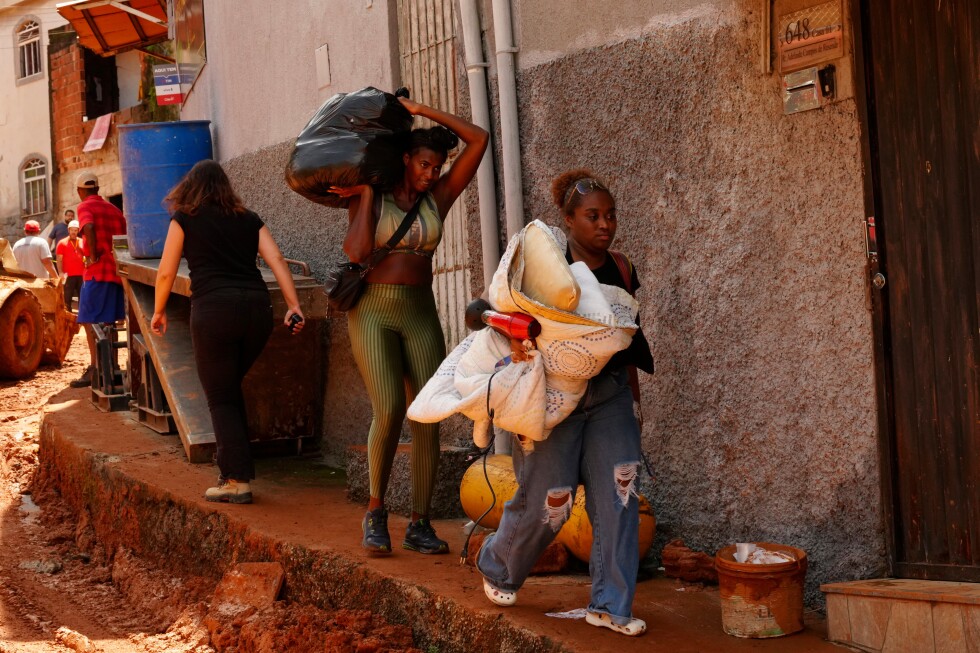
Devastating rains across Brazil’s Minas Gerais state have claimed 64 lives in a catastrophic week of flooding and landslides that has forced thousands to evacuate their homes, authorities confirmed Friday.
The disaster began Monday evening when torrential downpours struck the cities of Juiz de Fora and Uba, located approximately 310 kilometers north of Rio de Janeiro. Emergency responders have worked tirelessly throughout the week to assist victims and recover bodies from the affected areas.
According to the Minas Gerais fire department, five people remain missing as of Friday, while more than 5,500 residents have been displaced from their homes due to the dangerous conditions. The scale of destruction has prompted an urgent response from Brazil’s highest levels of government.
President Luiz Inácio Lula da Silva is scheduled to visit the devastated region on Saturday to meet with local officials and assess the damage firsthand, according to a statement released by the presidential palace. The federal government has already authorized emergency funds totaling 3.4 million reais (approximately $660,000) for reconstruction efforts and humanitarian assistance in the affected communities.
The disaster highlights ongoing vulnerability concerns in the region. A 2023 report by Cemaden, Brazil’s national disaster monitoring agency, had previously identified that nearly a quarter of Juiz de Fora’s population—around 540,000 people—reside in areas at risk of natural hazards related to land and water movements.
Brazil’s meteorology institute, Inmet, has issued urgent warnings of “great danger” for additional severe weather not only in Minas Gerais but also in neighboring states including Rio de Janeiro and São Paulo. Forecasters caution that these areas face continued risks of landslides, river overflows, and major flooding as weather systems persist across the region.
The crisis extends beyond Minas Gerais. Video footage captured Thursday evening showed raging brown floodwaters sweeping through the tourist destination of Paraty, a UNESCO-protected colonial town on Brazil’s southeastern coast. Local authorities have advised residents to avoid flooded areas and hillsides, while also warning against sheltering under trees due to heightened lightning strike risks.
Climate scientists have increasingly linked such extreme weather events to human-caused climate change, noting that severe precipitation events are becoming more frequent and intense as global temperatures rise.
This disaster follows just months after catastrophic flooding in Brazil’s southern Rio Grande do Sul state in May 2024, which resulted in at least 185 deaths and caused widespread destruction to infrastructure, businesses, and agriculture. Financial losses from that event exceeded 10 billion reais ($1.9 billion), demonstrating the growing economic toll of climate-related disasters in Brazil.
Environmental organizations have responded to the ongoing crisis with calls for improved urban planning and climate adaptation. Greenpeace Brazil issued a statement Friday on Instagram urging authorities to implement measures that better prepare cities for climate change and provide enhanced protection for vulnerable populations.
“Avoiding tragedies like the ones currently happening in cities in Minas Gerais and other states needs to be a priority,” the organization stated. “Disasters are also the result of political choices.”
The current crisis underscores Brazil’s complex relationship with climate vulnerability. Despite being home to the Amazon rainforest—crucial for global climate regulation—the country faces increasing challenges from extreme weather events that disproportionately affect densely populated urban areas built in flood-prone regions.
As rescue efforts continue and President Lula prepares his visit to the affected communities, attention is focusing on both immediate relief needs and longer-term resilience planning for a country increasingly battered by climate extremes.
Fact Checker
Verify the accuracy of this article using The Disinformation Commission analysis and real-time sources.

9 Comments
It’s good to see the Brazilian government responding quickly with emergency funds and the president visiting the region to assess the damage. Disaster recovery and rebuilding will be a massive undertaking, but I hope the affected areas can get the support they need to rebuild and heal.
Yes, the swift response from the federal government is critical. Coordinating the humanitarian aid and reconstruction efforts will be crucial in the coming weeks and months.
This is a tragic situation. My heart goes out to the families and communities affected by these devastating floods in Brazil. The scale of destruction is staggering, and I hope the search and rescue efforts are successful in finding the missing.
As the search for survivors continues, I can only imagine the anguish and uncertainty the affected families must be experiencing. My thoughts are with them during this incredibly difficult time.
I’m curious to know more about the specific factors that may have contributed to the severity of this flooding, such as land use, infrastructure, or environmental conditions in the affected regions. Understanding the root causes could help inform future prevention and mitigation efforts.
Floods of this magnitude can have long-lasting impacts on local economies, especially in regions already struggling with poverty and inequality. I hope the reconstruction efforts prioritize building back more resilient communities that can withstand future extreme weather events.
It’s heartbreaking to see the loss of life and destruction of homes and livelihoods in these floods. I hope the emergency response teams are able to provide adequate shelter, food, and medical care for the thousands of displaced residents.
This is a reminder of the devastating impact of extreme weather events, which are becoming more frequent due to climate change. My condolences to all those who have lost loved ones or had their lives disrupted by this tragedy.
I agree. The increasing frequency and intensity of natural disasters like these floods underscores the urgent need for greater climate action and resilience planning at all levels of government.