


Listen to the article
Satellite Imagery Reveals Extent of Iran War Damage
Satellite images are beginning to emerge that provide the first comprehensive look at the destruction caused by the ongoing conflict between Iran, the United States, and their respective allies since hostilities erupted on February 28.
Information about the damage inflicted across the Middle East has been scarce until now, particularly regarding closed military facilities that are inaccessible to journalists and the public. The newly released imagery offers crucial visual evidence of the war’s impact on both civilian and military infrastructure.
The images come from Planet Labs PBC, a San Francisco-based satellite firm used by various media outlets, including The Associated Press. Planet Labs has implemented a two-week delay on public access to its imagery, citing concerns that the photos could be utilized by “adversarial actors” in the conflict. Other providers and the U.S. Geological Survey have also released imagery that has proven valuable in assessing the scope of damage.
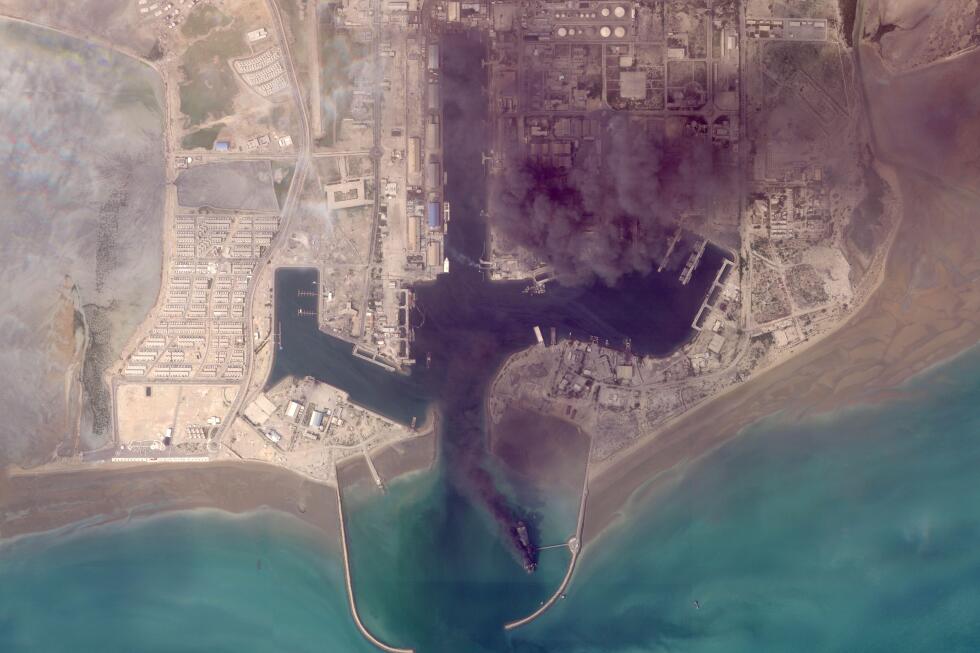
Some of the most dramatic images captured by Planet Labs show ships ablaze at the Iranian military port in Bandar Abbas, located near the strategically vital Strait of Hormuz that connects the Persian Gulf to the Arabian Sea. The March 2 images reveal multiple vessels on fire following U.S. military strikes. The U.S. Central Command has systematically targeted Iran’s naval assets throughout the conflict, claiming to have sunk or damaged more than 100 Iranian vessels since the war began.
The conflict has also taken a significant toll on American and allied military facilities across the region. Satellite imagery from March 1 shows extensive damage at the U.S. Navy’s 5th Fleet headquarters in Bahrain, with a major building destroyed and two radomes — geodesic domes covering radar antennas — severely damaged, likely from Iranian missile and drone strikes.
The U.S. Navy has not provided detailed information about the extent of destruction at the base, though Iran has repeatedly claimed successful attacks on the facility. Online videos have documented incoming fire targeting the installation. The damage to the radomes is particularly significant as they house sensitive communications equipment. A similar radome at Al Udeid Air Base in Qatar was destroyed by Iranian forces during a shorter conflict in June.
In the United Arab Emirates, satellite imagery taken on March 15 by an Airbus Defence and Space Pléiades Neo satellite reveals significant damage at Abu Dhabi’s Al Dhafra Air Base. The images show destruction at a set of hangars in the northwest section of the facility, while another hangar in the southeast appears to have been gutted by fire, with an adjacent structure sustaining roof damage.
Al Dhafra typically hosts approximately 2,000 American troops and has served as a critical base for U.S. operations in the region, housing everything from armed drones to F-35 stealth fighters. For years, the U.S. military only vaguely referred to Al Dhafra as a base in “southwest Asia” before the UAE became more open about acknowledging the American military presence there.
Also in Abu Dhabi, France’s Camp de la Paix naval base has suffered significant damage. Satellite images from March 3 show two large hangar-like structures at the facility have been hit. The base is situated near Zayed Port and Abu Dhabi’s Cultural District, which includes the Louvre Abu Dhabi and other major museums.
The U.S. Geological Survey’s Landsat satellites have been instrumental in identifying major fires resulting from the conflict. Imagery taken on Monday captured a fire at Dubai International Airport after an Iranian drone strike ignited a fuel tanker at what is normally the world’s busiest airport for international travel. The attack produced a large plume of black smoke visible for miles.
Another significant fire was detected on Monday at Oman’s southern port in Salalah, which came under attack from suspected Iranian drones on March 11, though Tehran has denied responsibility for strikes targeting Gulf Arab states. The satellite imagery suggests the fire has been burning continuously since the initial attack.
The U.S. and Israel have been conducting strikes against a wide variety of targets in Iran, including leadership figures, military bases, missile and air defense sites, and positions held by the Islamic Revolutionary Guard Corps and its volunteer Basij force. Iran has responded with drone and missile attacks targeting Israel and neighboring Gulf Arab nations that have allied with the United States.
As the conflict continues, these satellite images provide crucial independent verification of the war’s physical toll across the region, documenting damage that might otherwise remain hidden from public view.
Fact Checker
Verify the accuracy of this article using The Disinformation Commission analysis and real-time sources.

11 Comments
While the images are distressing, I’m glad they are being documented and shared. Transparency around the impacts of war is essential for accountability and informing future prevention efforts.
Satellite imagery is a powerful tool for documenting the impacts of war. While it’s disturbing to see the extent of the damage, I’m glad these images can help provide crucial evidence and awareness.
The release of this imagery is a critical step in understanding the full extent of the damage. I hope it can help drive more effective humanitarian aid and reconstruction efforts.
It’s alarming to see the level of destruction captured in these satellite images. I hope the information they provide can help inform efforts to de-escalate the conflict and provide assistance to affected communities.
The damage to civilian and military infrastructure is staggering. I hope the international community can come together to provide humanitarian aid and support reconstruction efforts in the affected areas.
These satellite images underscore the immense scale of destruction caused by the war. I worry about the long-term implications for the region’s stability and economic recovery.
The delay in public access to this imagery is understandable, but I hope the relevant authorities and humanitarian organizations can still utilize it to assess needs and coordinate response efforts.
The strategic location of the Iranian port in Bandar Abbas makes the damage there especially concerning. I wonder what the implications will be for shipping and trade flows in the region.
Good point. Disruptions to shipping in that critical waterway could have far-reaching economic impacts. Restoring port operations will likely be a top priority.
The damage to both civilian and military infrastructure is a stark reminder of the human toll of this conflict. I hope the international community can find a peaceful resolution soon.
Heartbreaking to see the destruction caused by this conflict. I hope the diplomatic efforts to resolve the crisis intensify so that peace can be restored and the people of the region can rebuild.