


Listen to the article
U.S. Seizure of Russian-Linked Oil Tanker Raises Maritime Security Concerns
The recent seizure of a Russian-linked oil tanker in the North Atlantic has heightened concerns among NATO and Nordic-Baltic governments about the operation of “dark fleet” vessels and their crews, according to maritime intelligence analysts.
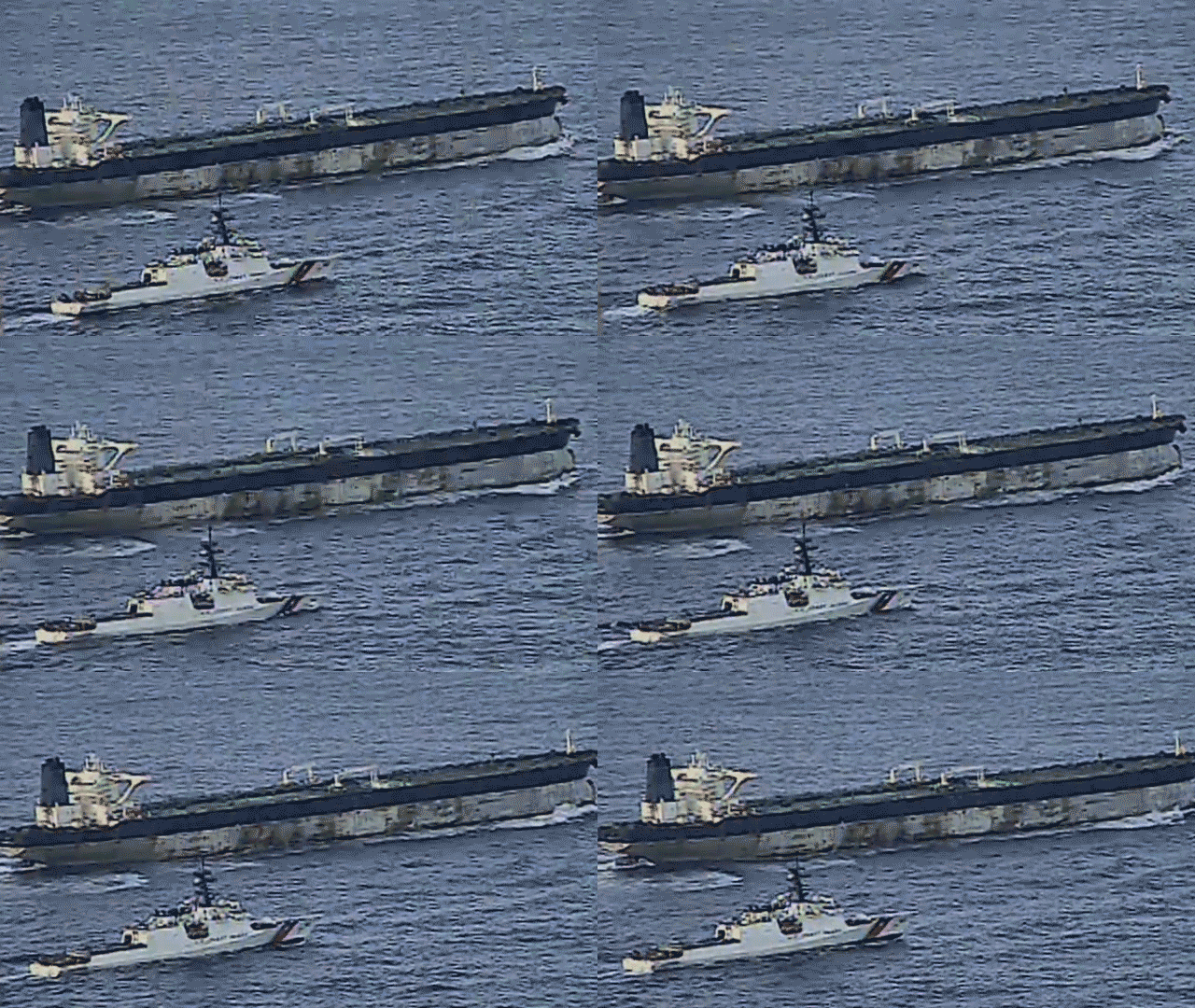
U.S. military and Coast Guard personnel boarded the Marinera on Wednesday in waters between Iceland and the United Kingdom. Officials stated the vessel was operating under deceptive shipping practices, including flying a false flag and violating international sanctions.
Following the seizure, Russian authorities demanded “humane treatment” and repatriation of the crew members, setting up a potential diplomatic confrontation between Washington and Moscow.
Maritime intelligence analyst Michelle Wiese Bockmann reported that ownership of the Marinera had recently been transferred to Burevestmarin LLC, a newly formed Russian company. The transfer occurred shortly before the vessel was intercepted by U.S. forces.
“We do not know the status of these sailors and seafarers, who are Russian nationals,” Wiese Bockmann told Fox News Digital. “That lack of clarity is common with dark fleet tankers.”
The incident has shed light on growing concerns about sanctions evasion in the maritime industry. According to Wiese Bockmann, NATO and the Nordic-Baltic 8+ group of governments have expressed particular worry about sanctioned oil tankers carrying unauthorized personnel, including armed guards.
“Increasingly, the Nordic Baltic 8+ governments are worried about unauthorized people also on board, also known as armed guards,” she explained. “It is highly irregular. Armed guards are rarely seen and typically used on ships that are transiting the Gulf of Aden or the Red Sea and are therefore assessed as at risk from attack by Houthis or pirates.”
The White House has taken a firm stance on the matter. Press Secretary Karoline Leavitt rejected Russian demands for special treatment of the Marinera’s crew during her regular briefing on Wednesday.
“This was a Venezuelan shadow fleet vessel that had transported sanctioned oil,” Leavitt stated. “The vessel was deemed stateless after flying a false flag, and it had a judicial seizure order, and that’s why the crew will be subject to prosecution.”
Russia’s Foreign Ministry indicated it was “closely following” the situation, according to state-run media outlet TASS.
The Marinera seizure appears to be part of a broader U.S. strategy to enforce sanctions against Venezuela’s oil industry. As previously reported, a second vessel, the M. Sophia, was also boarded in international waters near the Caribbean while en route to Venezuela, suggesting coordinated enforcement actions by American authorities.
Maritime security experts note that these interceptions highlight the complex intersection of commercial and military shipping operations. “There is a blurring of commercial and military shipping around the dark fleet,” Wiese Bockmann explained. “What we’re seeing now is something that has really only emerged in the last six or seven months.”
The crackdown on sanctions evasion is not limited to U.S. operations. European authorities have also begun holding crews accountable, particularly when captains facilitate “dangerous deceptive shipping practices, such as spoofing and going dark,” according to Wiese Bockmann.
“The EU recently sanctioned the captain of a tanker who refused orders from the Estonian navy to be stopped for inspection last May, and the French charged a captain over his refusal to comply with orders and failure to justify a flag’s nationality after authorities intercepted a dark fleet tanker in the Atlantic last October,” she added.
Industry analysts note that crews on these “dark fleet” vessels typically feature multinational composition, often with a Russian master accompanied by Chinese, Indian, or Filipino crew members. This international mix can further complicate jurisdictional and diplomatic questions when vessels are seized.
The interdiction of these vessels represents a significant escalation in efforts to enforce international sanctions, with potential repercussions for global shipping operations and diplomatic relations between the major powers involved.
Fact Checker
Verify the accuracy of this article using The Disinformation Commission analysis and real-time sources.

8 Comments
This is an unsettling development. Armed Russian-linked tankers disregarding protocols raise serious risks of escalation and confrontation. Proper investigation and diplomatic resolution will be crucial to de-escalate the situation.
The transfer of this tanker to a newly formed Russian company right before the U.S. seizure raises red flags. Curious to learn more about the ownership structure and potential sanctions evasion tactics employed.
Interesting to see the use of ‘dark fleet’ vessels with deceptive practices in this region. Underscores the need for robust maritime domain awareness and information sharing among NATO and Nordic-Baltic partners.
You’re right, improved coordination and intelligence gathering will be key to mitigate these types of security challenges in sensitive maritime zones.
The seizure of this vessel highlights the need for robust monitoring and enforcement of international sanctions, especially in strategic maritime zones. Curious to learn more about the ownership and operational details behind this ‘dark fleet’ vessel.
You raise a good point. Transparent shipping practices and full compliance with sanctions are essential to maintain stability and security in these sensitive waterways.
Concerning to hear about these Russian-linked tankers with armed guards operating in sensitive Baltic and Nordic waters. Raises questions about transparency and potential sanctions violations. Hope relevant authorities can investigate thoroughly and address any security risks.
Indeed, maritime security is a critical concern in this region given geopolitical tensions. Hopefully diplomatic channels can be used to resolve this issue constructively.