


Listen to the article
Drone Expert Dismisses Russia’s Claims of Ukrainian Attack on Putin Residence
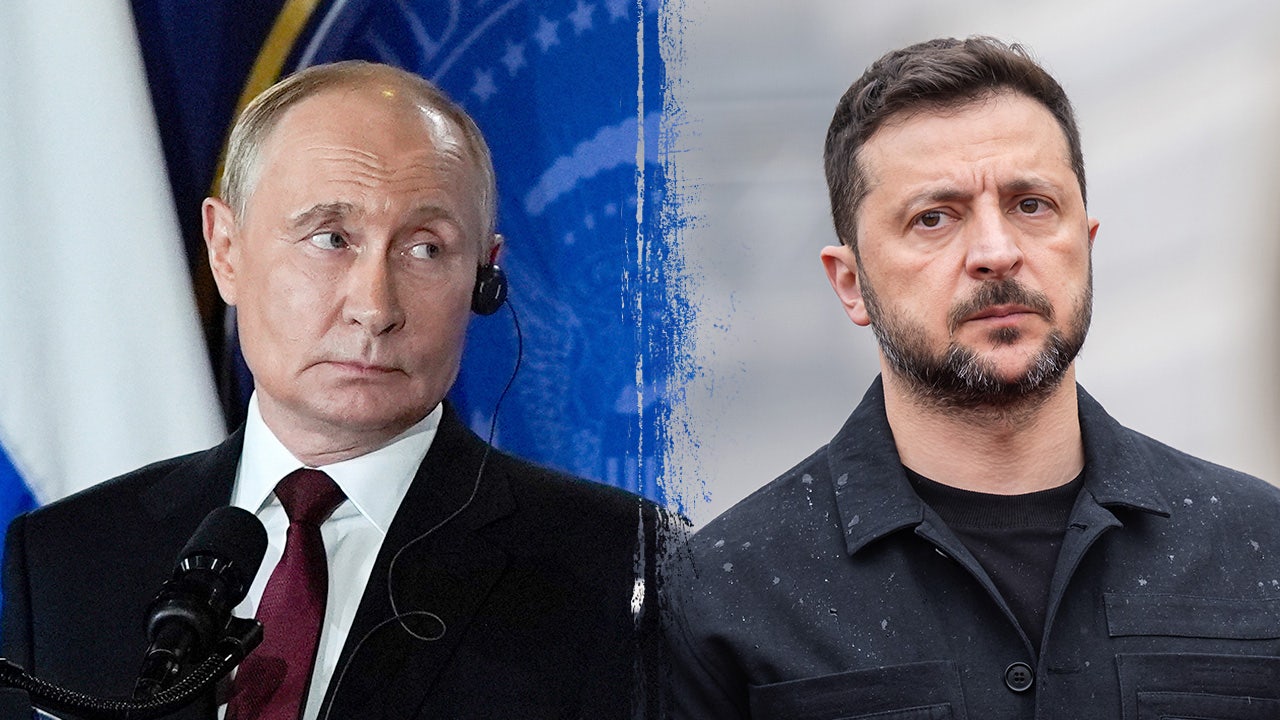
Russia’s escalating accusations that Ukraine attempted to strike President Vladimir Putin’s residence with drones have been firmly rejected by a leading military drone expert, who described the alleged attack as “hard to fathom” and tactically implausible.
Cameron Chell, CEO and co-founder of Draganfly, a drone manufacturer supplying equipment to the U.S. Department of Defense and allied militaries including Ukraine, questioned the credibility of Moscow’s claims that have been flatly denied by Kyiv.
“What really makes things usually very signature about Ukraine is that they’re always incredibly clever about how they use drones,” Chell told Fox News Digital. “They are clever from a cost perspective — let’s call it an efficiency perspective — but also very clever in their tactics.”
The timing of Russia’s allegations has raised eyebrows, coming shortly after what appeared to be productive discussions between President Trump and Ukrainian President Volodymyr Zelenskyy in Florida. The accusations seem positioned to potentially disrupt peace efforts at a critical juncture in diplomatic relations.
Russian Foreign Minister Sergey Lavrov claimed that 91 drones were intercepted en route to Putin’s residence on Lake Valdai in the Novgorod region. However, his statement appeared inconsistent with earlier Defense Ministry reports, which initially said 89 drones were shot down over eight regions, including 18 over Novgorod, before adding another 23.
Only after Lavrov’s statement did the ministry allege that 49 drones intercepted over Bryansk, nearly 300 miles from Novgorod, were also targeting Valdai. When asked about physical evidence of the attack, Kremlin spokesman Dmitry Peskov deflected, saying it was “a matter for our military.”
Chell highlighted several technical inconsistencies in Russia’s narrative that undermine its credibility. “To attack Putin’s residence, you need long-range, very fast-moving drones,” he explained, noting that for smaller drones to reach such a site, they would need to be launched from much closer locations.
“They would have to be within about 10 kilometers [6.2 miles] — or maybe, at most, 30 kilometers — of Putin’s residence,” Chell said, suggesting that such an operation would likely require launches from within Russian territory.
The security implications also don’t align with Ukraine’s known tactical approach. “That facility where Putin lives would also be incredibly secure, and so to have a number of lower-cost, slower-moving drones coming in on that facility would be very un-Ukrainian,” Chell observed.
He further noted operational constraints that make Russia’s claims dubious. Since the alleged attack occurred at night, GPS- or AI-based navigation would be compromised due to jamming and visibility limitations, making a coordinated launch of dozens of drones highly improbable.
“Apparently the thing was at night, so that’s very difficult for machine vision or AI mapping software,” he said. “It definitely wasn’t using GPS, because it would have been jammed. There are just a bunch of things that don’t add up.”
From a strategic perspective, Chell emphasized that Ukraine has nothing to gain politically from such an attack. “They’re bold, but right in the middle of peace talks — when they need Trump on side — it makes no sense,” he said. “Ukraine is just politically too smart to have done that.”
Zelenskyy has dismissed Russia’s allegations as a complete fabrication, suggesting Moscow might be laying groundwork for further escalation. Meanwhile, Lavrov warned of retaliation while indicating Russia would continue talks with Washington.
The allegations come at a delicate moment in the conflict, with reports of progress in peace negotiations. Kremlin officials have used the purported attack to justify a toughening of their diplomatic stance, with Duma Speaker Vyacheslav Volodin declaring there could be “no forgiveness” for Zelenskyy.
President Trump indicated he learned of the alleged attack directly from Putin and expressed anger about it, adding, “We’ll find out” when asked whether evidence existed to support Russia’s claims.
As tensions escalate, the conflicting narratives underscore the fragile nature of diplomatic efforts to resolve the ongoing conflict that has devastated Ukraine and destabilized European security since Russia’s full-scale invasion in 2022.
Fact Checker
Verify the accuracy of this article using The Disinformation Commission analysis and real-time sources.

8 Comments
The article raises valid doubts about Russia’s narrative around this alleged attack. Ukraine has shown itself to be strategic and innovative in its use of drones, so I’m not convinced this high-profile strike aligns with their typical approach. More clarity is needed.
I appreciate the expert’s perspective on Ukraine’s tactical drone use. It provides important context for evaluating Russia’s claims. The timing of these accusations is certainly suspicious and warrants further scrutiny of Moscow’s motives.
Interesting analysis. It does seem implausible that Ukraine would use such a high-profile attack on Putin’s residence, given their focus on tactical efficiency. The timing is certainly suspicious and raises questions about Russia’s motivations behind these claims.
It’s concerning to see the escalating accusations between Russia and Ukraine, especially given the potential impact on diplomatic efforts. The analysis from the drone industry expert casts doubt on the credibility of Russia’s narrative around this alleged attack.
The expert’s perspective on Ukraine’s drone tactics being clever and cost-effective is insightful. It makes me wonder if Russia is exaggerating or fabricating this alleged attack to disrupt diplomatic efforts, as the article suggests.
This is a complex and rapidly evolving situation. While I don’t doubt Russia’s security concerns, the expert analysis raises valid questions about the plausibility of Ukraine carrying out such a high-profile drone strike on Putin’s residence. Continued close monitoring of developments will be crucial.
The expert’s perspective on Ukraine’s drone tactics being clever and cost-effective is insightful. It makes me wonder if Russia is exaggerating or fabricating this alleged attack to disrupt diplomatic efforts, as the article suggests. More transparency and independent verification would be helpful.
This is a complex geopolitical situation. While I don’t doubt Russia’s security concerns, the credibility of their claims about this drone attack seems questionable given the analysis from the drone industry expert. It will be important to closely follow developments.