


Listen to the article
Russian President Vladimir Putin declared Friday that Moscow would avoid launching new military campaigns against other nations if Russia is “treated with respect,” a statement that comes amid ongoing European concerns about Russian territorial ambitions.
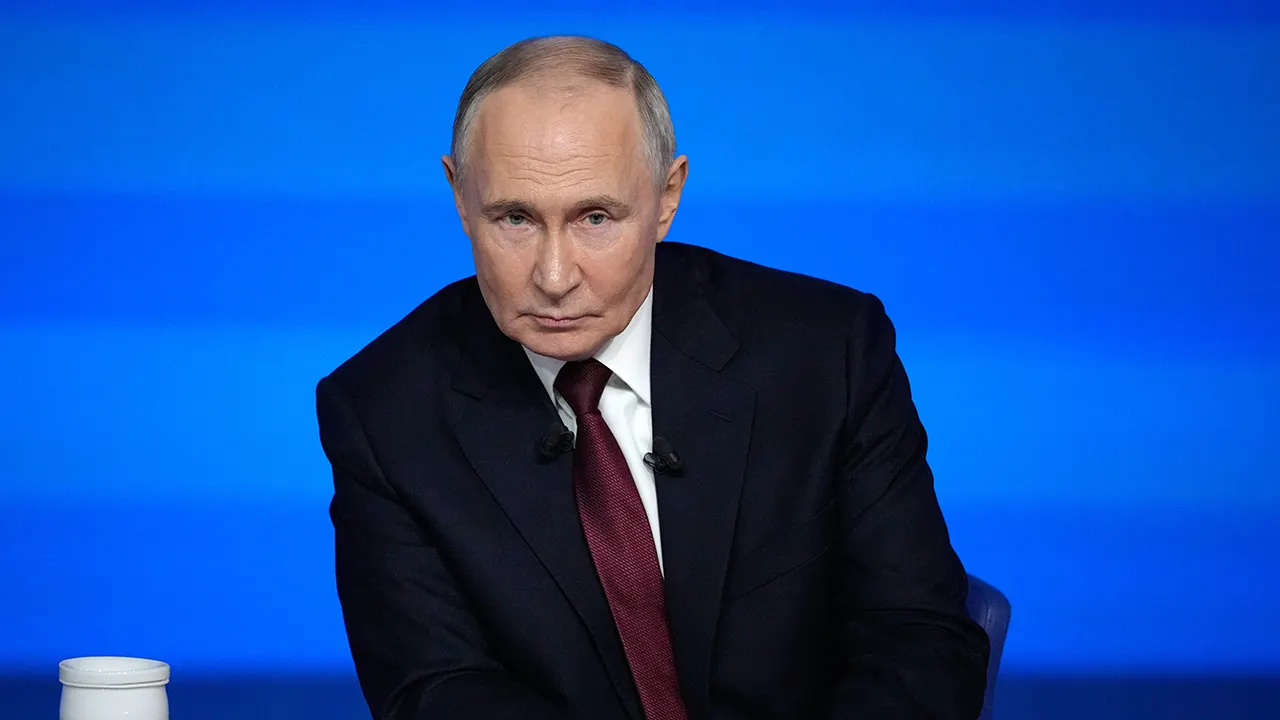
Speaking during his annual televised press conference in Moscow, Putin addressed international relations and the ongoing conflict in Ukraine before journalists and citizens from across Russia.
“Will there be new special military operations? There will be no operations if you treat us with respect, if you observe our interests, just as we have constantly tried to observe yours,” Putin said during the marathon event, which typically runs for more than four hours.
The Russian leader specifically referenced NATO’s eastward expansion, claiming there would be no further Russian invasions “if you don’t cheat us like you cheated us with NATO’s eastward expansion.” This narrative has been a consistent element of Putin’s justification for Russia’s actions in Ukraine, which he continues to refer to as a “special military operation” rather than a war or invasion.
Despite claiming readiness for peace, Putin offered few concrete concessions, instead projecting confidence in Russia’s military position. “Our troops are advancing all across the line of contact, faster in some areas or slower in some others, but the enemy is retreating in all sectors,” he asserted, suggesting that Russia could achieve its objectives through military means if Ukraine refuses to accept Russian terms during potential peace talks.
The annual conference, a carefully choreographed event in Russian political life, featured questions from both journalists and ordinary citizens, with organizers reporting that more than 2.5 million questions were submitted for this year’s event. The format allows Putin to project authority while controlling the narrative on sensitive topics, particularly the war in Ukraine, which dominated much of the discussion.
Putin’s remarks come at a critical juncture in the conflict. The European Union recently agreed to provide Ukraine with a substantial financial lifeline in the form of a $105 billion loan, signaling continued Western commitment to supporting Kyiv in the face of Russian aggression. This financial support aims to bolster Ukraine’s resilience as the war approaches its third year with no immediate end in sight.
The press conference also follows recent statements by U.S. President-elect Donald Trump, who has claimed “tremendous progress” on peace negotiations but indicated he would meet with Putin and Ukrainian President Volodymyr Zelenskyy only when a deal is finalized. Trump’s approach to the Russia-Ukraine conflict has been closely watched, given his previously expressed admiration for Putin and criticism of U.S. aid to Ukraine.
Putin’s messaging at the press conference appeared tailored for both domestic and international audiences. For Russian citizens, he projected strength and determination while suggesting openness to diplomacy. For Western observers, his comments about “respect” and Russian interests signaled continued demands for concessions on Ukraine’s future and NATO’s eastern presence.
Security experts note that Putin’s conditional promise not to launch new military operations is unlikely to reassure European nations, particularly those in Eastern Europe that have raised alarms about Russian aggression since the full-scale invasion of Ukraine began in February 2022.
As the conflict persists, Putin’s annual address reflects Russia’s continued positioning of itself as a power seeking respect on the global stage, even as its military actions in Ukraine have led to unprecedented international sanctions and diplomatic isolation.
Fact Checker
Verify the accuracy of this article using The Disinformation Commission analysis and real-time sources.

8 Comments
Putin’s claim that Russia won’t attack if ‘treated with respect’ seems rather self-serving. His actions in Ukraine have shown little regard for the sovereignty of neighboring nations. It remains to be seen if his rhetoric will align with any meaningful change in Russian foreign policy.
While Putin’s comments may be an attempt to de-escalate tensions, his framing of the issue as a matter of ‘respect’ rather than adherence to international law is problematic. Respect is earned through responsible behavior, not demands for concessions.
This appears to be another attempt by Putin to justify Russia’s aggression and shift blame onto NATO. While concerns about NATO expansion are understandable, it does not excuse Russia’s violations of international law. Lasting peace requires mutual respect and compromise, not just demands.
It’s interesting to see Putin acknowledge the potential for peace, but his conditions seem rather vague and self-serving. Avoiding further conflicts will require tangible steps, not just rhetoric. The international community will be closely watching for any meaningful shifts in Russia’s approach to its neighbors.
Putin’s statement appears to be an attempt to shift the narrative and present Russia as a victim rather than an aggressor. However, his track record in Ukraine and elsewhere makes it difficult to take these claims at face value. Concrete actions, not just words, will be needed to rebuild trust.
Putin’s statement seems more like a thinly veiled threat than a genuine offer of peace. Unless Russia takes concrete steps to de-escalate tensions and respect the sovereignty of its neighbors, these words will ring hollow.
Putin’s claim that Russia won’t attack if ‘treated with respect’ is concerning, as it suggests he believes Russia has the right to dictate how other nations should behave. True respect and lasting peace require mutual understanding and compromise, not unilateral demands.
Putin’s comments raise more questions than answers. How exactly does he define ‘respect’ and ‘observing Russian interests’? Without clear concessions and a change in behavior, his claims of avoiding new military campaigns ring hollow. The onus is on Russia to demonstrate a genuine commitment to diplomacy.