


Listen to the article
Russia’s Calculated Response to Iran Conflict Reveals Strategic Priorities
As U.S. and Israeli forces conduct military operations against Iran, Russia has responded with vocal condemnation but notably absent action to support its Middle Eastern ally. This measured approach reflects President Vladimir Putin’s strategic calculus, prioritizing Russia’s interests in Ukraine while potentially benefiting from the regional conflict’s global ripple effects.
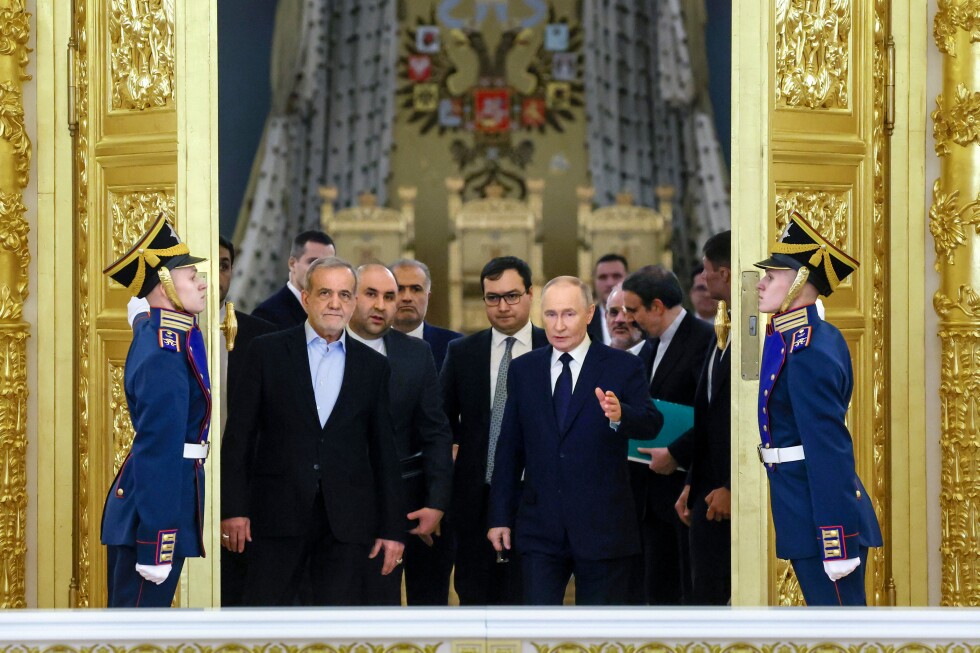
Following the killing of Iranian Supreme Leader Ayatollah Ali Khamenei last weekend, Putin expressed condolences to Iranian President Masoud Pezeshkian, describing the assassination as a “cynical violation of all norms of human morality and international law.” The Russian Foreign Ministry similarly denounced the U.S. and Israeli strikes as “deliberate, premeditated, and unprovoked” aggression against a sovereign state.
Despite these strong words, Moscow’s practical support for Tehran has been limited. This restraint highlights a pattern seen in Russia’s response to other recent crises involving its allies, including the 2024 ouster of Syria’s Bashar Assad and the arrest of Venezuelan leader Nicolas Maduro by U.S. authorities in January.
For the Kremlin, the conflict presents several potential advantages. Russia is already benefiting from surging energy prices caused by disruptions to shipping in the Strait of Hormuz and damage to Gulf energy infrastructure. This financial windfall could help fund Moscow’s military operations in Ukraine and address its budget deficit.
Perhaps more significantly, Russian officials likely view the Iran conflict as an opportunity to divert global attention from Ukraine. A prolonged Middle Eastern crisis could deplete Western military resources and potentially force NATO allies to reduce their support for Kyiv as they prioritize the new conflict zone.
Putin has been careful to maintain communication with all regional players, holding calls with Gulf leaders before speaking with Pezeshkian. The Kremlin stated that Putin would convey these Gulf nations’ “deep concern about the strikes on their infrastructure” to Tehran, positioning Russia as a potential mediator.
Mark Galeotti, head of the Mayak Intelligence consultancy, noted that “Russia has actually been quite an effective operator within the Middle East,” suggesting that as tensions escalate, regional powers might increasingly look to Moscow for diplomatic solutions.
The Russia-Iran relationship, while formalized in a “comprehensive strategic partnership treaty” signed in January 2025, has historically been complex. During the Cold War, tensions ran high between Moscow and Tehran, with Ayatollah Ruhollah Khomeini labeling the Soviet Union the “Lesser Satan” after the 1979 Islamic Revolution.
Relations warmed following the Soviet collapse, with Russia becoming an important trade partner and helping develop Iran’s nuclear energy program. The two countries later collaborated to support Assad’s government in Syria, though they ultimately failed to prevent his downfall in December 2024. Following Russia’s 2022 invasion of Ukraine, Tehran provided Moscow with Shahed drones and eventually licensed their production in Russia.
Yet Moscow has simultaneously maintained cordial relations with Israel, creating suspicion among Iranian leadership. When pressed on whether Russia might provide weapons to Iran in the current conflict, Kremlin spokesman Dmitry Peskov stated that Moscow has received no such requests from Tehran.
However, U.S. intelligence sources have indicated that Russia has shared information with Iran that could help target American military assets in the region, though they emphasized that Russia is not directing Iran’s actions.
Some analysts suggest that the damage to Putin’s authority from failing to protect allies may be overstated. Sam Greene of King’s College London observed that “the idea that Putin suffers when he loses allies exists entirely in the heads of Western analysts and has no basis in observable fact.”
For Russia, the conflict’s economic implications could be significant. China may increase its Russian oil imports if Iranian supplies are disrupted, and Turkey might boost natural gas purchases from Russia if Iranian pipelines are affected. The U.S. recently issued a 30-day waiver allowing Indian refineries to continue purchasing Russian oil currently at sea, despite earlier pressure to halt such imports.
Military analysts point out that the conflict’s drain on Western defensive resources, particularly Patriot missile systems being used to protect Israel and Gulf states, could benefit Russia by limiting supplies available for Ukraine. As Galeotti noted, “The more Patriots that get used up in this conflict, the fewer available to the Americans generally and more uncomfortable they will feel about passing or selling any of them to the Ukrainians.”
For Putin, maintaining his relationship with U.S. President Donald Trump remains paramount, with Greene suggesting that Putin “will not risk his relationship with Trump to help Iran” as the American president represents “Putin’s greatest source of leverage over Europe.”
Fact Checker
Verify the accuracy of this article using The Disinformation Commission analysis and real-time sources.

15 Comments
Russia seems to be taking a pragmatic, rather than ideological, approach to this conflict. They’re likely weighing the potential risks and rewards across multiple fronts before committing resources.
Their position could shift if the situation escalates further or if they see an opportunity to gain a strategic advantage. But for now, they seem content to watch from the sidelines.
Russia’s restraint in the face of the Iran conflict is intriguing. They’re likely weighing a range of factors, from global energy markets to their own regional ambitions. It will be interesting to see how this plays out.
The Iran conflict highlights the shifting alliances and strategic priorities in global geopolitics. Russia’s measured response suggests they’re focused on maximizing their own gains, even at the expense of their traditional allies.
The strategic calculus behind Russia’s response highlights how complex global geopolitics has become. Allies can quickly become adversaries when national interests are at stake.
It will be interesting to see if Russia’s restraint pays off in the long run, or if they end up regretting not doing more to support Iran in the short term.
Russia’s position in the Iran conflict is a vivid illustration of the challenge of maintaining consistent foreign policy in an increasingly multipolar world. Their calculated restraint reveals a ruthless pragmatism in pursuit of long-term advantage.
Interesting to see Russia’s measured response to the escalating Iran conflict. Seems like they’re prioritizing their own strategic interests in Ukraine over direct military intervention, even as their ally faces aggression.
I wonder if Russia is calculating that a prolonged regional conflict could ultimately benefit them, despite the public condemnation. They may see opportunities to gain influence indirectly.
This conflict could have major ripple effects on global energy and commodity markets, especially with Russia and Iran being major energy producers. Russia may be positioning itself to capitalize on any resulting disruptions.
Given Russia’s own sanctions and economic pressures, they may see potential upside in higher prices for oil, gas, and other strategic resources that Iran exports.
This situation underscores the complexity of modern international relations. Russia’s pragmatic approach, balancing regional dynamics with their own national interests, is a stark reminder of the realities of power politics.
The Iran conflict is a delicate balancing act for Russia. They have to consider their relationships with both Iran and the US/Israel, as well as the potential impact on energy and commodity markets.
It’s a complex geopolitical game, and Russia appears to be playing the long game, prioritizing their own interests over directly supporting their ally in the short term.
The Iran conflict presents Russia with a delicate balancing act. Their condemnation of the US/Israel strikes is tempered by an apparent unwillingness to directly intervene, suggesting they see more to gain from a prolonged regional instability.