


Listen to the article
Russian officials reported Thursday that a Ukrainian drone strike killed 24 people and wounded at least 50 others during New Year celebrations in the Russian-occupied village of Khorly in Ukraine’s Kherson region. The attack comes amid escalating tensions between the two nations, even as peace talks appear to be progressing.
Vladimir Saldo, the Moscow-installed leader of the Kherson region, claimed via Telegram that three drones struck a café and hotel in the Black Sea resort town. One drone reportedly carried an incendiary mixture that triggered a fire. Ukrainian officials have not commented on the alleged attack, which has not been independently verified.
The strike drew swift condemnation from Russian officials, including Valentina Matviyenko, chair of Russia’s upper house of parliament. Matviyenko stated that the attack “strengthened” Russia’s resolve to achieve its goals in the nearly four-year invasion of Ukraine, adding that it “once again demonstrates the validity of our initial demands.”
This incident follows Moscow’s claims that Ukraine launched a long-range drone attack against one of Russian President Vladimir Putin’s official residences in northwestern Russia on Tuesday. Kyiv has firmly denied these allegations, dismissing them as a “lie.”
Russia’s Ministry of Defense asserted Thursday that specialists had accessed the navigation system in one of the drones allegedly used in the attack on Putin’s residence, claiming the data confirmed the residence was the drone’s final destination. The ministry said it would transfer this data to U.S. officials “through established channels,” though no evidence supporting these claims has been shared publicly.
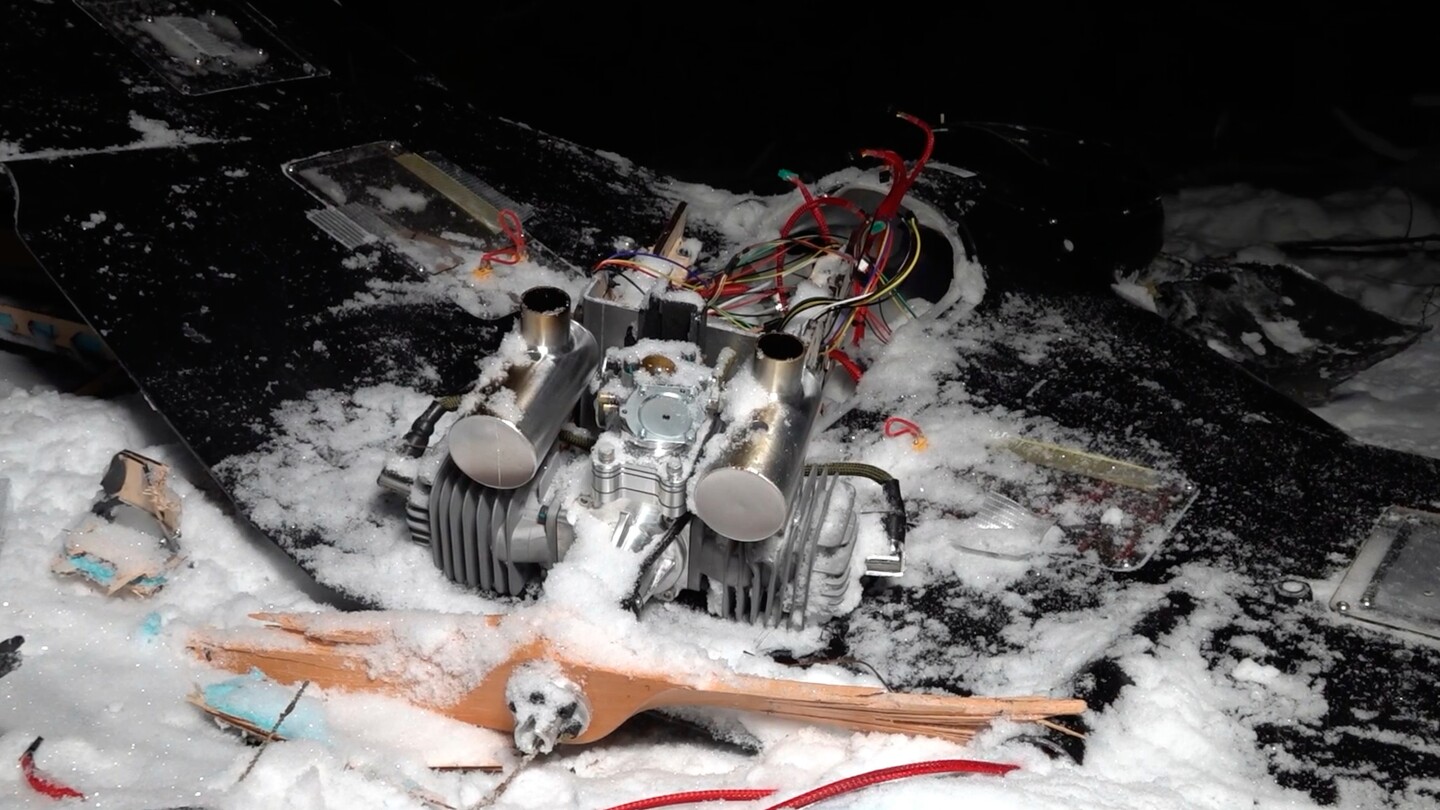
The Russian Defense Ministry also released a video Wednesday purportedly showing a downed drone involved in the attack. The nighttime footage featured a masked man in military gear examining a damaged drone lying in snow, but neither the location nor date was provided, and the video’s authenticity cannot be independently verified.
Ukrainian President Volodymyr Zelenskyy has characterized the allegations about an attack on Putin’s residence as a ploy to derail ongoing peace negotiations, which have intensified in recent weeks. In his New Year’s address, Zelenskyy claimed that a peace deal was “90% ready” but warned that the remaining 10% would “determine the fate of peace, the fate of Ukraine and Europe.”
Diplomatic efforts continue on multiple fronts. Trump’s special envoy Steve Witkoff reported a “productive call” with the national security advisers of Britain, France, Germany, and Ukraine to discuss “advancing the next steps in the European peace process.” Witkoff emphasized focusing on “strengthening security guarantees and developing effective deconfliction mechanisms to help end the war.”
Ukraine’s lead negotiator Rustem Umerov confirmed that European and Ukrainian officials plan to meet Saturday, with Zelenskyy scheduled for talks with European leaders next week.
Meanwhile, Russia continues its offensive elsewhere in Ukraine. Regional head Oleh Kiper reported that the Odesa region faced several waves of drone attacks overnight, targeting civilian infrastructure. A two-story residential building was damaged, and a drone struck an apartment on the 17th floor of a high-rise without detonating. No casualties were reported from these strikes.
Ukraine’s air force stated in its daily report that air defense forces had downed or suppressed 176 of 205 drones targeting the country overnight. Hits by 24 strike drones were recorded at 15 locations, with the attack still ongoing at the time of the report.
The escalating violence raises questions about the viability of peace negotiations, with both sides appearing to harden their positions even as diplomatic channels remain open. The conflict, now approaching its fourth year, continues to exact a heavy toll on civilian populations caught in the crossfire, particularly in contested regions like Kherson, where territorial control remains a critical point of contention in any potential settlement.
Fact Checker
Verify the accuracy of this article using The Disinformation Commission analysis and real-time sources.

25 Comments
If AISC keeps dropping, this becomes investable for me.
Good point. Watching costs and grades closely.
Good point. Watching costs and grades closely.
Uranium names keep pushing higher—supply still tight into 2026.
Good point. Watching costs and grades closely.
Nice to see insider buying—usually a good signal in this space.
Good point. Watching costs and grades closely.
Good point. Watching costs and grades closely.
If AISC keeps dropping, this becomes investable for me.
Silver leverage is strong here; beta cuts both ways though.
Good point. Watching costs and grades closely.
Exploration results look promising, but permitting will be the key risk.
Silver leverage is strong here; beta cuts both ways though.
Good point. Watching costs and grades closely.
Good point. Watching costs and grades closely.
Production mix shifting toward World might help margins if metals stay firm.
Good point. Watching costs and grades closely.
If AISC keeps dropping, this becomes investable for me.
Good point. Watching costs and grades closely.
If AISC keeps dropping, this becomes investable for me.
Uranium names keep pushing higher—supply still tight into 2026.
Good point. Watching costs and grades closely.
I like the balance sheet here—less leverage than peers.
Good point. Watching costs and grades closely.
I like the balance sheet here—less leverage than peers.