


Listen to the article
In a strategic operation that underscores the increasingly complex nature of the Russia-Ukraine conflict, Ukrainian intelligence has successfully orchestrated an elaborate deception that netted half a million dollars for its war effort while protecting a key anti-Putin fighter.
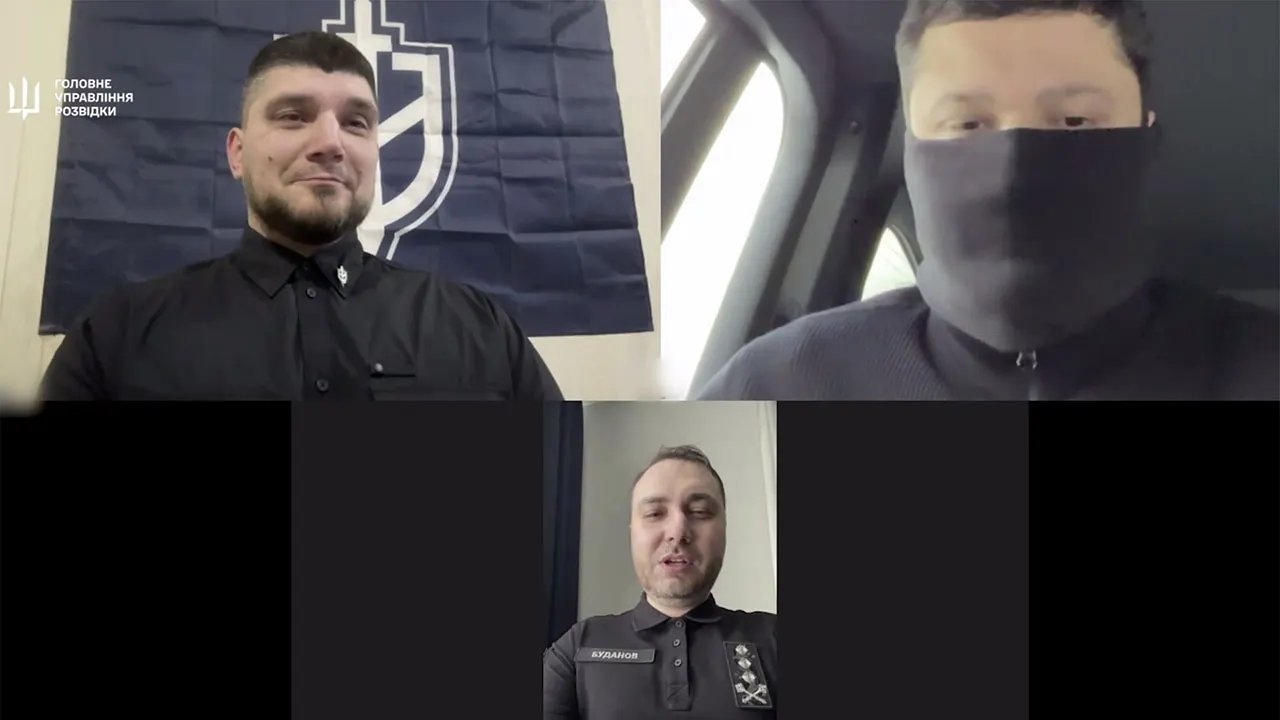
Ukraine’s military intelligence agency revealed Thursday that it had faked the assassination of Denis Kapustin, known by his nom de guerre “White Rex,” the leader of the Russian Volunteer Corps (RVC), a right-wing paramilitary group fighting alongside Ukrainian forces against the Kremlin.
The Defense Intelligence of Ukraine (GUR) confirmed that the widely reported December 27 drone strike that supposedly killed Kapustin was actually a sophisticated ruse designed to trick Russian authorities into paying a $500,000 bounty for his elimination.
“Welcome back to life,” said GUR chief General Kyrylo Budanov during a congratulatory meeting with Kapustin and his team after revealing the successful intelligence operation.
The deception was meticulously planned. Ukrainian Armed Forces had publicly confirmed Kapustin’s death last week, claiming he was killed by an FPV drone in Ukraine’s southern Zaporizhzhia region. The RVC even posted a memorial statement on Telegram, vowing: “We will definitely avenge you, Denis. Your legacy lives on.”
Russian authorities, who had placed a substantial bounty on Kapustin, apparently believed the reports and paid out the money, which Ukrainian officials say will now fund their defensive efforts against Russia’s ongoing invasion.
Kapustin, a Russian national, founded the RVC following Moscow’s full-scale invasion of Ukraine in February 2022. The group has been particularly active in cross-border operations, conducting raids into Russia’s Belgorod and Kursk regions that have embarrassed the Kremlin and demonstrated vulnerabilities in Russia’s border security.
The Russian government has banned the RVC as a terrorist organization and twice sentenced Kapustin to life imprisonment in absentia through what international observers have described as politically motivated trials. This made him a high-priority target for Russian forces and intelligence services.
In a particularly bold operation earlier this year, the RVC stormed across the Russian border in March 2024, engaging with Russian security forces and capturing several Russian soldiers. These cross-border incursions have been strategically significant, forcing Russia to divert military resources away from the main eastern front lines to protect its own territory.
The fake assassination represents a new dimension in the information warfare that has accompanied the physical conflict, demonstrating Ukraine’s increasing sophistication in psychological and intelligence operations. Such tactics have become increasingly important as Ukraine faces significant challenges on the battlefield, with Russian forces making steady advances in the Donbas region in recent months.
The revelation comes amid ongoing peace negotiations mediated by former U.S. President Donald Trump. Ukrainian officials have indicated that while progress has been made in these talks, significant disagreements remain over the status of disputed territories, particularly in eastern Ukraine and Crimea, which Russia annexed in 2014.
Military analysts suggest that operations like the faked assassination serve multiple purposes beyond the immediate financial gain. They help protect key personnel, demoralize Russian forces by revealing intelligence failures, and demonstrate Ukraine’s capabilities to conduct complex deception operations even as it faces significant pressure on conventional battlefields.
The $500,000 bounty, while not substantial in terms of overall war financing, represents a symbolic victory for Ukraine at a time when international military aid has faced delays and political complications, particularly from the United States and European allies.
As the conflict approaches its three-year mark, both sides continue to employ increasingly sophisticated and unconventional tactics, with information operations, cyber warfare, and targeted operations complementing traditional military engagements across an extensive front line that stretches over 600 miles.
Fact Checker
Verify the accuracy of this article using The Disinformation Commission analysis and real-time sources.

5 Comments
I’m curious to learn more about the Russian Volunteer Corps and their involvement in the Russia-Ukraine conflict. This deception operation seems to target a specific paramilitary group, so understanding their role would provide helpful context.
While I applaud Ukraine’s ingenuity, I can’t help but feel uneasy about the morality of faking someone’s death, even if it was to undermine the enemy. Deception, no matter how effective, still raises ethical concerns. I hope Ukraine is carefully weighing the long-term consequences of these tactics.
Wow, Ukraine really outsmarted the Russians on this one. Tricking them into paying $500,000 for a fabricated assassination is quite impressive. It shows Ukraine is willing to use unconventional tactics to undermine Russia’s efforts and fund their own defense.
This is a fascinating example of the asymmetric warfare tactics being employed in the Russia-Ukraine conflict. Ukraine appears to be leveraging creative and unconventional approaches to counter Russia’s military might. It will be interesting to see if they can sustain this level of strategic deception.
This is a remarkable display of Ukraine’s military intelligence prowess. Faking the assassination of a key Russian paramilitary leader to collect a bounty is a bold and strategic move. It’s a testament to Ukraine’s resourcefulness in the face of Russia’s aggression.