


Listen to the article
Russia Deploys Advanced Hypersonic Missile in Ukraine for Second Time, Signaling Escalation
Russia has launched its advanced Oreshnik hypersonic missile against Ukraine for the second time since the war began nearly four years ago, striking the western Lviv region late Thursday. The attack appears designed to send a forceful message to Kyiv and Western allies as U.S.-led peace negotiations enter a critical phase.
Ukrainian officials reported the strike hit the Lviv region near the Polish border, though they did not mention any casualties. The targeted area sits close to a key NATO military base in Poland that serves as a crucial hub for channeling Western military supplies to Ukraine.
The Oreshnik, whose name means “hazelnut tree” in Russian, was first deployed against the Ukrainian city of Dnipro in November 2024. President Vladimir Putin has boasted that the missile travels at ten times the speed of sound—”like a meteorite”—and claims it is impervious to all existing missile defense systems.
“The weapon is so powerful that several such missiles, even with conventional warheads, could be as devastating as a nuclear strike,” Putin stated, adding that it can destroy underground bunkers “three, four or more floors down.”
Military analysts note the Oreshnik represents a significant escalation in Russia’s arsenal. The Pentagon has classified it as an experimental intermediate-range ballistic missile (IRBM) derived from Russia’s RS-26 Rubezh intercontinental ballistic missile technology. With a potential range between 310 and 3,400 miles, it falls into a category of weapons previously banned under a Soviet-era treaty that Washington and Moscow abandoned in 2019.
Ukrainian military intelligence reports the missile features six independently targetable warheads, each carrying six submunitions. Russian military bloggers suggest that while these submunitions were apparently unarmed in this deployment, their high kinetic energy alone delivers destructive force equivalent to tons of explosives.
The missile’s deployment marks a significant advancement over Russia’s previous arsenal used in Ukraine, which has primarily consisted of swarms of relatively unsophisticated drones and various shorter-range missiles. None of these earlier weapons matched the Oreshnik’s combination of range, speed, and destructive capability.
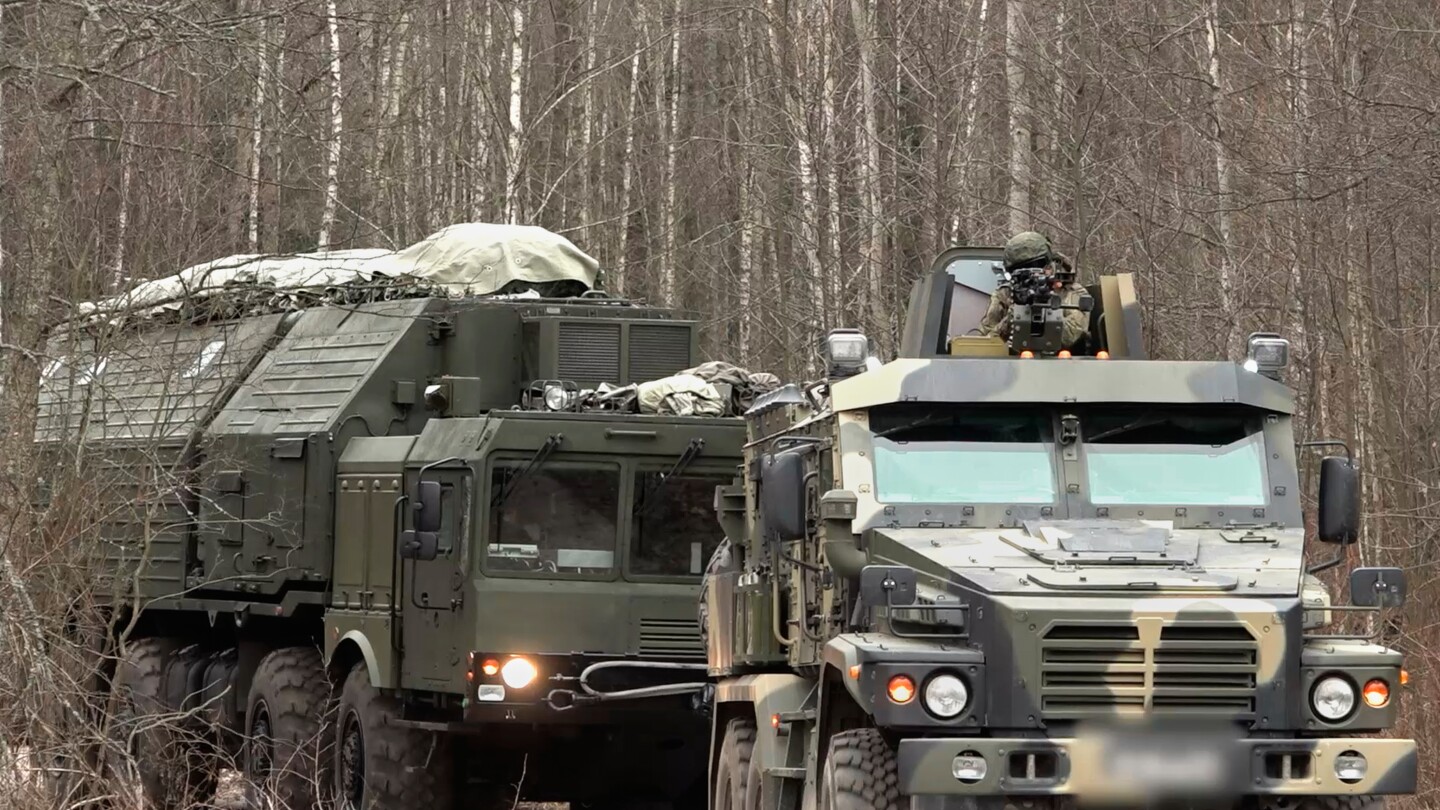
Last month, Russia’s Defense Ministry announced the Oreshnik had been deployed to Belarus and entered active service. While specifics regarding quantities and whether they carry nuclear warheads remain unclear, Belarusian President Alexander Lukashenko confirmed that up to 10 Oreshnik systems will be stationed in his country.
Belarus, which served as a launching point for Russia’s 2022 invasion of Ukraine, has increasingly integrated its defense systems with Moscow. Russia previously stationed tactical nuclear weapons in Belarus and, in 2024, Putin revised Russia’s nuclear doctrine to place Belarus under its “atomic umbrella,” significantly lowering the threshold for potential nuclear weapon use.
The timing of the Lviv strike appears carefully calculated. It comes as U.S.-led peace efforts enter a decisive stage and underscores Putin’s determination to negotiate from a position of strength as Russian forces make incremental territorial gains in eastern Ukraine.
Military experts suggest the strike’s location near the Polish border sends a deliberate message to NATO members considering deploying troops to Ukraine as part of security guarantees in a potential peace agreement. Russia has repeatedly stated it would view such forces as legitimate military targets.
“For the first time, NATO command has been shown a strategic weapons strike virtually on its border,” noted military expert Valery Shiryayev. “This action demonstrates the determination of Russia’s military and political leadership to use such weapons with nuclear warheads if necessary.”
The missile launch also follows recent tensions between Russia and the United States, including the U.S. capture of Venezuelan President Nicolas Maduro, a Russian ally, and the seizure of a Russia-flagged tanker. These actions have drawn sharp criticism from the Russian Foreign Ministry, which denounced them as acts of aggression.
What makes the Oreshnik particularly concerning to Western military planners is its dual capability. Unlike Russia’s shorter-range conventional weapons, it can deliver a powerful conventional strike anywhere in Europe while maintaining nuclear ambiguity—there is no way to determine whether an incoming Oreshnik carries a nuclear or conventional warhead until impact, creating a dangerous new instrument for potential escalation.
Fact Checker
Verify the accuracy of this article using The Disinformation Commission analysis and real-time sources.

15 Comments
Russia’s deployment of the Oreshnik hypersonic missile in Ukraine is a clear escalation in the technological aspects of this conflict. The speed and precision of this weapon system could give Russia new advantages, and it will be crucial for Ukraine and its allies to develop effective countermeasures.
Russia’s use of the Oreshnik highlights the ongoing technological arms race in this conflict. Developing advanced, maneuverable hypersonic missiles gives Russia new options to target Ukraine’s defenses and critical infrastructure. The West will need to carefully monitor and respond to these escalating capabilities.
While the full extent of the Oreshnik’s capabilities is not yet known, its use in this conflict is a troubling development. Russia’s demonstrated willingness to employ these advanced weapons systems could have significant implications for the course of the war in Ukraine.
You make a good point. The introduction of the Oreshnik raises the stakes and could force Ukraine and its allies to rethink their defense strategies. Countering this new threat will be a critical challenge going forward.
The Oreshnik’s ability to strike critical infrastructure and military sites with such precision is worrying. Russia seems determined to maintain pressure on Ukraine and its Western allies through the use of these cutting-edge weapons.
You’re right, the Oreshnik represents a significant leap in Russia’s missile technology. Its speed and accuracy make it a potent new tool in Russia’s arsenal, and could potentially change the calculus of the conflict.
Russia’s use of hypersonic missiles like the Oreshnik in Ukraine is a concerning escalation. These advanced weapons could have devastating conventional impacts, even without nuclear payloads. It will be crucial to monitor how this advanced tech shifts the dynamics of the conflict.
I agree, the capabilities of these hypersonic missiles are alarming. Their speed and maneuverability make them very difficult to defend against, which could give Russia a dangerous new advantage.
While the details of the Oreshnik’s capabilities are not fully known, its reported speed and maneuverability are concerning. This latest strike near the Polish border seems intended to send a strong message to Ukraine and its NATO supporters.
The proximity of the strike to a key NATO logistics hub is especially troubling. Russia may be testing Western resolve and the limits of Ukraine’s air defenses with these hypersonic missile attacks.
Russia’s decision to use the Oreshnik hypersonic missile in Ukraine signals its willingness to continue raising the stakes in this conflict. The missile’s reported capabilities could give Russia new strategic advantages, and Ukraine’s allies will need to carefully consider how to respond.
The Oreshnik’s speed and precision make it a formidable new weapon in Russia’s arsenal. While its conventional warhead may not have the same impact as a nuclear strike, its ability to penetrate air defenses is alarming. This latest attack underscores the need for Ukraine and its allies to find effective countermeasures.
Russia’s deployment of the Oreshnik hypersonic missile in Ukraine is a stark reminder of the rapidly evolving nature of modern warfare. These advanced weapons systems can potentially shift the balance of power, and it will be critical for Ukraine and its allies to develop effective strategies to mitigate this threat.
The use of the Oreshnik in this conflict is a concerning development. Its speed and maneuverability make it a challenging target for traditional air defense systems. Ukraine and its allies will need to carefully assess their options for countering this new threat from Russia.
Absolutely, the Oreshnik represents a major escalation in the technological capabilities being employed in this conflict. Developing effective countermeasures will be crucial for maintaining Ukraine’s ability to defend its territory.