


Listen to the article
French Scholar Freed in Prisoner Exchange with Russia
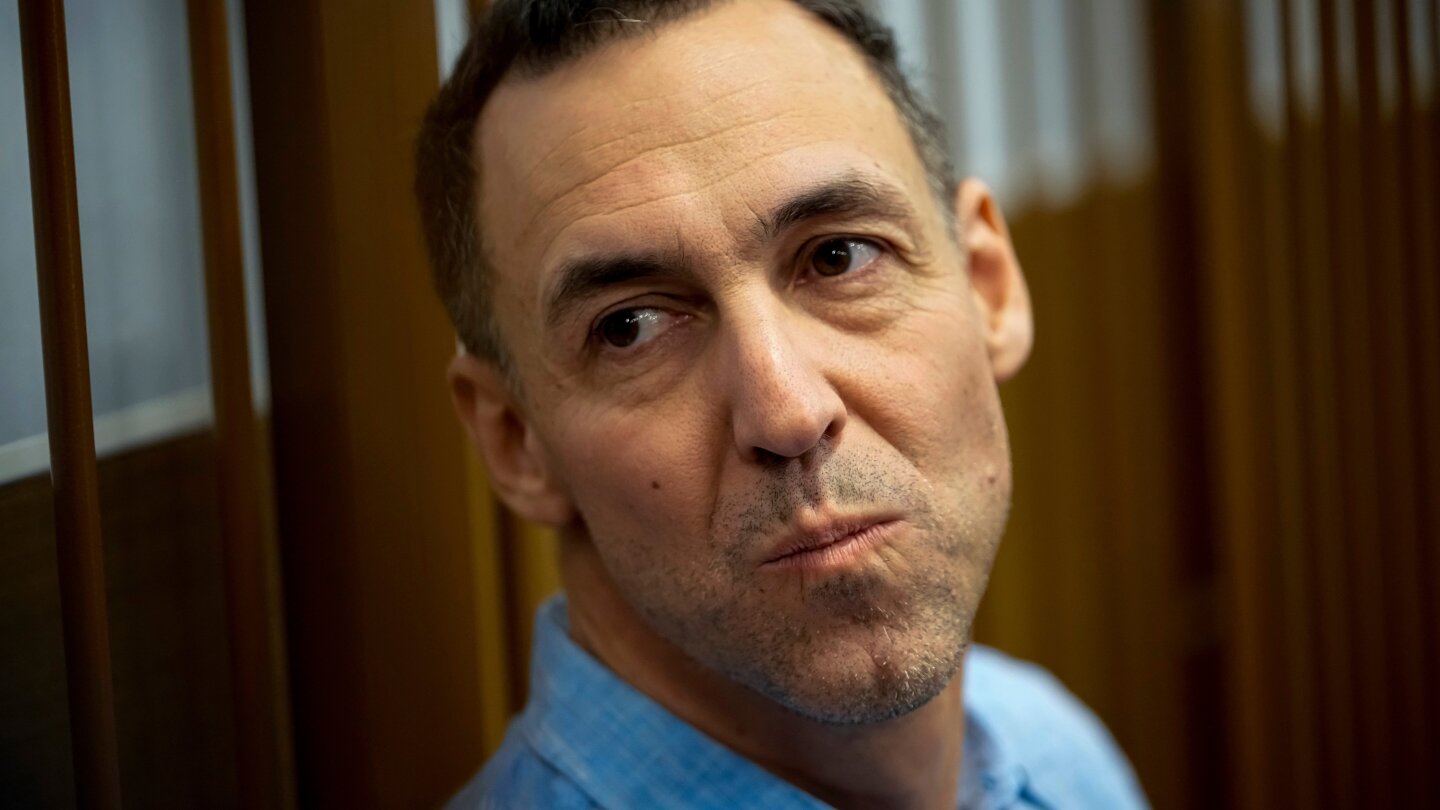
Laurent Vinatier, a French political scholar who was serving a three-year sentence in Russia, has been released and returned to France as part of a prisoner exchange, officials announced Thursday.
French President Emmanuel Macron confirmed Vinatier’s release on social media, expressing “relief” and thanking diplomatic staff for securing his freedom. “Laurent Vinatier is free and back in France,” Macron wrote on X.
In exchange, Russia received Daniil Kasatkin, a Russian basketball player who had been detained in France pending extradition to the United States, according to Russia’s Federal Security Service (FSB). Russian state news agency Tass released footage allegedly showing Vinatier being informed of his release, thanking officials in Russian, and boarding a plane after Kasatkin disembarked.
Vinatier was arrested in Moscow in June 2023 and accused of failing to register as a “foreign agent” while collecting information about Russia’s military activities that authorities claimed could harm national security. A Russian court convicted him and handed down a three-year prison sentence.
The case took a more serious turn last year when the FSB additionally charged Vinatier with espionage, an offense carrying a potential sentence of 10 to 20 years in Russian prison. The scholar has now been pardoned by Russian President Vladimir Putin, according to the FSB.
France’s Foreign Ministry reported that Vinatier was welcomed at the Quai d’Orsay by Foreign Minister Jean-Noël Barrot alongside the scholar’s parents. Barrot informed ambassadors of the release during a closed-door meeting at the time of Macron’s announcement.
The exchange comes after Putin claimed during his annual December news conference that he knew “nothing” about Vinatier’s case when questioned by a French journalist about the possibility of a presidential pardon or prisoner swap. Days later, Kremlin spokesman Dmitry Peskov revealed that Russia had made “an offer to the French” regarding Vinatier.
Vinatier works as an adviser for the Centre for Humanitarian Dialogue, a Swiss-based NGO that had previously stated it was doing “everything possible to assist” him following his arrest. The charges against him stemmed from legislation requiring individuals gathering military information to register with Russian authorities as foreign agents.
Human rights organizations have criticized this law as part of the Kremlin’s broader crackdown on independent media and political activists, designed to suppress criticism of Russia’s war in Ukraine.
Russia has increasingly detained foreigners—particularly Americans—on various criminal charges in recent years, later exchanging them for Russians held in Western countries. The most significant such exchange occurred in August 2023, when Moscow released American journalists Evan Gershkovich and Alsu Kurmasheva, along with Paul Whelan and several Russian dissidents, in a multinational agreement that freed 24 people in total.
Kasatkin, the basketball player freed in Thursday’s exchange, had been held at Fresnes prison near Paris since late June after his arrest at Charles de Gaulle airport at the request of U.S. authorities. According to his lawyer, Frédéric Belot, Kasatkin was accused of involvement in computer fraud, allegedly acting as a negotiator for hackers.
Belot, who represents both Vinatier and Kasatkin, defended his clients’ innocence. Regarding Kasatkin, the lawyer stated: “We believe that this computer was used remotely by these hackers without his knowledge. He is a basketball player and knows nothing about computer science.”
The attorney was equally emphatic about Vinatier, asserting that the French researcher is “totally innocent of the espionage acts that were alleged against him.”
The exchange represents the latest development in increasingly strained relations between Russia and Western nations, where detained citizens have become valuable bargaining chips in international diplomacy.
Fact Checker
Verify the accuracy of this article using The Disinformation Commission analysis and real-time sources.

12 Comments
The swap of a French scholar for a Russian basketball player seems like an unusual trade-off. I wonder what the broader strategic considerations were behind this decision.
Good point. Prisoner exchanges often involve complex geopolitical calculations beyond the individual cases. It will be interesting to see if this leads to further diplomatic engagement.
The release of the French scholar is welcome news, but the broader context of this case raises questions about how nations balance security concerns and individual rights. Nuance is key.
Well said. These types of cases require striking a balance between national interests and human rights. Ongoing dialogue and transparency will be important going forward.
While the details are still emerging, this prisoner swap highlights the importance of diplomatic solutions, even in contentious geopolitical situations. Careful statecraft is required.
Absolutely. Prisoner exchanges can be delicate, but they demonstrate a willingness to find common ground and de-escalate tensions. Hopefully this is a positive step forward.
Prisoner swaps can be a useful tool for defusing tensions, but they require careful negotiation. I hope this exchange helps improve France-Russia relations in a constructive way.
Agreed. Maintaining open communication channels, even in difficult times, is important for preventing further escalation. Let’s see if this leads to broader progress.
This case highlights the delicate balance between national security and individual rights. I hope the scholar was treated fairly and that both sides can learn from this experience.
Absolutely, transparency and due process are crucial, even in sensitive national security matters. Diplomacy requires nuance and compromise on all sides.
Interesting development with the prisoner swap between France and Russia. Geopolitics can be complex, but it’s good to see diplomacy at work, even in challenging times.
Agreed, these kinds of exchanges can help build trust and open communication channels, which is important for global stability.