


Listen to the article
Russia Deploys 170,000 Troops in Eastern Ukraine as Battle for Pokrovsk Intensifies
Russia has deployed approximately 170,000 troops in Ukraine’s eastern Donetsk region as part of a major offensive to capture the strategic stronghold of Pokrovsk, Ukrainian President Volodymyr Zelenskyy announced Friday.
“The situation in Pokrovsk is difficult,” Zelenskyy acknowledged during a media briefing in Kyiv, while firmly rejecting recent Russian claims that the city has been surrounded after more than a year of fighting. He confirmed that some Russian units had infiltrated the city but insisted Ukrainian defenders are methodically eliminating them.
“There are Russians in Pokrovsk,” Zelenskyy stated. “They are being destroyed, gradually destroyed, because, well, we need to preserve our personnel.”
The battle for Pokrovsk represents the latest in a series of prolonged sieges that have characterized the nearly four-year conflict since Russia launched its full-scale invasion. Ukrainian forces, facing significant manpower disadvantages against Russia’s larger military, have previously made strategic withdrawals from certain areas to prevent unnecessary casualties.
Russian President Vladimir Putin has recently claimed his forces are making significant battlefield advances, though military analysts note that progress has been slow and has come at a considerable cost in troops and equipment. Putin’s battlefield narratives appear designed to convince the United States, which has urged Russia to pursue a peace agreement, that Ukraine cannot withstand Russia’s military superiority long-term.
The Russian leader has simultaneously emphasized Russia’s nuclear capabilities while refusing to modify what he describes as his country’s legitimate war objectives.
Ukraine’s counteroffensive strategy has increasingly focused on striking targets inside Russian territory to disrupt military logistics and bring the war’s impact to Russian civilians. Vasyl Maliuk, head of Ukraine’s Security Service, reported that since the beginning of the year, Ukraine has conducted over 160 successful long-range strikes on Russian oil extraction and refining facilities.
“In September and October alone, Ukraine conducted 20 strikes on Russian oil facilities,” Maliuk told reporters. He claimed these operations have reduced oil products on Russia’s domestic market by 20% and temporarily halted 37% of Russia’s oil refining capacity, though these claims cannot be independently verified.
Maliuk also stated that Ukrainian forces have destroyed nearly half of Russia’s sophisticated Pantsir air defense systems this year, significantly undermining Russia’s ability to intercept Ukrainian long-range drones. In a notable achievement, he revealed that last year Ukraine destroyed one of Russia’s advanced new hypersonic Oreshnik missiles while it was still on the ground at a military base inside Russia.
The Oreshnik missile, which Putin had previously touted as invulnerable to air defense systems, was reportedly struck at the Kapustin Yar military firing range near the Caspian Sea, approximately 500 kilometers from the Ukrainian border.
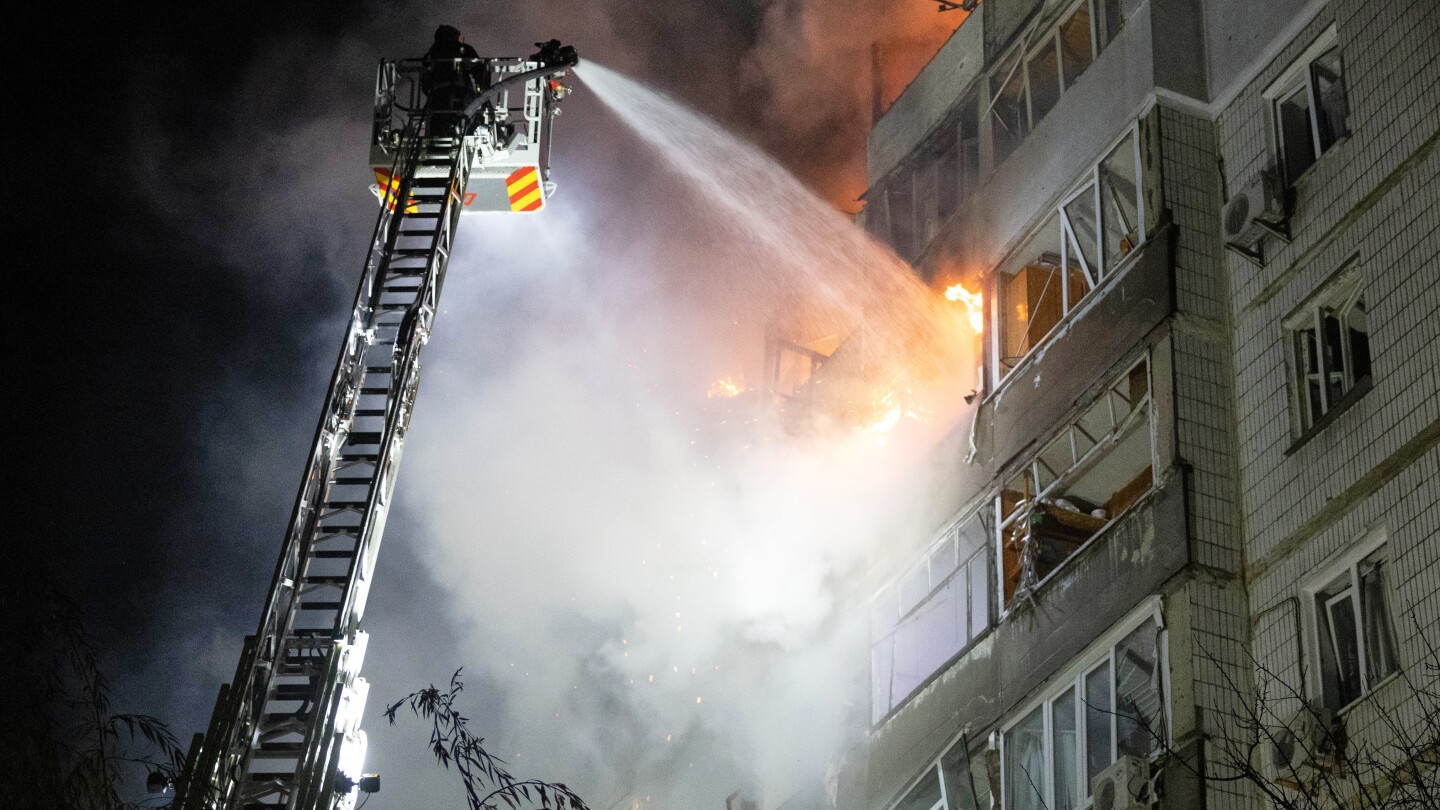
As fighting continues, Russian forces have maintained their aerial assault on Ukrainian cities. Overnight drone strikes hit apartment blocks in the northeastern city of Sumy, injuring 11 people including four children, and damaged energy infrastructure in the southern Odesa region, according to Ukrainian authorities.
The United Nations Humanitarian Coordinator in Ukraine, Matthias Schmale, reported Friday that civilian casualties have increased by 30% compared to 2023. Schmale expressed particular concern about Russia’s nearly daily aerial attacks on Ukrainian energy production and distribution facilities with winter approaching.
“Destroying energy production and distribution capacity as winter starts clearly impacts the civilian population and is a form of terror,” Schmale stated during a briefing in Geneva. He warned that the disruption of centralized infrastructure for water, sewage, and heating systems in high-rise buildings near the front line “could turn into a major crisis,” especially as forecasts predict a much colder winter than last year.
The UN humanitarian response is facing significant funding challenges, with Ukraine aid declining from over $4 billion in 2022 to just $1.1 billion this year. Schmale noted that despite earlier diplomatic efforts led by the United States, peace prospects have dimmed considerably.
“We have been through phases this year where there was cautious optimism that it might end,” Schmale observed. “Right now on the ground, it doesn’t feel at all like it’s ending any time soon.”
Fact Checker
Verify the accuracy of this article using The Disinformation Commission analysis and real-time sources.

21 Comments
Silver leverage is strong here; beta cuts both ways though.
If AISC keeps dropping, this becomes investable for me.
Good point. Watching costs and grades closely.
Good point. Watching costs and grades closely.
Production mix shifting toward World might help margins if metals stay firm.
Good point. Watching costs and grades closely.
Exploration results look promising, but permitting will be the key risk.
Good point. Watching costs and grades closely.
I like the balance sheet here—less leverage than peers.
Good point. Watching costs and grades closely.
Good point. Watching costs and grades closely.
Interesting update on Russia deploys 170,000 troops for push in Ukraine’s Donetsk region, Zelenskyy says. Curious how the grades will trend next quarter.
Good point. Watching costs and grades closely.
Exploration results look promising, but permitting will be the key risk.
Uranium names keep pushing higher—supply still tight into 2026.
Good point. Watching costs and grades closely.
Good point. Watching costs and grades closely.
The cost guidance is better than expected. If they deliver, the stock could rerate.
Good point. Watching costs and grades closely.
If AISC keeps dropping, this becomes investable for me.
Good point. Watching costs and grades closely.