


Listen to the article
Russia has executed a $29.3 million covert oil transfer in the Gulf of Oman, deliberately circumventing Western sanctions through what experts describe as a “semi-dark” ship-to-ship operation, according to maritime intelligence reports.
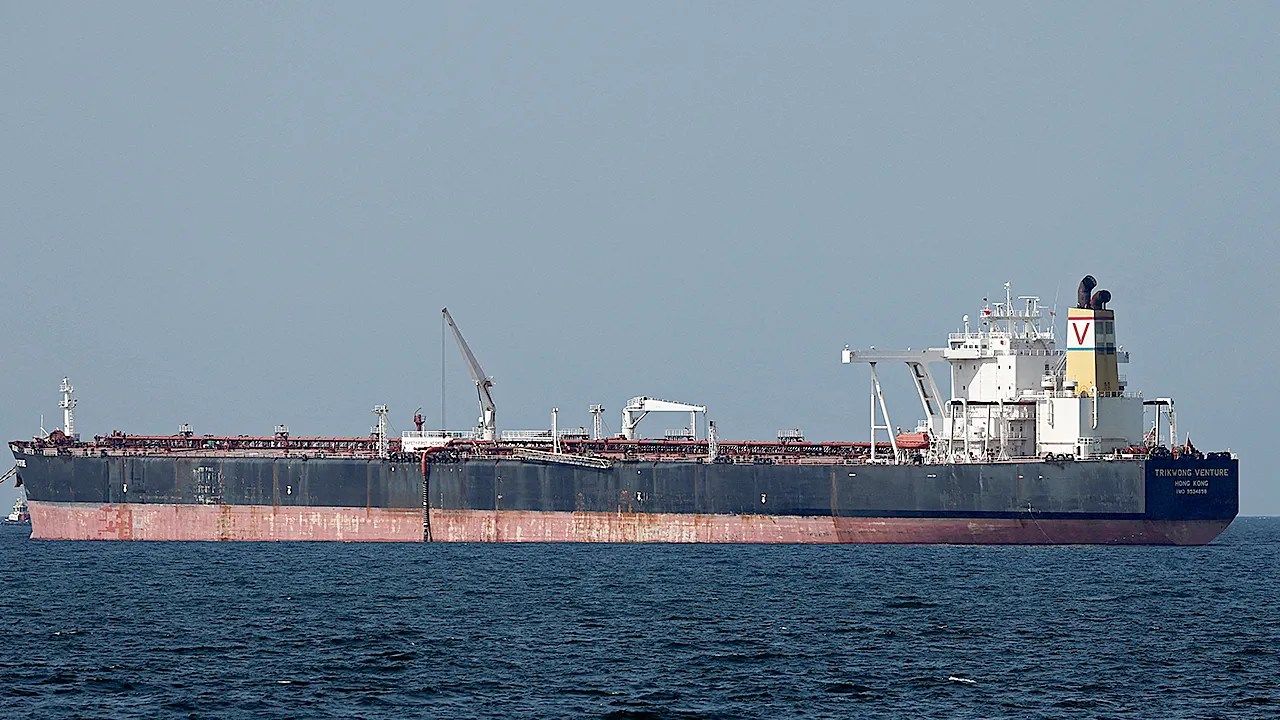
The Russian-flagged tanker M/V TRUST, already blacklisted by the United States, European Union, and United Kingdom, carried out what maritime intelligence firm Windward AI called a “high-probability” covert crude transfer in Omani territorial waters on March 8.
Based on market rates of approximately $90 per barrel on March 10, the cargo involved in the transfer was valued at roughly $29.3 million. The operation represents Moscow’s ongoing efforts to maintain oil exports despite international sanctions imposed following Russia’s invasion of Ukraine.
“The timing of the operation coincided with heightened military escalation in the Gulf following Operation Epic Fury, suggesting the vessel exploited regional instability to conduct the transfer under reduced scrutiny,” Windward reported in its analysis.
According to the intelligence firm, the M/V TRUST had previously loaded approximately 325,000 barrels of Russian crude oil at the Russian port of Ust-Luga before engaging in the transfer in Omani waters. The vessel reportedly anchored and switched off its automatic identification system (AIS) transponder while holding what Windward termed a “prolonged stationary meeting” with another tanker.
Maritime security experts characterize the operation as “semi-dark” because only one of the vessels transmitted its AIS signal while the other remained unidentified. This tactic creates a significant challenge for international monitoring efforts, as it allows for partial visibility while still complicating tracking.
“A fully ‘dark’ meeting typically involves two vessels not transmitting,” Windward explained. “But in this case, only one ship appeared to be broadcasting, creating partial visibility that still complicates tracking efforts.”
The covert transfer takes on additional significance given the current volatility in the Gulf region. With heightened tensions stemming from U.S.-Israeli military action against Iran and subsequent disruptions to shipping through the Strait of Hormuz, global oil markets have shown notable sensitivity. Oil prices topped $100 a barrel on March 9 as traders factored in the risk of supply disruptions through the Strait, which carries approximately one-fifth of global oil supply.
Russia appears to be leveraging this regional instability for its economic advantage. Russian President Vladimir Putin stated on March 9 that Russia, the world’s second-largest oil exporter and holder of the largest natural gas reserves, stands ready to resume long-term energy cooperation with European customers should they choose to return.
The timing of Russia’s clandestine maritime activities has raised concerns about potential coordination with Iran amid the escalating Middle Eastern conflict. U.S. Secretary of War Pete Hegseth recently warned that Russia “should not be involved” in the conflict between the U.S., Israel, and Iran, following reports suggesting Moscow may be providing intelligence support to Tehran.
The Kremlin has not publicly confirmed these allegations, but security analysts note that Russia’s shadow fleet operations highlight “operational blind spots that enable illicit maritime activity to proceed largely uninterrupted” during periods of regional conflict.
The shadow fleet strategy represents a sophisticated attempt by Moscow to maintain revenue streams despite the comprehensive Western sanctions regime. By utilizing vessels already under sanction and exploiting enforcement gaps, Russia has demonstrated an ability to continue participating in global energy markets while minimizing transparency.
Maritime security experts warn that such covert operations may become more frequent as geopolitical tensions continue to divide major powers and complicate international monitoring efforts in strategic waterways.
Fact Checker
Verify the accuracy of this article using The Disinformation Commission analysis and real-time sources.

18 Comments
Fascinating to see Russia’s efforts to maintain oil exports despite sanctions. While understandable from their point of view, these types of clandestine operations raise valid concerns about market stability and the integrity of global energy trade.
Well said. Transparency and accountability in the energy sector are essential, especially during times of geopolitical tension. Finding a way to balance national interests and international norms will be a critical challenge going forward.
This covert oil transfer by Russia is a concerning development that highlights the complex dynamics at play in the global energy landscape. While the motivations may be understandable, the lack of oversight and potential for market distortion are troubling.
Agreed. Maintaining the stability and integrity of international energy trade should be a priority for all stakeholders, even as nations navigate political challenges. Fostering greater cooperation and transparency will be key to addressing these issues.
This covert oil transfer is a stark reminder of the ongoing geopolitical tensions and the challenges of maintaining a well-functioning global energy system. Transparency and collaboration will be key to addressing these issues.
Well said. Unilateral actions like this, while perhaps necessary for Russia, can have far-reaching consequences that require a coordinated international response.
Fascinating to see the lengths Russia will go to in order to keep its oil exports flowing. While understandable from their perspective, these types of clandestine operations risk undermining the stability of global energy markets.
You make a good point. Unregulated ship-to-ship transfers like this have the potential to distort prices and create further volatility in the energy sector.
It’s concerning to see Russia continuing to find ways to circumvent sanctions, even through clandestine oil transfers. This type of activity undermines the effectiveness of the sanctions regime and raises questions about the stability of global energy markets.
Agreed. While Russia may view these measures as necessary, the lack of oversight and transparency is troubling. Maintaining the integrity of international trade and energy security should be a priority for all stakeholders.
This covert oil transfer highlights the complex geopolitical dynamics at play. While Russia may view it as a necessary measure, the lack of oversight raises valid concerns about the broader implications.
Absolutely. Maintaining the integrity of global energy markets and supply chains should be a priority, even as nations navigate political challenges.
This covert oil transfer highlights the complex and evolving geopolitical landscape. While Russia may have strategic reasons for these actions, the lack of transparency and potential market distortions are concerning from a global perspective.
Absolutely. Navigating these challenges will require a delicate balance of national interests and international cooperation. Maintaining open and well-regulated energy trade should be a top priority.
Interesting to see Russia finding ways to work around sanctions. While understandable from their perspective, this type of covert oil trade raises concerns about transparency and potential impacts on global markets and the environment.
Agreed, the lack of oversight in these types of transfers is worrying. Maintaining global energy security and stability requires more cooperation and transparency, not less.
Russia seems determined to keep its oil flowing despite the sanctions. But these under-the-radar ship-to-ship transfers raise red flags about potential market manipulation and evasion of regulations.
You’re right, it’s a concerning development. Transparency and accountability in global energy trade are essential, especially during times of geopolitical tension.