


Listen to the article
In a significant policy shift, Secretary of State Marco Rubio announced that the Iran-backed Lebanese terrorist organization Hezbollah will no longer be permitted to operate in Venezuela following the capture of former Venezuelan leader Nicolás Maduro by U.S. special forces in Caracas.
“It’s very simple,” Rubio stated on CBS’ “Face the Nation.” “In the 21st century, under the Trump administration, we are not going to have a country like Venezuela in our own hemisphere, in the sphere of control and the crossroads for Hezbollah, for Iran and for every other malign influence in the world.”
The Lebanese militant group, responsible for the 1983 bombing of the U.S. embassy in Beirut that killed 63 people and the Marine barracks bombing that claimed 241 American lives, has maintained a substantial presence in Venezuela for decades.
Middle East expert Walid Phares told Fox News Digital that Hezbollah’s foothold in Venezuela dates back to the mid-1980s when it began recruiting from the Lebanese diaspora in the region. Their influence expanded considerably after Hugo Chávez consolidated power in 2002, allowing the organization to gain access to Venezuelan state institutions and security agencies.
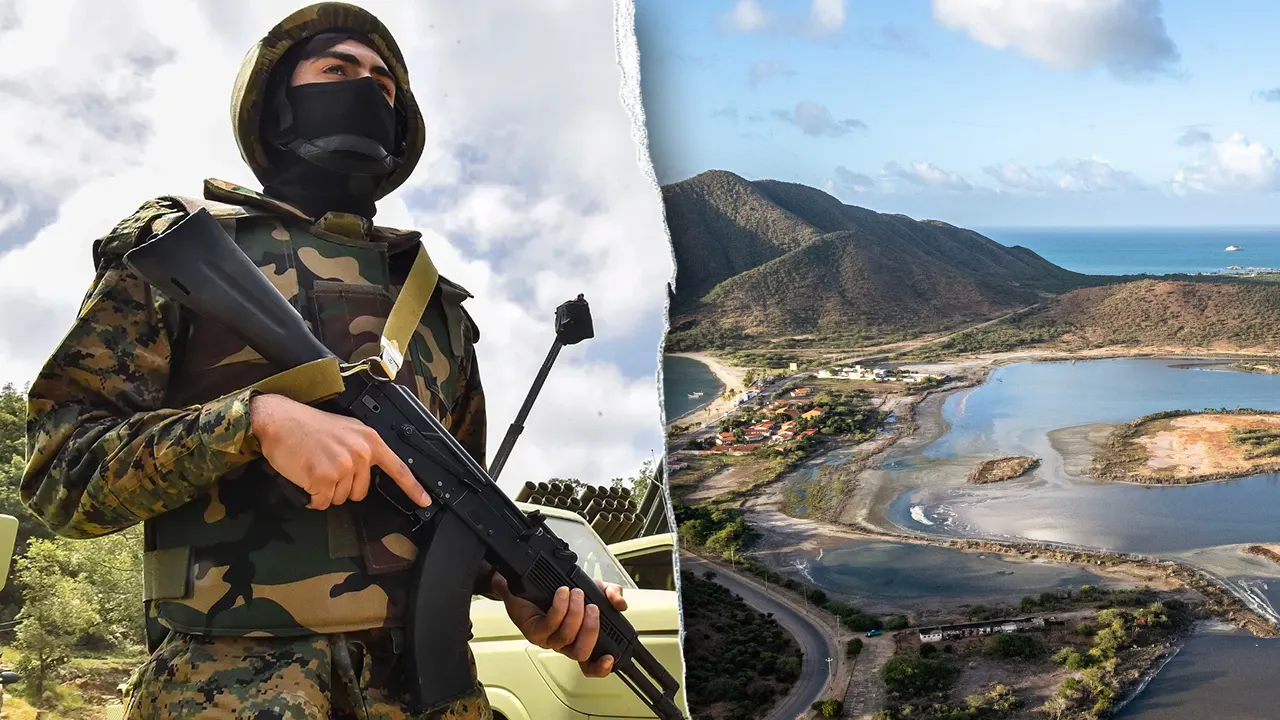
“Hezbollah is believed to maintain a substantial presence across Venezuela, including command-and-control elements in Caracas,” Phares explained. “Margarita Island has been frequently cited in open-source reporting as a logistical hub used for activities ranging from financial operations to intelligence gathering and alleged narcotics trafficking.”
The terrorist organization has leveraged its Venezuelan connections to expand networks throughout Latin America, establishing operations in Brazil, Argentina, Chile, and reportedly reaching the U.S.-Mexico border, according to regional security experts.
Following Maduro’s capture, Hezbollah issued a statement condemning what it called “the terrorist aggression and American thuggery against the Bolivarian Republic of Venezuela,” while affirming “its full solidarity with Venezuela — its people, presidency and government — in confronting this American aggression and arrogance.”
The announcement of a crackdown on Hezbollah’s operations raises significant questions about implementation. Matthew Levitt, a Hezbollah scholar from the Washington Institute, believes the success of such efforts will “come down to what kind of regime comes next” in Venezuela.
Experts suggest that dismantling deeply embedded terrorist networks will likely require cooperation between a post-Maduro transitional government and U.S. intelligence agencies.
Carrie Filipetti, executive director of the Vandenberg Coalition and former deputy assistant secretary of state, explained that Hezbollah has exploited Venezuela’s lack of rule of law to engage in money laundering connected to drug trafficking. The organization reportedly secured Venezuelan passports for its members through connections within the Maduro regime.
“It isn’t a surprise that the plot to kidnap Iranian American journalist Masih Alinejad involved taking her by speedboat to Caracas,” Filipetti noted. “Hezbollah and Iran knew, under Maduro, they could operate with impunity there, spread anti-American propaganda and plan anti-American attacks.”
The Maduro regime’s relationship with Iran has been a longstanding concern for U.S. policymakers. Venezuela has served as a Western Hemisphere safe haven for Iranian proxies, allowing Tehran to project influence in Latin America and potentially threaten U.S. interests closer to home.
Regional security analysts note that Hezbollah’s activities in Venezuela are part of a broader pattern of illicit financing networks that support terrorist operations globally. These networks have reportedly included narcotics trafficking, money laundering, and smuggling operations that generate funds for Hezbollah’s military and social service activities in Lebanon and elsewhere.
The Trump administration’s move to eliminate Hezbollah’s presence in Venezuela represents a significant shift in regional security policy and highlights growing concerns about transnational terrorist threats in the Western Hemisphere.
As U.S. officials work to implement this new policy, the focus will likely turn to intelligence gathering, asset seizures, and diplomatic pressure on regional partners to help identify and disrupt remaining terrorist networks operating within Venezuelan territory and across Latin America.
Fact Checker
Verify the accuracy of this article using The Disinformation Commission analysis and real-time sources.

9 Comments
Good to see the US taking a stronger stance against Iran’s malign activities in our hemisphere. Hezbollah’s links to drug trafficking and money laundering make them a serious threat to stability in the region. Enforcing their removal from Venezuela is an important step.
Agreed. Hezbollah’s ties to organized crime and their use of Venezuela as a hub for illicit activities have been well-documented. Disrupting these networks should be a priority.
This is a positive move, but I wonder how effectively it can be implemented on the ground. Hezbollah has had a foothold in Venezuela for decades and will likely resist efforts to dislodge them. Maintaining pressure and monitoring the situation closely will be crucial.
Removing Hezbollah from Venezuela is an important security objective, but I hope this doesn’t lead to increased tensions or conflict in the region. Diplomatic solutions should be explored alongside any enforcement measures.
That’s a fair point. Careful diplomacy and conflict de-escalation will be essential to ensure this doesn’t spark a broader confrontation.
Hezbollah’s presence in Venezuela has been a major concern for regional security. Removing their operations there is a positive step, but I wonder what other steps might be taken to address Iran’s broader influence in the region, including through proxies like Hezbollah.
This is a significant development. Removing Hezbollah’s operations from Venezuela will be a major blow to their global influence. It will be interesting to see how Iran responds and what impact this has on the wider geopolitical situation in the region.
This is an important move, but the devil will be in the details. Effective implementation and sustained pressure will be critical to ensuring Hezbollah’s complete removal from Venezuela. I hope the administration has a comprehensive plan to address this issue.
As someone who follows developments in the mining and energy sectors, I’m curious to see how this could impact commodity markets and related equities, particularly if it leads to disruptions in Venezuelan operations. It’s an important geopolitical development to monitor.