


Listen to the article
Congressional Leaders Question U.S. Military Action in Venezuela Amid Growing Concerns
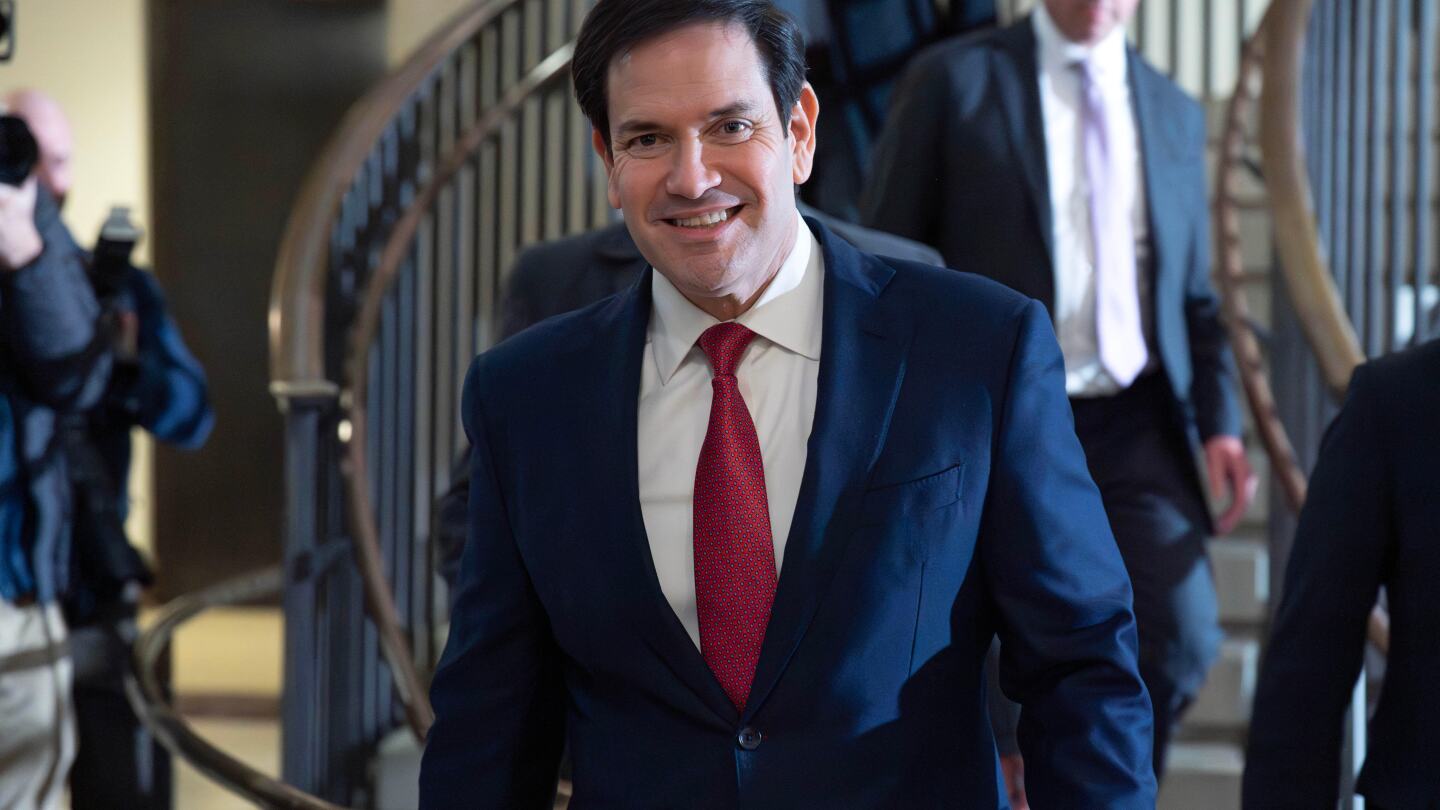
Secretary of State Marco Rubio and top Trump administration officials faced intense questioning from congressional leaders during a closed-door Capitol briefing Monday regarding the recent military operation in Venezuela. The meeting highlighted mounting bipartisan concerns about President Donald Trump’s decision to forcibly remove Venezuelan President Nicolás Maduro from power without proper congressional consultation.
Republican leaders largely supported Trump’s actions, while many Democrats emerged with significant questions about the administration’s strategy and long-term vision for Venezuela’s future.
“We don’t expect troops on the ground,” House Speaker Mike Johnson told reporters after the two-hour briefing. “This is not a regime change. This is demand for a change in behavior. We don’t expect direct involvement in any other way beyond just coercing the new, the interim government, to get that going.”
Johnson suggested economic pressure would be the primary lever for change. “We have a way of persuasion — because their oil exports as you know have been seized, and I think that will bring the country to a new governance in very short order.”
Democratic lawmakers expressed far less confidence in the administration’s approach. Senator Jeanne Shaheen of New Hampshire, ranking Democrat on the Senate Foreign Relations Committee, stated bluntly: “There are still many more questions that need to be answered.”
Representative Gregory Meeks of New York, the top Democrat on the House Foreign Affairs Committee, raised immediate practical concerns: “What is the cost? How much is this going to cost the United States of America?”
Congressional Leaders Left in the Dark
The briefing came days after the surprise military action that few congressional leaders knew about until after it was underway—a remarkable breach of protocol given Congress’s constitutional authority over matters of war. Defense Secretary Pete Hegseth, Joint Chiefs of Staff chairman Air Force Gen. Dan Caine, and Attorney General Pam Bondi, who brought drug trafficking charges against Maduro, participated in the classified session.
Lawmakers questioned numerous aspects of the operation, from potential U.S. troop involvement to the role of Venezuelan opposition leadership, which appears to have been sidelined as Maduro ally Delcy Rodriguez assumed the interim presidency.
Senator Mark Warner, top Democrat on the Intelligence Committee, revealed the continuing uncertainty about Venezuela’s political situation. When asked if he had more clarity about who is actually running Venezuela following the briefing, Warner responded: “I wish I could tell you yes, but I can’t.”
The administration’s failure to include certain committee chairs also drew criticism. Leaders of the Senate Judiciary Committee—Republican chairman Chuck Grassley and ranking Democrat Richard Durbin—argued they should have been included, given their oversight of the Justice Department.
War Powers Resolution Heads to Senate Vote
A war powers resolution that would prohibit U.S. military action in Venezuela without congressional approval is headed for a Senate vote this week, highlighting the constitutional tensions raised by Trump’s unilateral action.
Senate Democratic Leader Chuck Schumer warned that Trump’s Venezuela intervention signals a concerning shift in foreign policy as the president publicly expresses interest in Colombia, Cuba, and Greenland. “The American people did not sign up for another round of endless wars,” Schumer said.
After the briefing, Schumer added that while the session was “extensive and long,” it “posed far more questions than it answered.”
Republicans remain divided on the issue, reflecting deepening schisms within Trump’s “Make America Great Again” movement. The president, who campaigned on an “America First” platform, now faces criticism from lawmakers in both parties who seek to avoid foreign entanglements after the prolonged conflicts in Iraq and Afghanistan.
Uncertain Path Forward
The administration’s next steps in Venezuela remain unclear, including plans for democratic elections. Trump’s team had been in talks with Delcy Rodríguez, who replaced Maduro and offered to collaborate with the Trump administration.
Meanwhile, Trump has dismissed Venezuelan opposition leader María Corina Machado, who recently won the Nobel Peace Prize for her struggle for democratic transition. Trump claimed Machado lacks the “support” or “respect” to run the country.
Senator Rick Scott of Florida, a Trump ally, countered this assessment, noting he plans to speak with Machado soon. “She’s very popular if you look at what happened in the last election,” Scott said. “She eventually, I think, will be the president of Venezuela. This is going to be a process to get to a democracy. It’s not easy.”
Senator Rand Paul of Kentucky, who has criticized Trump’s campaign of boat strikes against suspected drug smugglers that have killed more than 115 people, warned of dangerous precedents being set. “There are probably a dozen leaders around the world who the U.S. could say are in violation of international law or human rights law,” Paul told reporters. “And we have never gone in and plucked them out of the country. It sets a very bad precedent and it’s unconstitutional. There’s no way you can say bombing a capital and removing the president of a foreign country is not an initiation of war.”
Fact Checker
Verify the accuracy of this article using The Disinformation Commission analysis and real-time sources.

9 Comments
The bipartisan concerns expressed by congressional leaders are understandable. Any U.S. intervention in Venezuela, even if limited, carries significant risks. I hope the administration can articulate a clear, thoughtful strategy that prioritizes a peaceful, democratic transition.
Seizing oil exports is a powerful economic lever, but the administration must be mindful of the potential humanitarian consequences. Ensuring aid and support for the Venezuelan people should be a top priority alongside pressuring Maduro.
Interesting developments in Venezuela. It’s a complex situation with valid concerns on all sides. I’m curious to see how the administration navigates this without escalating the conflict further.
Agreed, the goal seems to be pressuring Maduro through economic means rather than direct military action. Sanctions can be a powerful tool, but must be carefully applied to avoid harming the Venezuelan people.
The seizure of Venezuela’s oil exports is a significant move. While it may increase pressure on Maduro, we have to consider the potential humanitarian impacts. I hope the administration has a clear plan to support the Venezuelan people through this transition.
Absolutely, the human toll has to be the top priority. Economic sanctions are a blunt instrument – they need to be paired with a comprehensive aid and recovery strategy for Venezuela.
The administration’s focus on coercing behavioral change rather than outright regime change seems prudent. But the details and long-term vision will be critical. I hope they can articulate a clear pathway to a stable, democratic Venezuela.
This is a delicate balancing act – applying enough pressure to force change, while avoiding actions that could destabilize the region or harm innocent civilians. I’ll be watching closely to see how the administration navigates this challenge.
It’s good to see bipartisan engagement on this issue, even if there are still differences. Maintaining a unified front will be crucial as the situation evolves. Thoughtful diplomacy and restraint will be key to avoid further escalation.