


Listen to the article
Indigenous Protesters Block UN Climate Conference Entrance in Brazilian Amazon
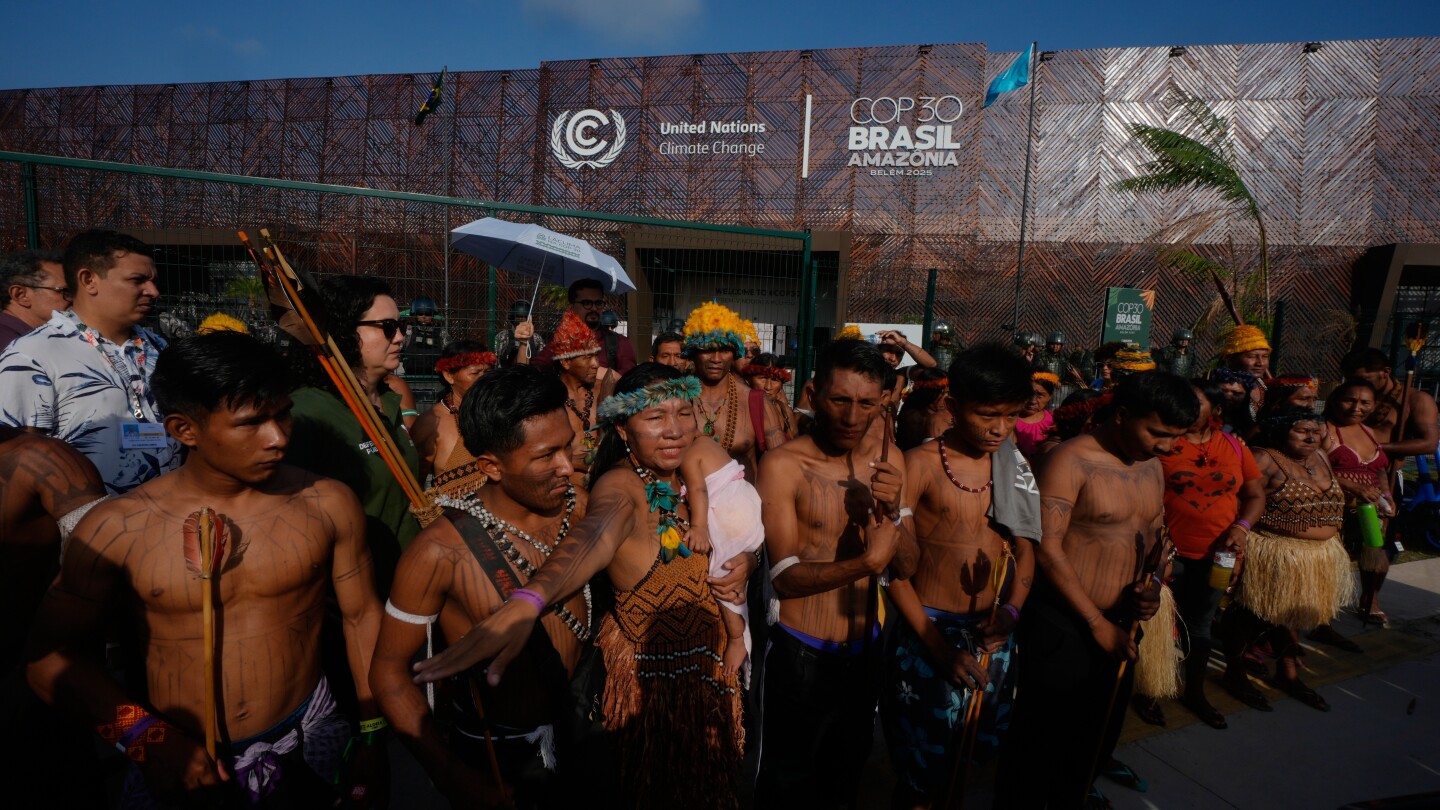
About 100 Indigenous protesters blocked the main entrance to the United Nations climate conference (COP30) in Belem, Brazil, for 90 minutes on Friday in a peaceful demonstration that highlighted growing tensions at the event. The protesters, primarily from the Munduruku Indigenous group, formed a human chain around the entrance as the day’s meetings began, chanting “No one enters, no one leaves.”
The standoff ended only after a lengthy discussion with climate talks president André Corrêa do Lago, who was seen cradling a protester’s baby while engaging with the group. Throughout the demonstration, Brazilian military personnel maintained positions around the venue but no physical altercations were reported.
This marked the second protest disruption at COP30 in four days, at a conference that ironically had been promoted as celebrating and empowering native peoples.
“President Lula, we are here in front of COP because we want you to listen to us. We refuse to be sacrificed for agribusiness,” the Munduruku Ipereg Ayu Movement stated in a written release. “Our forest is not for sale. We are the ones who protect the climate, and the Amazon cannot continue to be destroyed to enrich large corporations.”
The Munduruku leaders presented specific demands to the Brazilian government, including revoking plans for commercial river development, canceling a grain railway project they fear will accelerate deforestation, establishing clearer demarcations of Indigenous territories, and rejecting deforestation carbon credits.
During the blockade, which began around 7:30 a.m., conference organizers quickly rerouted participants through side entrances. UN staff worked to relocate metal detectors as hundreds of delegates formed long lines at alternative access points. The main entrance reopened at 9:37 a.m. following the conclusion of discussions between protesters and do Lago.
The United Nations Framework Convention on Climate Change reassured participants that there was “no danger” from what they described as a peaceful demonstration.
Paolo Destilo, representing the environmental group Debt for Climate, joined a secondary human chain encircling the protesters, expressing his support for Indigenous communities. “This is worth any delays to the conference,” he said. “If this is really to be Indigenous peoples’ COP, like officials keep saying, these types of demonstrations should be welcomed at COP30.”
Veteran anti-fossil fuel activist Harjeet Singh contextualized the protest within the broader history of climate negotiations. “We should look at this as a message and signal from Indigenous people, who have not seen any progress over the past 33 years of COP, that all these conversations have not led to actions,” he said. “They are the custodians of biodiversity and climate and clearly, they are not satisfied with how this process is doing.”
Friday’s demonstration followed a more contentious incident on Tuesday night when Indigenous demonstrators rushed the entrance to the main venue, clashing with security and resulting in minor injuries to two guards.
Protest activity appears to be intensifying as the conference approaches its midpoint. Saturday traditionally sees the largest demonstrations during United Nations climate talks, and observers expect significant mobilization this weekend.
The tensions at COP30 highlight the complex dynamics between Indigenous communities, who are often at the frontlines of environmental protection, and the formal climate negotiation processes that have struggled to deliver meaningful action over three decades of international climate talks.
Fact Checker
Verify the accuracy of this article using The Disinformation Commission analysis and real-time sources.

9 Comments
It’s good to see the protesters engaging directly with the conference president. Open dialogue and finding compromise solutions will be crucial here. The stakes are so high when it comes to protecting the Amazon and addressing climate change, so all sides need to be willing to listen and work together.
It’s concerning to see protests disrupting the climate talks, but I appreciate the protesters’ commitment to making their concerns known. The Amazon is a critical global resource, and the rights and needs of indigenous communities there have to be central to any solutions. The conference organizers have their work cut out for them.
It’s concerning to hear about tensions and disruptions at the climate conference. Peaceful protest is an important right, but the talks need to be able to proceed productively as well. Hopefully the organizers can find a way to balance these competing needs.
You make a good point. It’s a delicate balance, but the conference organizers should make sincere efforts to include and address the concerns of indigenous groups. Their land and livelihoods are deeply impacted by climate change.
The article mentions this is the second protest disruption at COP30 in just four days. That’s quite a lot of disruption for an event of this importance. While I support the right to protest, I hope the organizers can find ways to give indigenous voices a seat at the table without derailing the whole conference.
The tensions highlighted here underscore how complex and contentious the climate talks can be. There are so many competing interests and priorities at play. I hope the conference organizers can find ways to meaningfully include indigenous perspectives while also keeping the talks on track to deliver real progress.
Blocking the conference entrance is a bold tactic, but I can understand the protesters’ frustration if they feel their voices aren’t being heard. Hopefully the conference president’s efforts to engage directly can help de-escalate the situation and pave the way for more constructive dialogue.
Peaceful protest is a valid way for marginalized groups to make their voices heard, but the climate talks are also vitally important. The organizers will need to find ways to balance these competing needs and ensure all stakeholders have a meaningful seat at the table. It’s a tough challenge, but the stakes are too high not to try.
Interesting to see protesters at the COP30 climate talks in Brazil. Indigenous groups have a lot at stake in these negotiations and their voices deserve to be heard. Hope the talks can find ways to meaningfully address their concerns around protecting the Amazon.