


Listen to the article
Venezuela Seizure Sparks Fears in Iran as Officials Worry About Similar US Action
DUBAI, United Arab Emirates — As a fresh wave of protests challenges Iran’s theocratic government, an unexpected topic has captured national attention: the fate of Venezuelan President Nicolás Maduro, who was seized by U.S. forces half a world away.
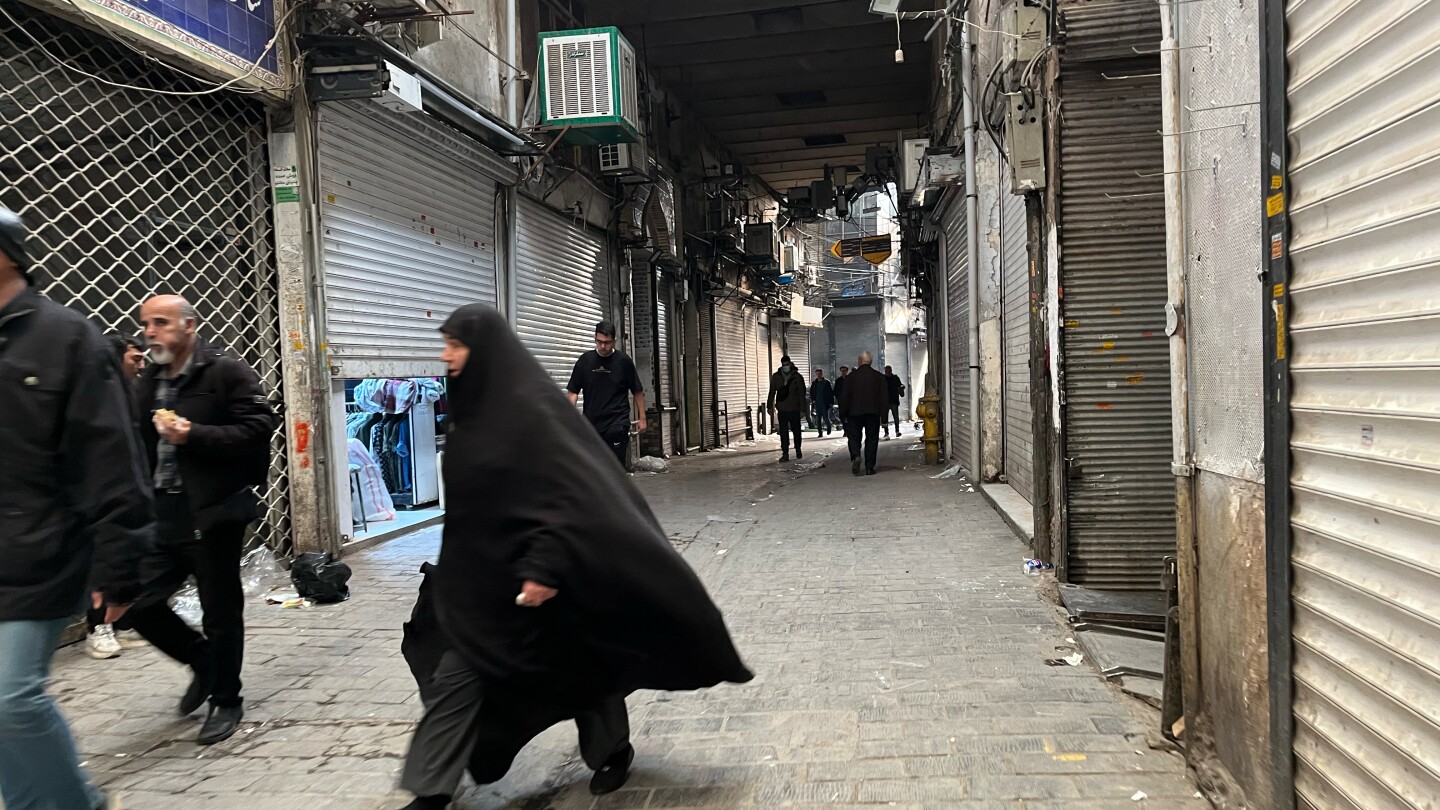
Since the weekend operation that led to Maduro’s capture, Iranian state media and officials have denounced the U.S. action. But on Tehran’s streets and even in some official circles, Iranians are quietly asking a more unsettling question: Could Iran’s leadership, including 86-year-old Supreme Leader Ayatollah Ali Khamenei, face a similar fate?
“God bless our leader, we should be careful too,” said Saeed Seyyedi, a 57-year-old teacher in Tehran. “The U.S. has always been after plots against Iran, especially when issues like oil, Israel are part of the case. In addition, it can be complicated when it is mixed with the Russia-Ukraine war, the Lebanese (group) Hezbollah and drug accusations.”
These concerns emerge against a backdrop of heightened tensions. Iran is still reeling from a 12-day Israeli military campaign in June that killed numerous top military officials and nuclear scientists. The U.S. also bombed Iranian nuclear enrichment facilities during that period. Intelligence sources suggest Khamenei went into hiding for his own protection.
The paranoia has reached Iranian state media, where an analyst claimed without evidence that the U.S. and Israel had previously planned to kidnap Iranian officials with a team of dual-national Iranians. On Sunday, prominent Ayatollah Mohammad Ali Javedan further stoked fears during prayers at Tehran University, saying, “Someone said he had a bad dream that the leader’s life is in danger. Please pray.”
Military analysts, however, note significant differences between the two scenarios. Iran, roughly twice the size of Venezuela, possesses a more robust military and sophisticated security apparatus. The U.S. also carries the psychological burden of Operation Eagle Claw, its failed 1980 mission to rescue American hostages in Tehran.
“In the grand-strategy scheme of things, they need to think about the day after,” said Farzin Nadimi, senior fellow at the Washington Institute for Near East Policy. “Iran is a much more complex political situation. They have to calculate the costs and benefits.”
The Revolutionary Guard, a powerful paramilitary organization answering only to Khamenei, could respond to any U.S. action with assassinations, cyberattacks, and disruptions to shipping in the Middle East. Perhaps most critically, Iran possesses fissile nuclear material that complicates any military calculation.
Israeli officials have seized on the moment. Opposition leader Yair Lapid posted on social media: “The regime in Iran should pay close attention to what is happening in Venezuela.” Prime Minister Benjamin Netanyahu referenced the protests in Iran, suggesting “the Iranian people are taking their fate into their own hands.”
Hours before the Venezuela operation, former U.S. President Donald Trump warned Iran that the U.S. “will come to their rescue” if Tehran “violently kills peaceful protesters.” Iranian Foreign Ministry spokesman Esmail Baghaei condemned these statements as “incitement to violence, terrorism and killing.”
Some U.S. politicians have drawn explicit connections between the two nations. Republican U.S. Representative Marjorie Taylor Greene claimed the Maduro operation was “a clear move for control over Venezuelan oil supplies that will ensure stability for the next obvious regime change war in Iran.” Senator Lindsey Graham appeared on television wearing a “Make Iran Great Again” hat, saying, “I pray and hope that 2026 will be the year that we make Iran great again.”
Even Saudi Arabia, which reached a Chinese-mediated détente with Iran in 2023 after years of hostility, appears to be contemplating the implications. Ghassan Charbel, editor-in-chief of the Saudi-owned Asharq Al-Awsat newspaper, wrote: “How devastating it must be for Iran’s supreme leader to hear of Maduro’s abduction at the hands of American forces.”
As international tensions continue to rise, many observers warn about the dangerous precedent the Venezuela operation might set for global diplomacy and international norms, regardless of which nation might be targeted next.
Fact Checker
Verify the accuracy of this article using The Disinformation Commission analysis and real-time sources.

11 Comments
The US raid on Venezuela is a worrying precedent that could embolden Washington to take more assertive action against US adversaries like Iran. Tehran will be closely analyzing the situation and considering how to best protect its leadership and national interests.
With the domestic unrest in Iran, the government there must be on high alert for any potential US efforts to exploit the situation. Maintaining stability and security will be a top priority.
This is a concerning situation, with the US action in Venezuela sparking fears in Iran. It’s understandable that Iranians would be wary of potential similar US interventions, given the geopolitical tensions and complexities involved.
Agreed, the US has a history of pursuing its interests aggressively, especially when oil and other strategic resources are at stake. Iran will likely be closely watching developments and looking to shore up its defenses.
The US action in Venezuela has understandably raised alarms in Iran, given the longstanding tensions and animosity between the two countries. Tehran will be studying this case closely to assess its vulnerabilities and take steps to protect its leadership and national interests.
The US action in Venezuela is a worrying precedent that could embolden Washington to take more assertive steps against its adversaries like Iran. Tehran will be studying this case closely and considering how to best protect its leadership and national interests.
This is a complex geopolitical situation with a lot of moving parts. Iran will likely be carefully weighing its options and taking steps to shore up its security in the face of the perceived threat from the US following the Venezuela raid.
The seizure of Maduro by US forces is sure to heighten anxieties in Iran, which has its own complex geopolitical tensions with Washington. Iranian officials will be studying this case closely to assess the risks and prepare contingency plans.
Iran will likely bolster its defenses and diplomatic efforts to deter any similar US actions targeting its leadership. The situation in Venezuela serves as a wake-up call for Tehran to shore up its security arrangements.
The seizure of Maduro by US forces is a concerning development that is sure to heighten anxieties in Iran. Tehran will be closely analyzing the situation and considering how to bolster its defenses against potential similar actions targeting its own leadership.
This is a delicate situation that could have far-reaching implications. Iran will be closely monitoring the fallout from the Venezuela raid and evaluating how to mitigate the risks of potential US aggression against its own government.