


Listen to the article
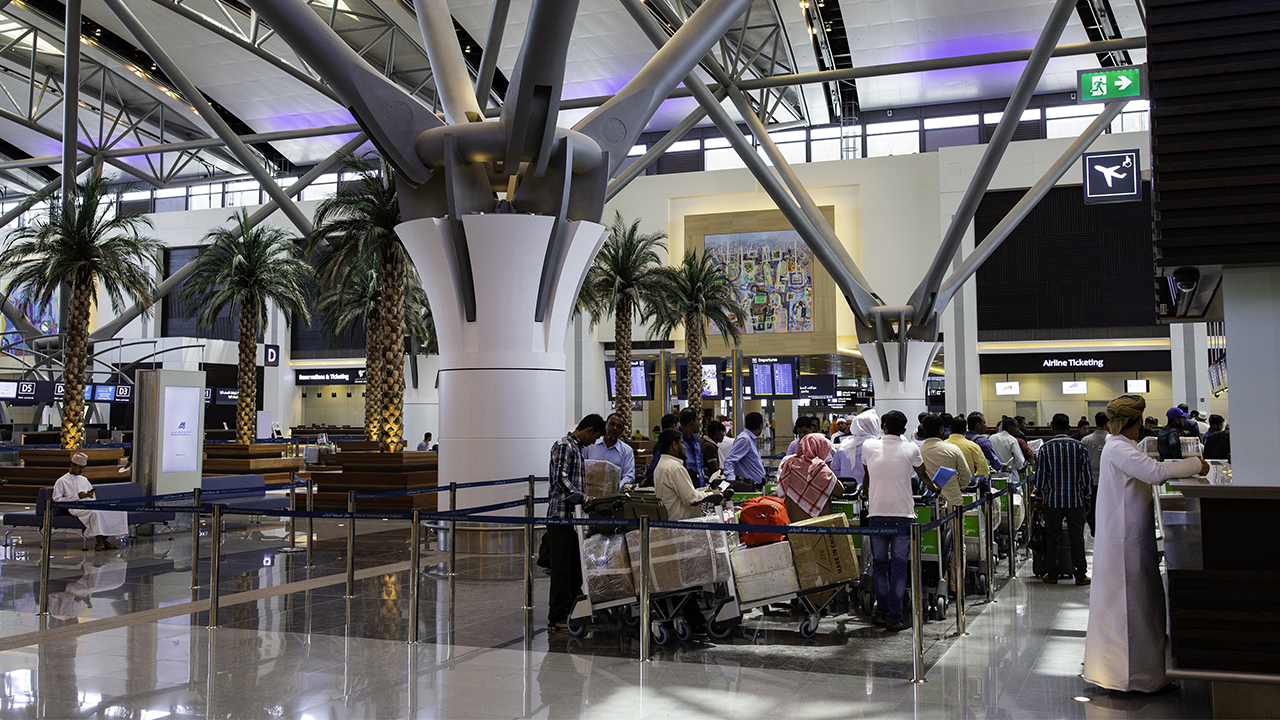
Private flights now make up nearly a third of traffic at Oman’s main airport as wealthy travelers and executives flee escalating tensions in the Middle East, according to real-time flight tracking data from FlightRadar24.
As Operation Epic Fury intensifies across the region, Muscat International Airport has transformed into a critical evacuation hub, with private flights accounting for 31% of all operations on Wednesday. By Thursday afternoon, the trend continued with private aircraft representing more than 30% of all movements at the airport.
The exodus reflects growing concerns among the ultra-wealthy, senior executives from global finance firms, and tourists caught in the region as military operations expand. Alternative escape routes have emerged, with private security companies booking fleets of SUVs to transport clients on the grueling 10-hour journey from Dubai to Riyadh, Saudi Arabia, where private flights remain available.
“We evacuated some of our own staff who were just visiting the region, and we arranged transport via the Hatta crossing into Oman from the UAE to get them to Muscat from where they flew out of the region,” a spokesperson for Air Charter Service told FOX Business. The company, which brokers private jets and freight transport globally, has arranged more than 10 evacuation flights with more scheduled.
The spokesperson noted that border crossing times at Hatta took approximately 3-4 hours as of Sunday, though those wait times have likely increased as more people pursue this option.
The limited availability of aircraft has dramatically inflated prices. Light jet trips from Muscat to Istanbul now command more than $93,000—roughly double the usual rate—according to Forbes. The same route on heavy jets can cost travelers up to $140,000.
Among those who secured private transportation was LIV golfer Jon Rahm, a two-time major winner. Through his partnership with VistaJet, a private aviation company, Rahm arranged a charter flight for seven stranded LIV golfers and a caddie. After a four-hour drive to Oman, the group flew to Hong Kong.
The surge in private evacuations comes after the United States and Israel launched attacks on Iran on Saturday, triggering retaliatory strikes targeting countries throughout the region that host American interests. In response, Mora Namdar, Assistant Secretary of State for Consular Affairs, advised U.S. citizens to leave Bahrain, Egypt, Iran, Iraq, Israel, the West Bank and Gaza, Jordan, Kuwait, Lebanon, Oman, Qatar, Saudi Arabia, Syria, the United Arab Emirates, and Yemen.
The crisis has affected travelers beyond the wealthy elite. Commercial airline passengers, including cruise ship tourists, have found themselves stranded as flights were canceled across the region. Many have been forced to seek alternative transportation options or wait out the situation.
The private aviation surge reflects a wider pattern of crisis response among those with means during regional conflicts. Similar evacuation trends have been observed during past Middle Eastern tensions, though the current scale of private flights indicates the severity of concerns about the expanding military operations.
As tensions continue to escalate, aviation analysts expect the demand for private transportation options to remain high, particularly as commercial airlines adjust their schedules and routes to account for airspace restrictions and safety concerns across the affected region.
Fact Checker
Verify the accuracy of this article using The Disinformation Commission analysis and real-time sources.

15 Comments
Interesting update on Private Jets Comprise 30% of Departures from Oman Airport as Wealthy Flee Middle East Tensions. Curious how the grades will trend next quarter.
Good point. Watching costs and grades closely.
Production mix shifting toward World might help margins if metals stay firm.
Good point. Watching costs and grades closely.
Interesting update on Private Jets Comprise 30% of Departures from Oman Airport as Wealthy Flee Middle East Tensions. Curious how the grades will trend next quarter.
Good point. Watching costs and grades closely.
Nice to see insider buying—usually a good signal in this space.
Good point. Watching costs and grades closely.
If AISC keeps dropping, this becomes investable for me.
Good point. Watching costs and grades closely.
Uranium names keep pushing higher—supply still tight into 2026.
Good point. Watching costs and grades closely.
Good point. Watching costs and grades closely.
Production mix shifting toward World might help margins if metals stay firm.
Silver leverage is strong here; beta cuts both ways though.