


Listen to the article
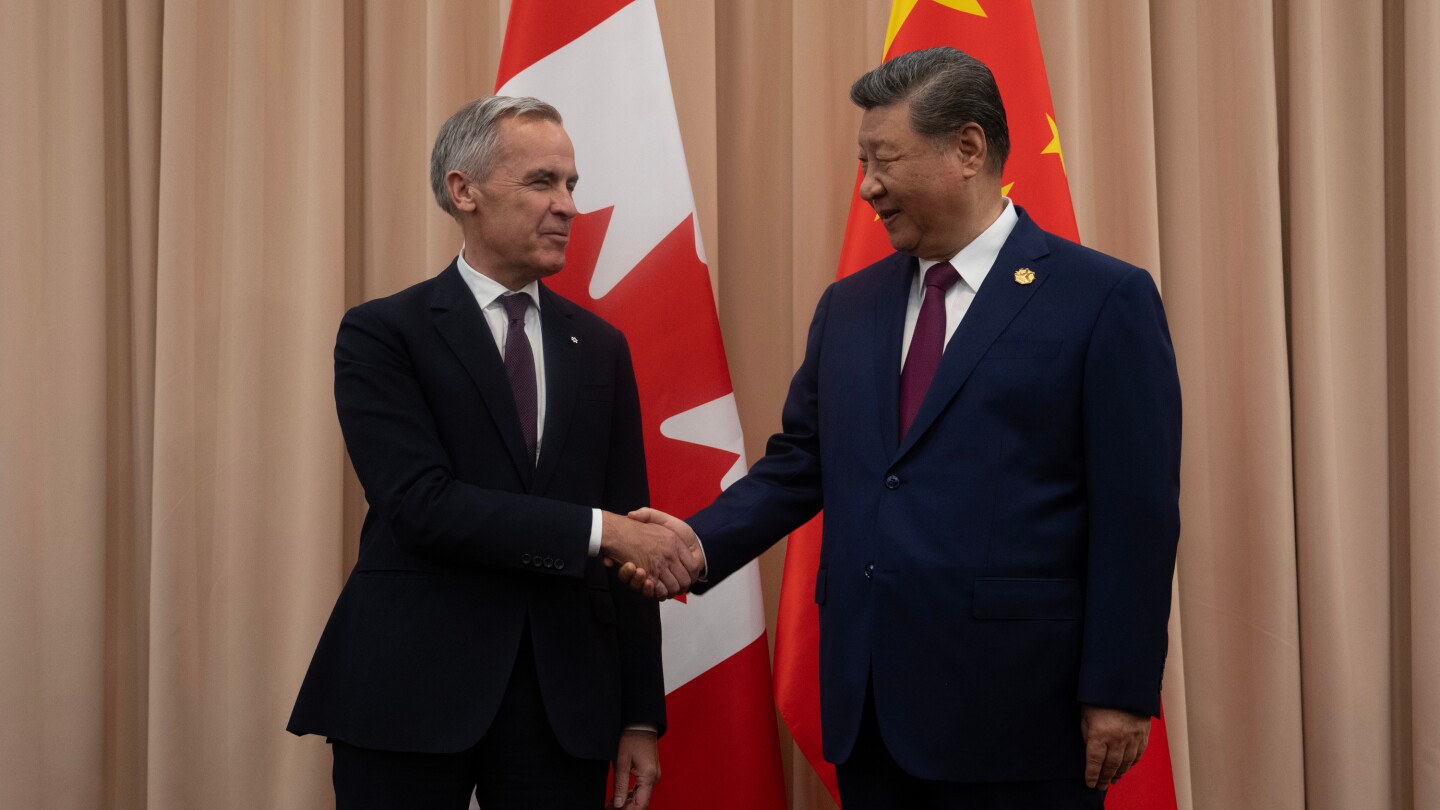
Canadian Prime Minister Mark Carney will travel to China next week for his first meeting with Chinese President Xi Jinping since taking office, marking the first visit by a Canadian leader to Beijing in more than eight years. The diplomatic mission comes as Canada seeks to diversify its trade relationships and reduce its heavy economic dependence on the United States.
Carney announced the trip Wednesday, emphasizing Canada’s strategic pivot toward building stronger international partnerships. “We’re forging new partnerships around the world to transform our economy from one that has been reliant on a single trade partner, to one that is stronger and more resilient to global shock,” he said in an official statement.
The prime minister will visit China from January 13 to 17, following an invitation extended by Xi when the two leaders met during an Asia-Pacific summit in October. After China, Carney will attend the World Economic Forum Annual Meeting in Davos, Switzerland, from January 19 to 21.
The timing of Carney’s Beijing visit is significant, coming amid escalating economic tensions with the United States. Former President Donald Trump’s previous threats of imposing tariffs on Canadian goods and his provocative suggestion that Canada could become “the 51st state” have raised concerns about Canadian economic sovereignty.
Currently, more than 75 percent of Canada’s exports go to the United States, creating a vulnerability that the Carney administration aims to address. The prime minister has outlined an ambitious goal to double Canada’s non-U.S. exports over the next decade. This diversification strategy gains urgency as the North American free trade agreement between Canada, the U.S., and Mexico is scheduled for review this year.
China represents a natural focus for this trade diversification strategy, as it already stands as Canada’s second-largest trading partner. However, bilateral relations have been strained in recent years, beginning with a diplomatic crisis in late 2018 when Canadian authorities arrested Meng Wanzhou, a senior executive of Chinese tech giant Huawei, at the request of the United States. China responded by detaining two Canadian citizens, Michael Kovrig and Michael Spavor, who were released in 2021 after Meng reached a deal with U.S. prosecutors.
More recently, trade tensions have intensified following Canada’s decision to implement a 100 percent tariff on Chinese electric vehicles, batteries, and related products in 2024. This move, coordinated with similar U.S. measures, prompted swift retaliation from Beijing, which imposed steep tariffs on Canadian canola, seafood, and pork exports—key sectors of the Canadian economy.
In what could be viewed as an opening for negotiation, China has suggested it might remove import taxes on certain Canadian products if Canada reconsiders its EV tariff policy. This offer creates a complex diplomatic balancing act for Carney, who must weigh closer economic ties with China against maintaining strong relations with the United States, Canada’s largest trading partner and closest ally.
The visit also reflects a broader geopolitical realignment as middle powers like Canada seek to navigate the intensifying competition between the United States and China. By engaging with Beijing while maintaining strong ties with Washington, Carney appears to be pursuing a pragmatic approach that prioritizes Canadian economic interests while acknowledging the complex realities of great power competition.
As preparations for the visit continue, business leaders and industry groups across Canada will be watching closely to see if Carney can make progress on resolving existing trade disputes while opening new opportunities for Canadian exporters in the vast Chinese market. The success of this diplomatic mission could significantly influence Canada’s economic trajectory and international standing in the years ahead.
Fact Checker
Verify the accuracy of this article using The Disinformation Commission analysis and real-time sources.

6 Comments
Canada’s decision to strengthen ties with China is a bold move, but one that may be necessary given the current political climate. As a leading producer of critical minerals like lithium and uranium, Canada’s collaboration with China could have far-reaching implications for the energy and technology sectors. This is definitely a story worth following closely.
It’s an interesting development to see Canada shifting its focus towards China, especially in the mining and commodities sectors. This could potentially lead to new trade and investment opportunities, but also carries risks given the complex political dynamics. I’ll be curious to see what kinds of agreements or partnerships emerge from Carney’s visit.
The timing of Carney’s trip to China is quite significant, coming amid the economic tensions between Canada and the US. As a major exporter of commodities, Canada’s pivot towards China could have ramifications for global supply chains and pricing. I’m curious to see what kind of trade deals or agreements might come out of this visit.
The visit by Prime Minister Carney to China is a clear signal that Canada is looking to diversify its economic relationships beyond the US. This could present new opportunities for Canadian mining and energy companies to access the large and growing Chinese market. However, it will be important to navigate this transition carefully, given the geopolitical tensions involved.
It’s interesting to see Canada pivoting away from the US and building stronger trade ties with China. This could have significant implications for the global mining and commodities markets, as Canada is a major producer of key resources. I wonder how this will impact the price and supply of metals like gold, silver, and copper.
This visit by Prime Minister Carney to China is a strategic move by Canada to diversify its trade relationships. Given the tensions with the US, it makes sense for Canada to explore new markets and partnerships, especially in the critical minerals and energy sectors. It will be important to watch how this evolves.