


Listen to the article
A record-breaking field of 11 candidates has officially launched their campaigns for Portugal’s upcoming presidential election, setting the stage for what analysts predict will be a closely watched and potentially divisive contest.
The two-week campaign period began Sunday, with candidates now racing to win voter support ahead of the January 18 election. Political observers note that the unusually large field makes it highly unlikely any single candidate will secure the required majority, pointing toward a February 8 runoff between the top two finishers.
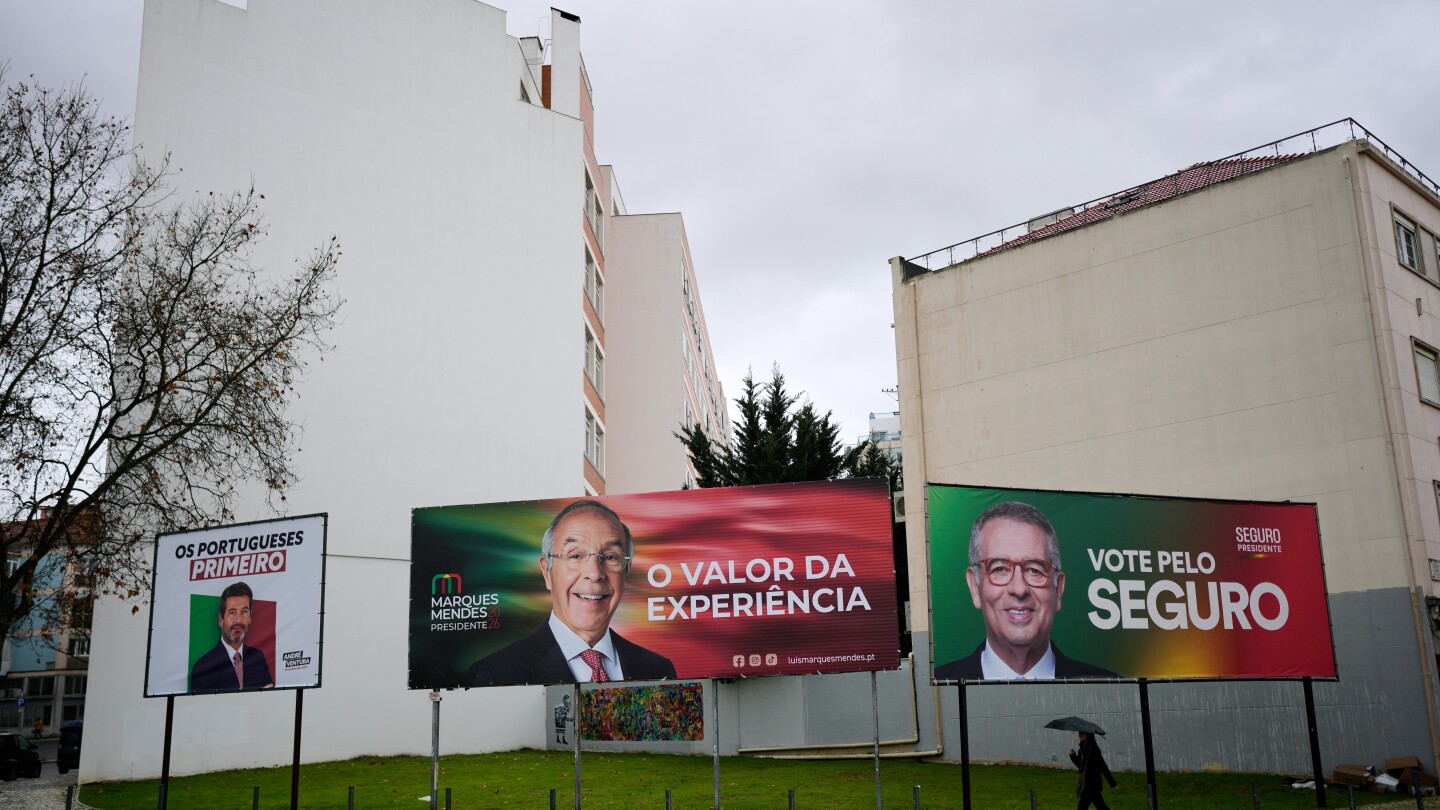
Polling data shows four candidates emerging as frontrunners in this crowded field. Luís Marques Mendes, representing the center-right Social Democratic Party currently leading Portugal’s government, brings established political credentials to the race. The center-left Socialist Party’s António José Seguro offers voters a more progressive alternative while still working within Portugal’s traditional political framework.
However, two challengers threaten to upend the country’s longstanding two-party dominance. André Ventura, leader of the populist anti-immigration Chega party, has capitalized on growing nationalist sentiment across Europe. Chega’s dramatic rise shocked Portugal’s political establishment last year when it became the second-largest party in Parliament, reflecting similar populist surges seen across the continent.
Perhaps the most intriguing candidate is Henrique Gouveia e Melo, a retired rear admiral running as an independent. Gouveia e Melo earned widespread public admiration for his efficient leadership of Portugal’s COVID-19 vaccination program, which became one of Europe’s most successful. His candidacy tests whether public service credentials can triumph over party machinery in Portuguese politics.
While Portugal’s presidency is largely ceremonial, the role carries significant constitutional powers. The president serves as a mediator in political conflicts and possesses the authority to veto legislation, though Parliament can override such vetoes. More critically, the president can dissolve Parliament and call snap elections – a power with particular resonance given Portugal’s recent political instability.
The country has endured three general elections in just three years, creating what political analysts describe as Portugal’s most turbulent political period in decades. This instability has heightened the importance of having a president skilled in brokering compromise among competing political factions.
Several contentious issues await the next president’s attention. A proposed citizenship bill, recently struck down by Portugal’s Constitutional Court and returned to Parliament, has sparked heated debate over immigration policies. The legislation would tighten restrictions on citizenship eligibility and create new provisions for citizenship revocation – measures that align with the rising nationalist sentiment that has boosted Chega’s popularity.
Labor reform presents another flashpoint. The current government’s proposed changes to employment laws have already triggered widespread protests and a major strike, with unions criticizing what they view as an erosion of worker protections. Business leaders counter that such reforms are necessary to improve Portugal’s economic competitiveness within the European Union.
Perhaps most divisive is Portugal’s stalled euthanasia and physician-assisted suicide legislation. Parliament approved a law permitting these practices in 2022, but constitutional challenges have prevented implementation. The next president will likely face decisions regarding this morally complex issue, which has divided Portuguese society along religious and ethical lines.
With almost 11 million eligible voters, the election comes at a critical moment for Portugal. The country faces significant economic challenges, including rising housing costs that have sparked public protests in major cities like Lisbon and Porto. Meanwhile, Portugal’s positioning within the European Union and its stance on immigration remain subjects of intense national debate.
As campaigning intensifies, candidates must navigate these complex issues while appealing to an electorate increasingly frustrated with traditional politics – a challenge reflected in the unprecedented number of presidential hopefuls seeking to lead this southern European nation.
Fact Checker
Verify the accuracy of this article using The Disinformation Commission analysis and real-time sources.

10 Comments
Portugal’s presidential election has drawn an unusually large field of 11 candidates. This diversity reflects the country’s political landscape, but also makes it unlikely for any single contender to win outright. The runoff vote will be pivotal.
You make a good point. The runoff will be a critical test, as voters will have to choose between the top two finishers and solidify the next president’s mandate.
This election highlights the political diversity in Portugal. With 11 candidates, it will be a challenge for any single contender to secure a majority. The runoff should provide more clarity on the direction voters want to take the country.
Agreed, the large field indicates significant political fragmentation in Portugal. The runoff vote will be crucial in determining the next president’s agenda and priorities.
An unusually large field of 11 candidates for Portugal’s presidential election. Looks like a close race and a likely runoff vote in February. Curious to see how the populist candidate André Ventura performs against the more traditional center-right and center-left options.
Yes, the rise of populist candidates is an interesting trend across Europe. It will be important to see if Ventura can capitalize on nationalist sentiment or if voters stick with the establishment parties.
Fascinating that the populist Chega party leader André Ventura is emerging as a frontrunner. This speaks to the broader nationalist and anti-immigration sentiment across Europe. Curious to see if he can pull off an upset victory.
You raise a good point. Ventura’s performance will be an important bellwether for the strength of populist movements in Portugal and the broader region.
A crowded presidential field in Portugal with 11 candidates. The large number of contenders suggests a potentially divisive and closely watched election ahead. I’ll be interested to see how the frontrunners fare, especially the populist Ventura.
Absolutely, the populist challenge to the traditional political establishment is a key dynamic to watch in this race. It could signal broader shifts in Portuguese politics.