


Listen to the article
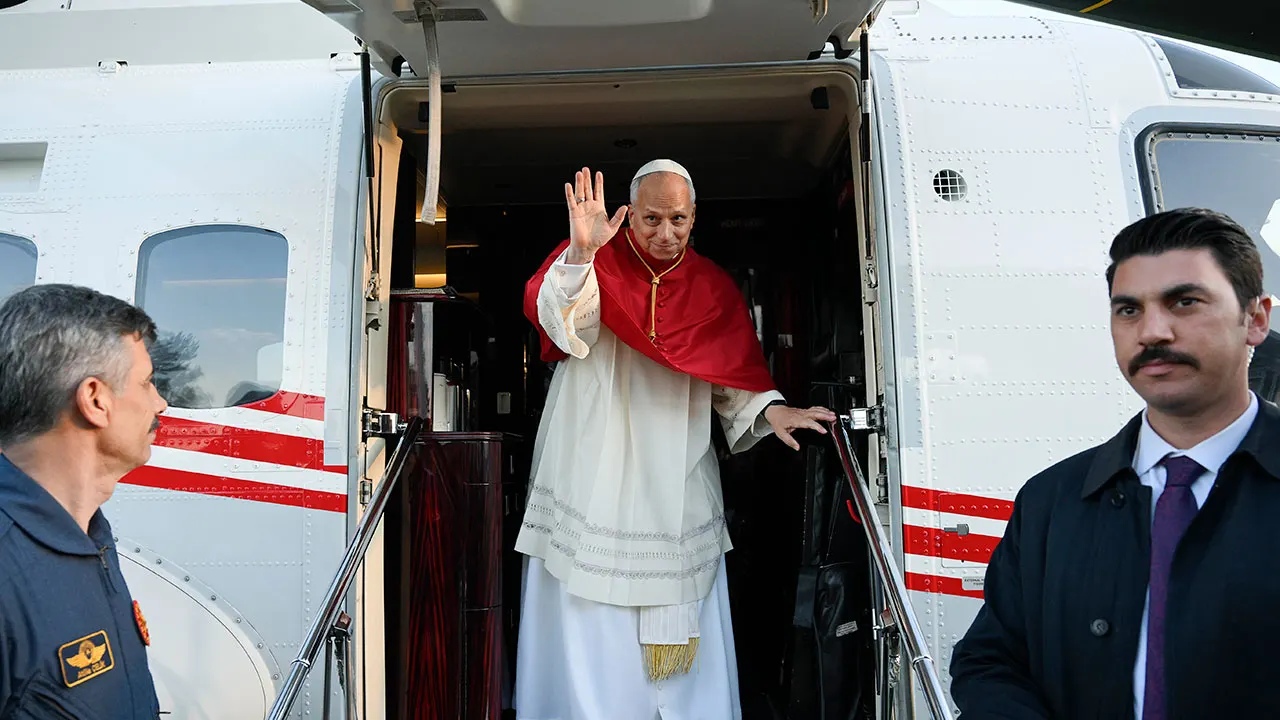
Early on Sunday, the Vatican’s chartered Airbus 320, which transported Pope Leo XIV, his entourage and 80 journalists to Turkey on Thanksgiving Day, received clearance for travel after a successful software update. This news brought relief to the papal delegation as their journey to Lebanon could proceed as planned.
This Middle East peace pilgrimage marks Pope Leo XIV’s first international trip since his elevation to the papacy six months ago. The four-day visit to Turkey combined religious diplomacy with cultural significance, occurring against the backdrop of regional tensions.
The journey began with a distinctly American touch. The Chicago-born pontiff was visibly delighted when presented with homemade pumpkin pies from journalists aboard the Vatican flight. The Thanksgiving meal, served with proper silverware and cloth napkins, created a warm atmosphere as the delegation embarked on its diplomatic mission.
In Turkey, Pope Leo engaged with a country where Catholics represent just 0.2% of the 85 million predominantly Sunni Muslim population. The religious demographics reflect a stark historical reality – over a million Christians, particularly Armenians, were killed during World War I under the Ottoman Empire.
Despite these sobering historical contexts, the pope’s Saturday Mass in Istanbul drew approximately 4,000 faithful. Throughout his homily, he emphasized themes of peace and unity, consistent with messages delivered earlier in his visit during meetings with Turkish President Recep Tayyip Erdogan in Ankara and with Jewish religious leaders in Istanbul.
A significant highlight came in Iznik, where Pope Leo joined Orthodox patriarchs and ecumenical leaders to commemorate the 1,700th anniversary of the Council of Nicaea. Following prayers with Patriarch Bartholomew, spiritual leader of the world’s Orthodox Christians, the pope signed a joint declaration symbolizing Christian unity.
The pope’s message extended beyond interfaith cooperation. “We live in a world where religion is too often used to justify wars and atrocities,” he stated. “We need to appreciate what unites us, breaking down the walls of prejudices and mistrust… to become peacemakers.”
Security concerns shadowed the visit. Turkish national Mehmet Ali Agca, who shot Pope John Paul II in 1981 and now resides in Iznik after serving prison sentences, expressed hope to meet Pope Leo. Instead, authorities escorted him out of town as a precautionary measure.
The visit echoed previous papal trips to Turkey. In 2006, Pope Benedict XVI made a conciliatory visit following controversy over his comments about Islam. Pope Francis visited in 2014, notably praying at Istanbul’s Blue Mosque. Expectations that Pope Leo would follow this precedent led to some confusion when journalists observed no obvious prayer moments during his mosque visit.
Vatican spokesman Matteo Bruni later clarified that the pope had visited the mosque “in silence, in the spirit of reflection and listening, with profound respect for the place and the faith of those gathered here in prayer.” This approach aligns with the 70-year-old Midwestern pontiff’s diplomatic style.
Pope Leo XIV’s first words after his elevation to lead the world’s 1.4 billion Catholics were “Peace be with you,” establishing the foundation of his papacy. His message of unity and human brotherhood faces its most challenging test in the Middle East, where decades of conflict have created deep divisions.
As the papal delegation heads to Lebanon, a country facing economic crisis and security concerns, questions remain about how the pope’s peace initiatives will be received in a region marred by ongoing conflicts. While his messages of dialogue and cooperation resonate with religious leaders, their practical impact in resolving entrenched political and territorial disputes remains uncertain.
The journey represents Pope Leo’s emerging diplomatic approach – combining respectful listening with clear moral guidance – but the effectiveness of this strategy in the complex landscape of Middle Eastern politics will only become apparent as his papacy progresses.
Fact Checker
Verify the accuracy of this article using The Disinformation Commission analysis and real-time sources.

27 Comments
If AISC keeps dropping, this becomes investable for me.
Good point. Watching costs and grades closely.
Uranium names keep pushing higher—supply still tight into 2026.
Good point. Watching costs and grades closely.
Uranium names keep pushing higher—supply still tight into 2026.
Good point. Watching costs and grades closely.
Good point. Watching costs and grades closely.
Interesting update on Pope Francis’s Thanksgiving Visit to Turkey, Lebanon Next on Agenda. Curious how the grades will trend next quarter.
Good point. Watching costs and grades closely.
I like the balance sheet here—less leverage than peers.
Good point. Watching costs and grades closely.
Good point. Watching costs and grades closely.
I like the balance sheet here—less leverage than peers.
Nice to see insider buying—usually a good signal in this space.
Good point. Watching costs and grades closely.
Good point. Watching costs and grades closely.
I like the balance sheet here—less leverage than peers.
Interesting update on Pope Francis’s Thanksgiving Visit to Turkey, Lebanon Next on Agenda. Curious how the grades will trend next quarter.
Good point. Watching costs and grades closely.
Interesting update on Pope Francis’s Thanksgiving Visit to Turkey, Lebanon Next on Agenda. Curious how the grades will trend next quarter.
Interesting update on Pope Francis’s Thanksgiving Visit to Turkey, Lebanon Next on Agenda. Curious how the grades will trend next quarter.
Silver leverage is strong here; beta cuts both ways though.
Good point. Watching costs and grades closely.
Exploration results look promising, but permitting will be the key risk.
Good point. Watching costs and grades closely.
Nice to see insider buying—usually a good signal in this space.
Good point. Watching costs and grades closely.