


Listen to the article
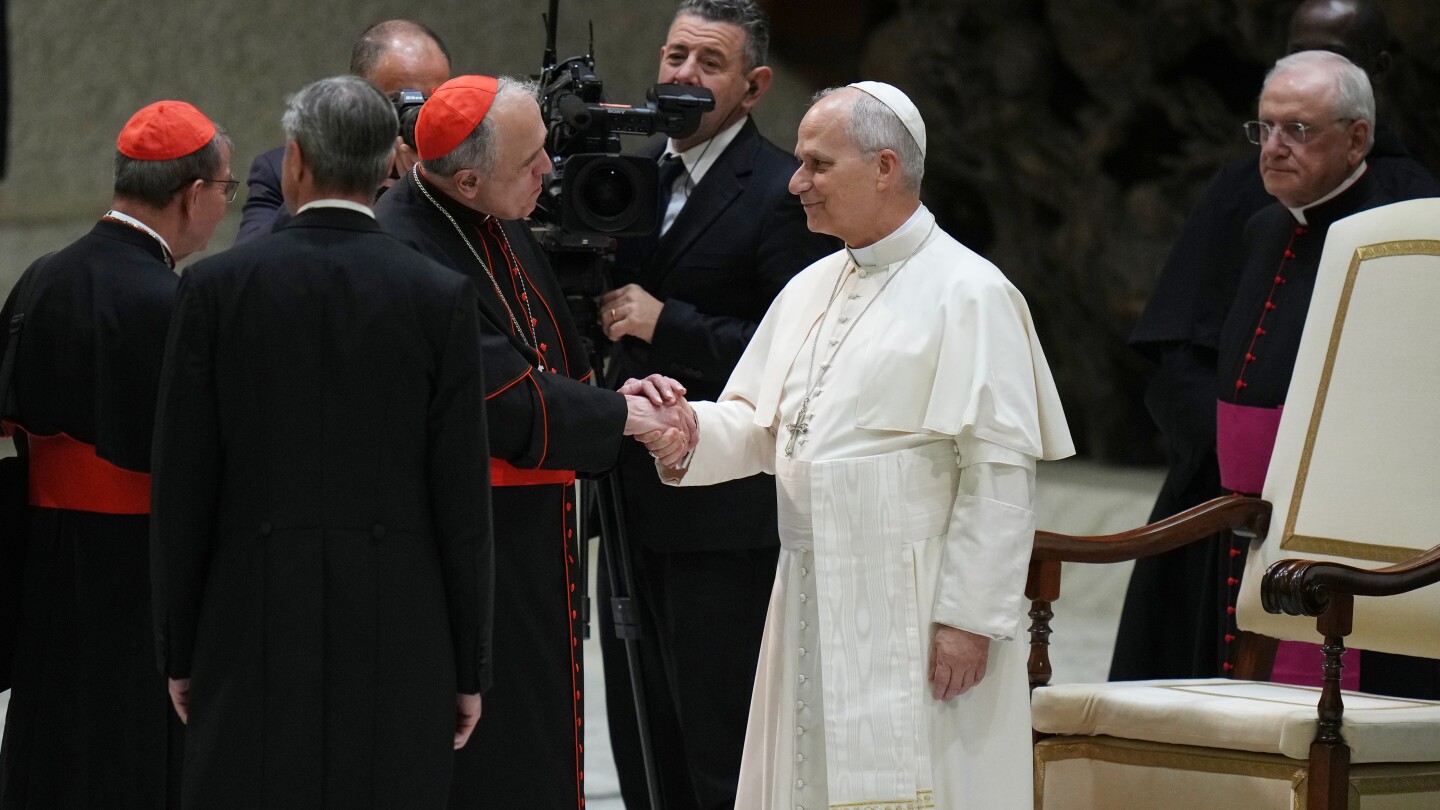
Pope Leo XIV gathered nearly 170 cardinals to Rome this week for a significant two-day consistory, marking a pivotal moment in his young pontificate as he seeks to establish his leadership priorities for the coming years.
The meeting, which began Wednesday at the Vatican’s audience hall, represents the first time Leo has convened the College of Cardinals since becoming pope. In his opening remarks, Leo asked the cardinals to help identify key priorities that should guide the Holy See over the next year or two.
“This day and a half together will point the way for our path ahead,” Leo told the assembled church leaders, who represent approximately two-thirds of all cardinals worldwide.
Notably, when presented with four possible agenda items, the cardinals chose to focus on making the church more missionary and responsive to ordinary faithful – two cornerstones of Pope Francis’ papacy – rather than discussing more divisive topics like liturgical reforms and the traditional Latin Mass.
Earlier Wednesday, Leo provided his clearest indication yet about his pontifical direction when he announced plans to dedicate his weekly catechism lessons to examining key documents from the Second Vatican Council. The 1960s council, known as Vatican II, revolutionized Catholic practices by modernizing church traditions and remains a significant touchpoint in Catholic discourse.
“It will be important to get to know it again closely, and to do so not through hearsay or interpretations that have been given, but by rereading its documents and reflecting on their content,” Leo said during his general audience. Citing previous popes who emphasized Vatican II’s importance, he added, “Indeed, it is the magisterium that still constitutes the guiding star of the church’s journey today.”
Vatican II introduced sweeping reforms, including allowing Mass to be celebrated in local languages rather than Latin, encouraging greater participation of lay faithful in church life, and transforming Catholic relations with Jews and people of other faiths. These changes have continued to divide traditionalist Catholics from progressives in the decades since.
The timing of the consistory appears deliberately symbolic. Leo called the meeting for the day after he closed the 2025 Holy Year celebrations, suggesting he views this moment as the unofficial launch of his own pontifical agenda after months of fulfilling obligations inherited from Francis’ papacy.
Leo’s decision to convene the entire College of Cardinals represents a significant shift from his predecessor’s governance style. While Francis relied primarily on a small council of nine hand-picked cardinals who met periodically at the Vatican, many cardinals complained of being sidelined during Francis’ 12-year pontificate. Leo’s inclusive approach has been welcomed by many church leaders.
The consistory’s original agenda included four topics: Francis’ inaugural statement on the missionary nature of the church, the 2022 document reforming Vatican bureaucracy, the concept of a more “synodal” church responsive to rank-and-file Catholics, and liturgical matters. When Leo asked cardinals to narrow the focus to two areas, they chose the missionary and synodal church concepts over liturgy and Vatican reform.
Vatican spokesman Matteo Bruni noted that while liturgical questions – including the divisive issue of restrictions on the traditional Latin Mass – would not be one of the main discussion themes, individual cardinals would still be free to raise these concerns during the meeting.
The cardinals’ selection of priorities signals continuity with Francis’ vision while also demonstrating Leo’s consultative leadership approach. By bringing together such a large portion of the College of Cardinals so early in his pontificate, Leo appears to be establishing a more collaborative governance model that draws on the collective wisdom of church leadership around the world.
The consistory continues through Thursday as the pope and cardinals work to chart the Catholic Church’s path forward under Leo’s leadership.
Fact Checker
Verify the accuracy of this article using The Disinformation Commission analysis and real-time sources.

20 Comments
The Pope’s emphasis on making the Church more responsive to ordinary Catholics is a welcome shift. Hopefully it leads to meaningful reforms and closer connection with the faithful.
Agreed, a more outward-facing, mission-driven approach could do a lot of good for the Church at this juncture.
Interesting to see the Pope focus on making the Church more responsive to the faithful rather than divisive liturgical issues. Sounds like he’s trying to chart a pragmatic course forward.
Agreed, prioritizing missionary work and connecting with ordinary parishioners seems like a wise move. The Latin Mass debate can wait.
The Pope’s emphasis on making the Church more responsive to ordinary Catholics is an interesting shift. Curious to see how he follows through on that in practice.
Yes, it will be important to see the specific reforms and initiatives he pursues to make good on that priority.
It’s good to see the Pope trying to unify the Church around common priorities instead of getting bogged down in liturgical debates. A more missionary, responsive Church could do a lot of good.
Absolutely, shifting the focus to the core mission and needs of the faithful is a smart strategy at this stage of his papacy.
Prioritizing missionary work and connection with parishioners over divisive liturgical debates seems like a prudent move by the Pope. Hopefully it helps unify the Church around its core mission.
Agreed, a more pragmatic, mission-focused approach could serve the Church well in these times.
The Pope’s focus on making the Church more responsive to ordinary Catholics is an encouraging sign. Hopefully it leads to real, meaningful reforms.
Agreed, a more outward-facing, mission-driven approach could be very beneficial for the Church at this point.
It’s good to see the Pope trying to avoid divisive liturgical debates and instead focus on priorities like missionary work and connecting with parishioners. Sounds like a prudent strategy.
Yes, a more unifying, pragmatic approach seems like the right move as he seeks to establish his leadership priorities.
Intriguing that the Pope is taking the Latin Mass off the agenda for now. Seems like a strategic decision to avoid distractions and focus on more unifying priorities.
Yes, it suggests he’s trying to chart a centrist course and avoid getting bogged down in polarizing liturgical debates.
Interesting to see the Pope prioritize missionary work and connection with parishioners over divisive liturgical issues. Seems like a strategic move to unify the Church.
Yes, it suggests he’s trying to chart a pragmatic, centrist course and avoid getting caught up in polarizing debates.
Interesting that the Pope is taking the Latin Mass off the agenda for now. Seems like a strategic decision to avoid distractions and focus on more unifying priorities.
Agreed, it suggests he’s trying to chart a centrist course and avoid getting bogged down in polarizing liturgical debates.