


Listen to the article
Pope Francis Calls for Peace in Annual Message, Condemns Weaponization of Faith
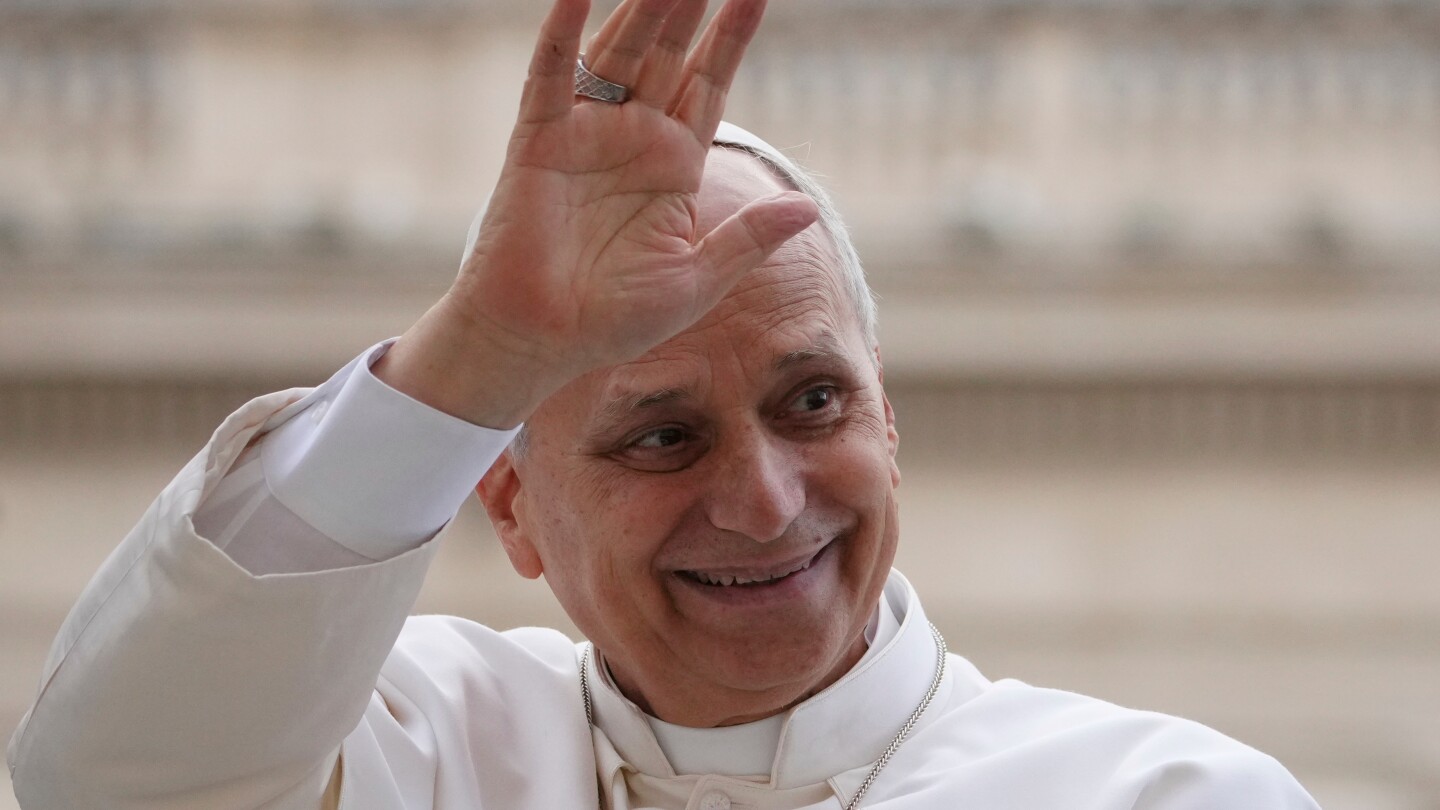
Pope Leo XIV delivered a powerful message on Thursday, emphasizing that peace is not only possible but necessary in today’s world. Speaking from Vatican City in his first annual peace message, the pontiff strongly criticized nuclear deterrence policies and the growing trend of using religious language to justify violence.
The annual peace exhortation, released ahead of New Year’s Day, which the Catholic Church observes as the World Day of Peace, echoed the Pope’s inaugural words spoken from St. Peter’s Basilica on May 8: “Peace be with you.”
In his address, Pope Leo urged Catholics and people of all faiths not to accept conflict and darkness as inevitable states of human existence. “When we treat peace as a distant ideal, we cease to be scandalized when it is denied, or even when war is waged in its name,” he said during an emotional press conference at the Vatican.
The Pope expressed particular concern about the role of economic and financial interests in driving military technological advancements. He highlighted how artificial intelligence is accelerating weapon development and fueling what he described as the “irrationality” of military deterrence strategies in the global arena.
Interfaith relations featured prominently in the message, with Leo warning believers across all religions against the dangerous tendency to misuse faith for political purposes. “Unfortunately, it has become increasingly common to drag the language of faith into political battles, to bless nationalism, and to justify violence and armed struggle in the name of religion,” the pontiff wrote.
In a notable diplomatic gesture, the Vatican ensured the message was translated into Russian and Ukrainian—beyond the standard eight languages typically used for Vatican documents—acknowledging the ongoing conflict in Ukraine.
The Vatican press conference took an emotional turn as it featured powerful firsthand accounts from survivors of European conflicts, bringing vivid context to the Pope’s message. Maria Agnese Moro, daughter of former Italian Premier Aldo Moro who was kidnapped and killed by the Red Brigades in 1978, shared her experience with restorative justice.
Moro described how, fifteen years ago, she participated in facilitated dialogue with members of the Red Brigades, the left-wing terrorist group responsible for her father’s death. “Every word I say hurts them, but it recognizes their humanity,” she explained. “Every word they say hurts me, but it recognizes my humanity: You are able to listen to us, to believe in our intentions of good at that time, disfigured by the violence used.”
Father Pero Miličević, a Croatian Catholic priest, provided another moving testimony. He recounted the traumatic events of 1993 when a Muslim unit of the Bosnian army attacked his village, killing 39 people including his father, aunt, and several cousins. His widowed mother and seven siblings were imprisoned in a war camp for seven months.
With evident emotion, Miličević explained how his Catholic faith enabled his family to endure such profound suffering. His experience as a priest hearing confessions later reinforced his understanding of the need for both external peace and the interior peace that comes through forgiveness.
“Precisely that education in faith in God helped us to overcome the horrors of what we witnessed,” Miličević said, his voice trembling at times during his testimony.
The Pope’s message comes at a time of heightened global tensions, with ongoing conflicts in Ukraine, the Middle East, and numerous other regions. By focusing on the concrete experiences of those affected by violence rather than abstract principles, the Vatican appears to be taking a more personal approach to its peace advocacy.
Through this annual message, Pope Leo XIV has established peace as a central theme of his papacy, continuing the Catholic Church’s long tradition of peace advocacy while addressing the unique challenges of modern warfare, technological advancement, and the complex intersection of religion and politics in contemporary conflicts.
Fact Checker
Verify the accuracy of this article using The Disinformation Commission analysis and real-time sources.

16 Comments
The Pope’s criticism of using religious language to justify violence is particularly salient. Faith should be a force for peace and unity, not division and conflict.
The Pope’s comments on the role of economic and financial interests in driving military technological advancements are particularly insightful. This is a dynamic that deserves more scrutiny and accountability.
Absolutely. The military-industrial complex has become a powerful and often unaccountable force. We need to find ways to redirect those resources and incentives towards more constructive ends.
While the Pope’s message may be seen as idealistic by some, I believe his call for a more peaceful, nonviolent approach to global challenges is both necessary and achievable if we have the courage to pursue it.
While some may dismiss the Pope’s message as idealistic, I believe his call for a more peaceful world is both necessary and achievable if we have the courage to pursue it.
Well said. The Pope is challenging us to think beyond the status quo and imagine a different, more hopeful future. That kind of visionary leadership is sorely needed.
I appreciate the Pope’s emphasis on the importance of dialogue and nonviolence in resolving global tensions. His message is a much-needed counterpoint to the growing militarization we see around the world.
Agreed. The Pope’s words provide a moral and spiritual perspective that is often lacking in discussions around security and defense policy. We need more of this type of leadership.
It’s concerning to see how economic and financial interests have become so deeply intertwined with the development of ever more destructive military technologies. The Pope rightly condemns this trend.
Absolutely. The weaponization of technology, including AI, is extremely troubling. We must find ways to redirect these resources towards more constructive ends that benefit humanity.
The Pope’s emphasis on the importance of dialogue and nonviolence in resolving global tensions is a much-needed counterpoint to the growing militarization we see around the world. His message is a welcome and timely one.
I agree. The Pope’s words provide a moral and spiritual perspective that is often lacking in discussions around security and defense policy. We need more of this type of leadership.
It’s heartening to see the Pope taking such a strong stance against the irrational and immoral policies of military deterrence. His message is a timely and important contribution to the global peace agenda.
The Pope’s message is a powerful reminder that we cannot accept conflict and war as inevitable. His call for people of all faiths to reject violence and pursue peace is an important one.
The Pope’s message on the need for peace and his criticism of military deterrence policies is a welcome and timely reminder. In a world increasingly divided, his call for dialogue and nonviolence is much needed.
I agree. Relying on nuclear weapons and other military technologies is an irrational and dangerous path. We must pursue more peaceful solutions to global conflicts.