


Listen to the article
Namibian Politician with Controversial Name Expected to Win Re-election
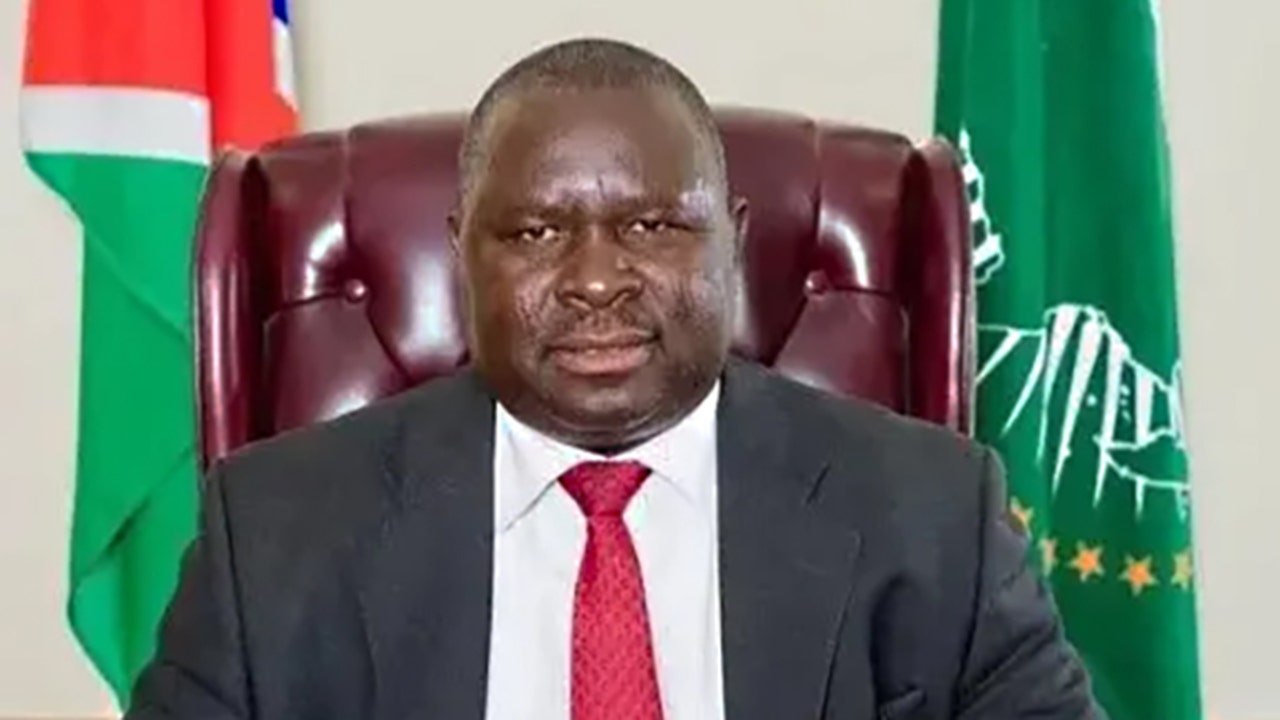
A Namibian local politician named Adolf Hitler Uunona is widely projected to retain his council seat in the country’s regional elections, drawing international attention due to his controversial name which he insists carries no ideological significance.
Uunona, a longtime member of Namibia’s ruling SWAPO party, is running for re-election in the Ompundja constituency in the northern Oshana region. While final results have not been officially announced, multiple international news sources indicate he is expected to win by a substantial margin, continuing his previous electoral success.
“It was a perfectly normal name for me when I was a kid,” Uunona explained to German publication Bild. “It wasn’t until I grew older that I realized this man wanted to subjugate the whole world and killed millions of Jews.”
According to Uunona, his father gave him the name without understanding its historical weight or significance. He has emphasized that he has never held extremist beliefs and that his name reflects no political intent whatsoever. “The fact I have this name does not mean I want to conquer Oshana,” he stated, adding that he generally goes by Adolf Uunona in his daily life.
The unusual naming situation highlights Namibia’s complex colonial history. The Southwest African nation was a German colony from 1884 until 1915, when South Africa took control during World War I. This German colonial period left a lasting cultural imprint, with Germanic names and place names remaining common in some Namibian communities.
Historians note that this colonial legacy sometimes results in unusual or jarring name combinations by modern standards, though they typically carry no inherent ideological meaning in the local context. Rather, they reflect a complex intermingling of cultures and historical influences in a country with a layered past.
SWAPO (South West Africa People’s Organization), which has governed Namibia since its independence from South Africa in 1990, has evolved considerably over the decades. Originally founded as a liberation movement with socialist principles, the party has gradually shifted toward a more centrist, market-oriented approach to governance while maintaining its dominant position in Namibian politics.
The Ompundja constituency that Uunona represents is a relatively small administrative area, covering 466 square kilometers with approximately 4,659 inhabitants spread across 19 administrative centers, according to official information from the Oshana regional government. Like many rural constituencies in Namibia, it faces challenges related to infrastructure development, access to services, and sustainable economic growth.
Uunona’s case highlights the occasional cultural disconnects that can occur in postcolonial societies, where naming practices and historical awareness may differ significantly from Western expectations. His consistent electoral success suggests that local voters prioritize his governance record and political affiliation over what many outsiders might consider a deeply problematic name.
The attention his name has received internationally also reflects the ongoing sensitivity surrounding Nazi symbolism and references globally, even in contexts where they may have emerged independently of their historical associations. For Namibians in Ompundja, however, Uunona appears to be judged primarily on his local governance record rather than the historical connotations of his name.
As SWAPO continues to navigate the challenges of modern governance while addressing Namibia’s development needs, local representatives like Uunona remain focused on constituency-level issues despite the occasional international spotlight their personal circumstances might attract.
Fact Checker
Verify the accuracy of this article using The Disinformation Commission analysis and real-time sources.

5 Comments
Quite an interesting story. I wonder if the politician has considered changing his name to distance himself from the notorious historical figure. Perhaps he could use a middle name or nickname instead.
This is a complex and sensitive topic. While the politician’s personal views are important, I imagine many voters may have strong reactions to the name alone. It will be interesting to see how this plays out.
A thought-provoking case study in the power of names and their lasting impact. I wonder if the politician has considered ways to reframe the narrative and emphasize his own identity and qualifications, separate from the historical association.
It’s understandable that his name would draw attention, given its historical connotations. I’m curious to learn more about his policy platform and vision for the region, beyond just the attention-grabbing name.
This is certainly a unique situation. The politician’s explanation that the name has no ideological significance for him seems plausible, but I can understand the public interest and scrutiny.