


Listen to the article
Centuries-Old Afro-Venezuelan Festival Continues Tradition of Resistance Through Celebration
Hundreds of revelers took to the streets of Caucagua, Venezuela this week to participate in the annual Bandos and Parrandas of the Holy Innocents, a vibrant celebration that traces its origins back more than two centuries in the region’s Afro-descendant cacao-growing communities.
Observed on December 28 alongside the Catholic Feast of the Holy Innocents, the festival represents a powerful fusion of religious observance and cultural resistance that has been preserved across generations. The tradition emerged during a time when enslaved people in Venezuela’s northern cacao plantations were given a rare day off from their forced labor.
What began as a temporary reprieve from plantation work was transformed by the enslaved community into a profound moment of expression and subtle rebellion. Today’s participants maintain that revolutionary spirit through elaborate costumes that satirize the historical plantation owners, using humor, riddles and parody to challenge authority – a practice that has become deeply embedded in the celebration’s identity.
“This festival represents our ancestors’ resilience,” explained Ricardo Mendez, a long-time participant in the celebration. “When our forebears were given this one day off, they didn’t just rest – they created something meaningful that has lasted for centuries, something that speaks to our identity as Afro-Venezuelans.”
The historical significance of the celebration is particularly notable in Caucagua, located in Venezuela’s Miranda state, which was once a major cacao-producing region where plantation economies relied heavily on enslaved labor. The area’s rich agricultural history shaped its demographic makeup, with descendants of those forced to work the plantations now comprising a significant portion of the local population.
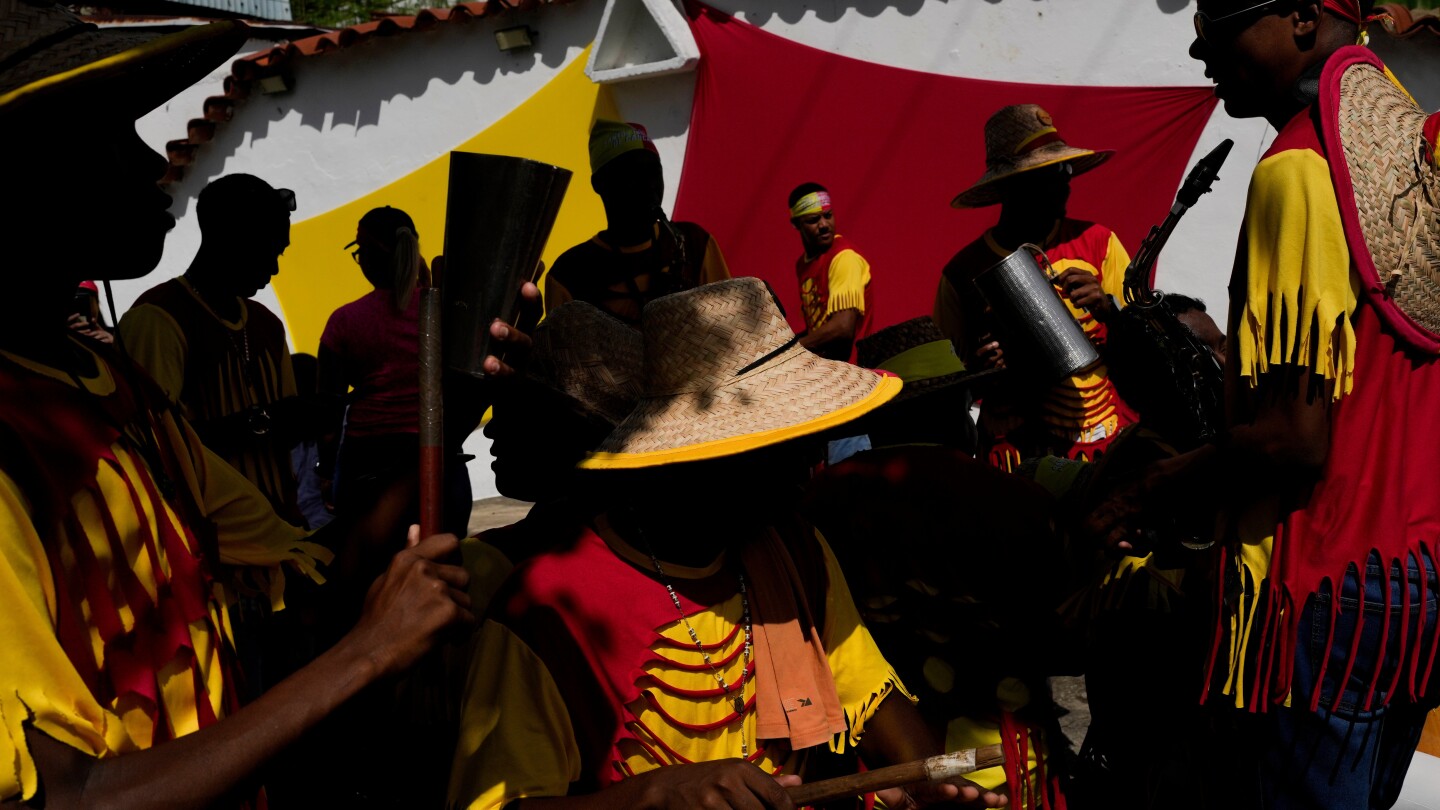
Festival participants don vibrantly colored costumes featuring exaggerated elements that mock colonial-era authority figures. Many wear oversized masks with caricatured features, elaborate hats adorned with ribbons and feathers, and carry props like canes and whips – symbols of power they reappropriate through performance. The carnival-like atmosphere fills Caucagua’s streets with dancing, music, and theatrical presentations that both entertain and educate.
Musical traditions play a crucial role in the celebration, with drummers performing rhythms that connect directly to West African heritage. These percussion-heavy sounds provide the heartbeat for the festivities, driving the energy of the processions through town. Songs often contain coded messages and historical references that might seem innocuous to outsiders but carry deeper meaning for those familiar with the tradition.
“What makes this celebration unique is how it preserves history through joy,” said María Rodríguez, a cultural anthropologist who has documented the festival for over a decade. “It’s not just about remembering suffering, but about celebrating how our communities found ways to assert their humanity and dignity even under the most oppressive conditions.”
The timing of the celebration aligns with the Catholic feast commemorating King Herod’s massacre of innocent children, creating a poignant parallel between biblical suffering and the historical trauma experienced by enslaved peoples. This religious framework provided a sanctioned space for expression that might otherwise have been forbidden.
The festival has evolved over time, incorporating new elements while maintaining its core identity as a form of cultural memory and resistance. In recent years, younger generations have added contemporary social commentary to the traditional performances, addressing current issues while honoring ancestral practices.
Local authorities now recognize the Bandos and Parrandas as an important cultural heritage event, providing support for the annual celebration that draws visitors from across Venezuela and increasingly from international destinations. Cultural tourism has brought new attention to the tradition, though community leaders work to ensure the festival maintains its authenticity and connection to local identity.
As the day’s festivities concluded, participants expressed pride in continuing a tradition that serves as a living bridge between past and present. The celebration not only preserves historical memory but also strengthens community bonds through shared cultural expression.
“When we put on these costumes and dance through the streets, we’re not just performing – we’re embodying our history,” said Juana Blanco, who has participated in the festival for over forty years. “This celebration reminds us who we are and where we come from. It’s how we ensure our ancestors’ stories and struggles are never forgotten.”
The Bandos and Parrandas of the Holy Innocents stands as a testament to how communities can transform moments of hardship into enduring cultural traditions that celebrate resilience, creativity, and the unbreakable human spirit.
Fact Checker
Verify the accuracy of this article using The Disinformation Commission analysis and real-time sources.

16 Comments
The Afro-Venezuelan community’s Bandos and Parrandas festival is a remarkable example of how cultural traditions can become a means of resistance and self-expression, even in the face of oppression. The costumes and parody seem like a creative way to commemorate the past while also making a statement in the present.
It’s inspiring to see how this festival has endured and been passed down through generations, preserving the revolutionary spirit of its origins.
The Bandos and Parrandas of the Holy Innocents festival is a vivid example of how cultural traditions can become a means of resistance and empowerment for marginalized communities. The creative costumes and parody seem like a wonderful way to commemorate the past while also making a statement in the present.
It’s great to see how this festival has endured, adapting and evolving over centuries to maintain its revolutionary spirit. The fusion of religious observance and political resistance is quite fascinating.
What an intriguing and multifaceted festival! The Bandos and Parrandas of the Holy Innocents in Venezuela appears to be a captivating blend of religious observance, cultural preservation, and political resistance. I’m curious to learn more about how this celebration has evolved and adapted over the centuries.
It’s inspiring to see how this festival has endured, passing down its revolutionary spirit through generations of Afro-Venezuelan communities.
The Bandos and Parrandas of the Holy Innocents festival in Venezuela is a powerful example of how cultural traditions can become a means of resistance and empowerment for marginalized communities. The creative costumes and parody seem like a wonderful way to commemorate the past while also making a statement in the present.
What an intriguing tradition! The Bandos and Parrandas of the Holy Innocents festival appears to be a captivating blend of religious observance, cultural preservation, and political resistance. I’m curious to learn more about how this celebration has evolved and adapted over the centuries.
This centuries-old festival in Venezuela seems to be a powerful blend of religious tradition and cultural resistance. The costumes and satirical elements are a fascinating way for the community to honor its history and challenge authority through celebration.
It’s inspiring to see how this festival has endured and evolved over generations, preserving the spirit of rebellion and self-expression that originated during a time of enslavement.
This centuries-old festival in Venezuela looks like a vibrant celebration that blends religious observance with cultural resistance. The elaborate costumes and satirical elements are a fascinating way for the Afro-Venezuelan community to honor their history and challenge authority.
It’s inspiring to see how this festival has endured and been passed down through generations, preserving the revolutionary spirit of its origins.
The Afro-Venezuelan community’s Bandos and Parrandas festival is a remarkable example of how cultural traditions can become a means of resistance and self-expression, even in the face of oppression. The costumes and parody seem like a creative way to commemorate the past while also making a statement in the present.
The Bandos and Parrandas of the Holy Innocents festival in Venezuela is a powerful example of how cultural traditions can become a means of resistance and empowerment for marginalized communities. The creative costumes and parody seem like a wonderful way to commemorate the past while also making a statement in the present.
This festival in Venezuela looks like a vibrant celebration steeped in history and cultural significance. The elaborate costumes and satirical elements seem like a powerful way for the Afro-Venezuelan community to assert their identity and challenge authority.
This festival in Venezuela looks like a vibrant celebration that blends religious observance with cultural resistance. The elaborate costumes and satirical elements are a fascinating way for the Afro-Venezuelan community to honor their history and challenge authority.