


Listen to the article
Iranians Mark 47th Anniversary of Islamic Revolution with Massive Rallies
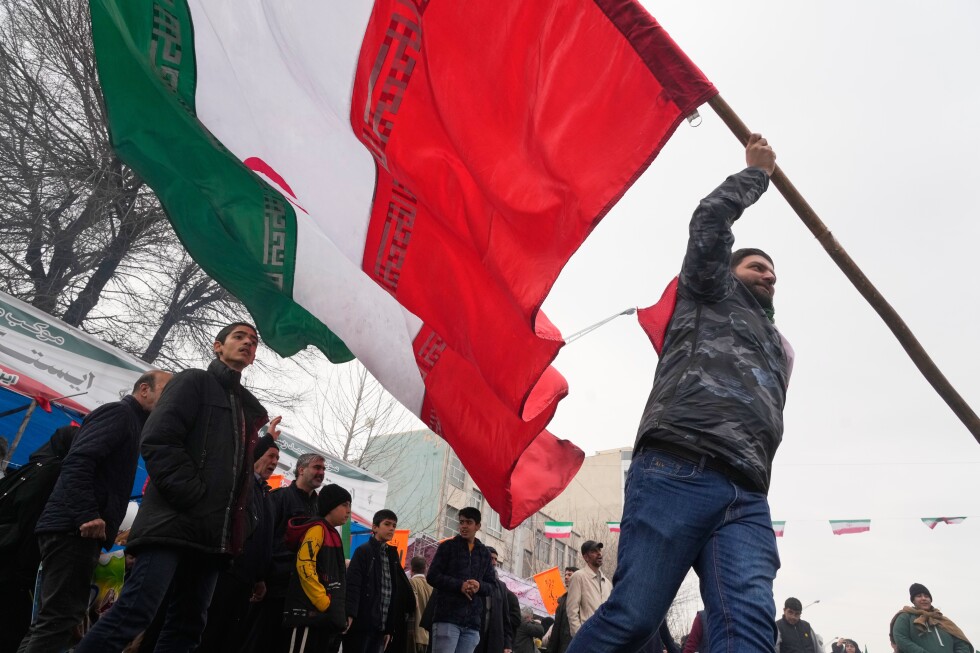
Hundreds of thousands of Iranians gathered across the country Wednesday to commemorate the 47th anniversary of the 1979 Islamic Revolution, participating in state-organized rallies that have become a cornerstone of Iran’s political calendar.
In Tehran, crowds converged on the iconic Azadi (Freedom) Square, where the towering monument serves as the symbolic heart of the annual celebrations. Government officials, clerics, and supporters of the Islamic Republic filled the streets in a display of national unity that the government promotes each year to commemorate the overthrow of the U.S.-backed Shah Mohammad Reza Pahlavi.
The revolution, which brought Ayatollah Ruhollah Khomeini to power and established the Islamic Republic, fundamentally altered Iran’s political landscape and its relationship with Western powers, particularly the United States. The anniversary celebrations serve as a reminder of the country’s break from its monarchical past and its embrace of an Islamic system of governance.
This year’s commemorations took place against a backdrop of heightened regional tensions. Many participants carried images of slain military commander General Qassem Soleimani, who was killed in a U.S. drone strike in Baghdad in 2020. His death continues to be a rallying point for anti-American sentiment in Iran, with many viewing him as a national hero and martyr.
The Revolutionary Guard, Iran’s elite military force that wields significant influence in the country’s political and economic spheres, maintained a visible presence throughout the event. Guards stood watch near the Azadi monument, underscoring the military’s central role in protecting the revolutionary ideology that defines the Islamic Republic.
As is customary during these celebrations, displays of military strength featured prominently. Iranian-built missiles were exhibited at the square, with some attendees taking selfies in front of the weaponry. These displays serve as a demonstration of Iran’s indigenous defense capabilities, developed largely in response to decades of international sanctions and isolation.
The annual rallies also provide a platform for the government to showcase popular support for the revolutionary ideals at a time when the country faces significant economic challenges. Iran’s economy continues to struggle under the weight of international sanctions, particularly those reimposed after the U.S. withdrawal from the nuclear deal in 2018.
Despite these hardships, the turnout at this year’s events appeared substantial, with people of all ages participating. Families with children, elderly citizens, and young adults were all visible in the crowds. Many waved Iranian flags or carried placards with revolutionary slogans and images of the country’s leadership.
The commemoration of the revolution remains a significant date on Iran’s national calendar, representing not just a historical event but an ongoing ideological commitment that continues to shape the country’s domestic policies and international relations nearly five decades after the fall of the Shah.
For Iran’s leadership, these annual celebrations serve a dual purpose: honoring the country’s revolutionary past while reinforcing its current political system in the face of both domestic and international challenges.
Fact Checker
Verify the accuracy of this article using The Disinformation Commission analysis and real-time sources.

6 Comments
Curious to see how the commemorations are portrayed in the international media. The government likely uses the rallies to bolster its political messaging, but the true public sentiment is harder to gauge from the outside.
The photos highlight the scale and pageantry of the Tehran rally. It’s a powerful visual representation of the Islamic Republic’s enduring influence and the importance of the revolution in the national psyche.
Regardless of one’s views on the revolution, these large-scale events showcase the Iranian people’s passion and pride in their country’s history. It will be interesting to see how the commemorations evolve over time.
Fascinating to see the scale of the rallies marking the Islamic Revolution’s anniversary in Iran. It’s a major political and symbolic event that reflects the country’s continued embrace of its revolutionary identity.
The revolution was a defining moment in Iran’s history that reshaped its relationship with the West. While the annual celebrations demonstrate national unity, they also highlight the ongoing tensions and ideological divides within the country.
That’s a good point. The revolution’s legacy remains a contentious issue, with supporters and critics still debating its impact and lasting significance.