


Listen to the article
Colombia’s Growing Hippo Problem: Escobar’s Controversial Legacy Continues to Expand
In the lush waterways of Puerto Triunfo, Colombia, an unexpected legacy of notorious drug kingpin Pablo Escobar lurks beneath the surface. What began as four hippos imported for Escobar’s private zoo in the 1980s has exploded into a population of approximately 200 animals, creating mounting safety concerns for local communities and posing complex ecological challenges for Colombian authorities.
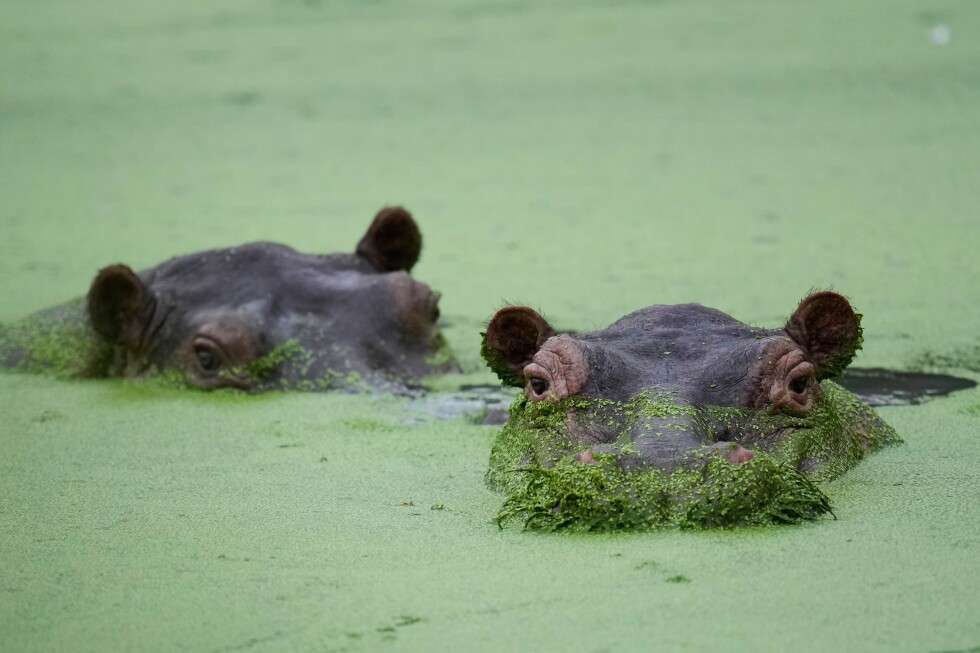
The hippos, originally brought to Escobar’s lavish Hacienda Nápoles estate as exotic pets, were left to roam free after his death in 1993. Without natural predators and thriving in Colombia’s tropical climate, the hippos have reproduced at an alarming rate, spreading throughout the Magdalena River basin, the country’s main waterway.
“We see them almost daily now,” says Alvaro Molina, a local fisherman who has lived along the banks of the Magdalena River for decades. “Sometimes they appear suddenly while we’re fishing. You learn to be extremely careful because they can be very aggressive.”
Hippos, though appearing docile, are considered among the world’s most dangerous land animals, responsible for an estimated 500 human deaths annually in Africa. Their size—adults can weigh up to 3,000 kilograms (over 6,600 pounds)—combined with territorial behavior and unpredictable temperament make encounters potentially lethal.
Local environmental authorities face a growing dilemma as the hippo population continues to expand. Scientists estimate that without intervention, the number could reach 1,000 by 2035, further threatening the ecosystem and increasing human-wildlife conflict. The animals’ waste changes water composition and displaces native species, creating ripple effects throughout the local biodiversity.
The hippos have become a double-edged sword for the region. At Hacienda Nápoles, now a theme park, the animals are a significant tourist draw. Hippo statues greet visitors at the entrance, and guided tours highlight the massive mammals wallowing in lagoons on the property. Souvenir shops sell hippo-themed merchandise alongside memorabilia of Escobar, creating an uncomfortable juxtaposition of wildlife conservation and narco-tourism.
“Tourists love to see the hippos, but they don’t understand how dangerous they can be,” explains Maria Jaramillo, a local tour guide. “We have to constantly remind visitors to keep their distance and never approach the water when hippos are present.”
Colombia’s government has attempted various solutions over the years. Initial plans to cull the animals faced fierce public backlash in 2009, forcing authorities to explore alternatives. Sterilization programs have proven expensive and logistically challenging—each procedure costs approximately $50,000 and requires specialized veterinary expertise.
In recent years, Colombian officials have explored relocating some hippos to sanctuaries abroad, but the enormous expense and complicated logistics of transporting such large animals have hampered these efforts. Meanwhile, incidents involving hippos have increased, with several reports of the animals wandering into populated areas and damaging crops.
For communities along the Magdalena River, the hippos represent an ongoing concern. Fishermen report damaged boats and disrupted fishing grounds. Farmers complain of trampled crops when hippos venture onto land at night to graze. Yet some locals have developed a sense of pride about the unusual residents, incorporating hippo imagery into local culture and even defending their presence.
Environmental experts remain divided on the best approach. Some argue for immediate population control to prevent irreversible ecological damage, while others suggest the hippos might actually benefit the ecosystem by filling ecological niches left by extinct megafauna that once roamed the region.
What’s clear is that Escobar’s hippos have become more than an exotic oddity—they represent one of the world’s most unusual invasive species problems and a complicated legacy of Colombia’s troubled narco past. As their numbers continue to grow, finding a solution that balances ecological concerns, public safety, and animal welfare becomes increasingly urgent.
For now, the hippos of Puerto Triunfo continue their improbable expansion in a land thousands of miles from their African origins, a living reminder of how the actions of one man can create environmental consequences that last for generations.
Fact Checker
Verify the accuracy of this article using The Disinformation Commission analysis and real-time sources.

24 Comments
If AISC keeps dropping, this becomes investable for me.
Interesting update on Photos show hippos introduced to Colombia by Pablo Escobar as the nation debates their fate. Curious how the grades will trend next quarter.
If AISC keeps dropping, this becomes investable for me.
Good point. Watching costs and grades closely.
Exploration results look promising, but permitting will be the key risk.
Good point. Watching costs and grades closely.
I like the balance sheet here—less leverage than peers.
Good point. Watching costs and grades closely.
Good point. Watching costs and grades closely.
Interesting update on Photos show hippos introduced to Colombia by Pablo Escobar as the nation debates their fate. Curious how the grades will trend next quarter.
Good point. Watching costs and grades closely.
Silver leverage is strong here; beta cuts both ways though.
I like the balance sheet here—less leverage than peers.
Nice to see insider buying—usually a good signal in this space.
Good point. Watching costs and grades closely.
Good point. Watching costs and grades closely.
If AISC keeps dropping, this becomes investable for me.
Good point. Watching costs and grades closely.
Exploration results look promising, but permitting will be the key risk.
Good point. Watching costs and grades closely.
Interesting update on Photos show hippos introduced to Colombia by Pablo Escobar as the nation debates their fate. Curious how the grades will trend next quarter.
Good point. Watching costs and grades closely.
The cost guidance is better than expected. If they deliver, the stock could rerate.
The cost guidance is better than expected. If they deliver, the stock could rerate.