


Listen to the article
In the heart of Germany’s Spreewald Forest delta, a unique postal tradition has resumed with the arrival of spring. Andrea Bunar, a 55-year-old postal worker, has returned to delivering mail by barge through the intricate waterways southeast of Berlin, continuing a service that dates back 129 years.
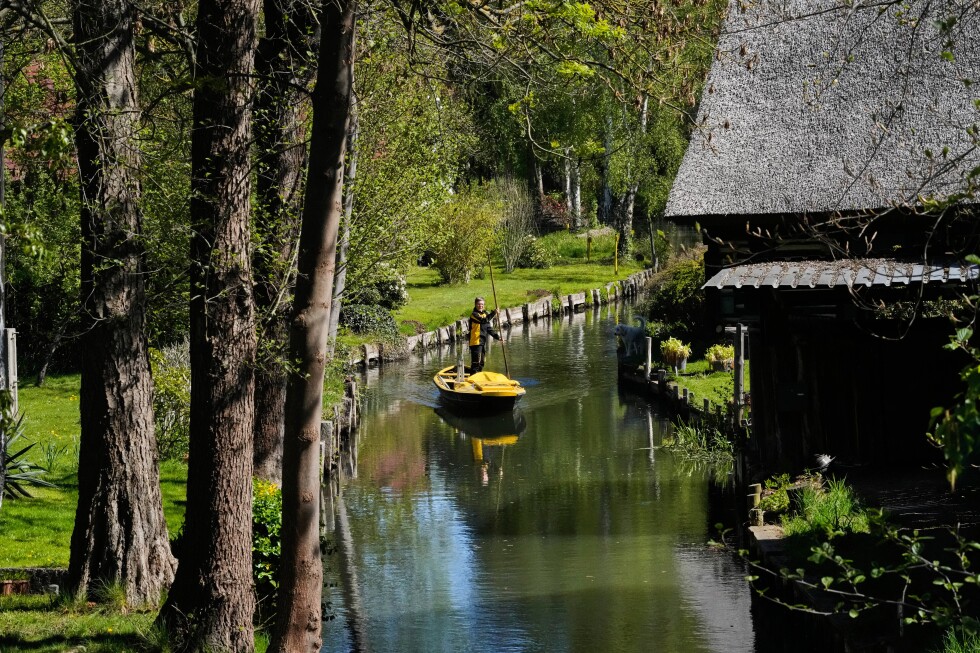
“The start of the season is always special for me,” Bunar said as she embarked on her yellow postal barge in full uniform. “After the long winter break, I enjoy being in nature and back on the water.”
For 14 years, Bunar has been the lifeline to the village of Lehde, located about 100 kilometers (60 miles) southeast of the German capital. The isolated community, which resembles a verdant Teutonic miniature of Venice, is the only place in Germany where mail is delivered by watercraft rather than traditional methods.
During winter months, Bunar delivers mail by car, navigating icy roads in a process she describes as cumbersome and time-consuming. But from April through October, she returns to her preferred mode of transportation: a nine-meter-long (29-foot) barge that she skillfully maneuvers through shallow waters using a single long oar for rowing, steering, and navigation.
The postal route spans approximately 8 kilometers (5 miles) of waterways, with Bunar depositing mail Monday through Saturday in boxes residents have positioned along the riverbanks. Her weekly deliveries amount to around 600 letters and 80 packages, a journey that typically takes about two hours to complete.
“I already delivered an e-scooter, a lawnmower and a fridge — sometimes my barge feels like a little container ship,” she explained, noting a shift in recent years toward fewer letters and more packages. On her first day of the spring season this Wednesday, her cargo included a large saw alongside the usual bills and correspondence.
The Spreewald region is renowned for its extensive network of 300 kilometers (185 miles) of waterways that wind through lush forests and wetlands. As an inland delta, the Spree River—which also flows through Berlin—branches into hundreds of small canals, creating a unique ecosystem that has earned UNESCO biosphere designation to protect its diverse fauna and flora.
The history of Lehde’s water-based postal service reflects changing communication patterns in rural Germany. Prior to 1894, villagers collected their mail just once weekly after Sunday church services. However, as urbanization accelerated and the need for regular long-distance communication grew, the German postal service adapted by increasing delivery frequency and, in Lehde’s case, establishing the distinctive barge delivery system.
Beyond her primary mail delivery duties, Bunar also sells stamps to residents along her route and accepts outgoing mail. This comprehensive service helps maintain connections for the remote community, balancing traditional methods with modern needs.
For Bunar, the role represents more than employment—it’s a calling. “This is and has been my dream job all along,” she said with a smile. “Being on the water is just so relaxing—it slows down life.”
As package deliveries continue to increase in the age of e-commerce, this centuries-old delivery method demonstrates remarkable resilience and adaptability. The contrast between Bunar’s traditional barge and the modern items she transports—from electronics to appliances—highlights the fascinating intersection of historical practice and contemporary life in this unique corner of Germany.
Fact Checker
Verify the accuracy of this article using The Disinformation Commission analysis and real-time sources.

12 Comments
What a delightful and sustainable postal tradition! Navigating the waterways by boat seems like a peaceful and scenic way to do the job. I’d be curious to learn more about how this system has evolved over the decades.
It’s great to see historical practices like this being preserved. I imagine the postal workers really feel a sense of connection to the community they serve.
This sounds like a charming, peaceful way to get the mail. I’d love to see the postal worker skillfully navigating the waterways. It’s great that they’ve kept this tradition alive for over a century.
I wonder how the seasonal transition impacts the postal service. Switching between car and boat must require flexibility and adaptability from the workers.
Delivering mail by boat is such a unique service. I imagine the villagers really appreciate the personal connection and the beautiful natural setting. It’s impressive that this tradition has endured for so long.
I’d be curious to learn more about the logistics of this postal service. How do they ensure reliable delivery year-round with the seasonal changes?
Delivering mail by boat in a German forest delta is such a unique and fascinating system. I’d love to see the postal worker in action, skillfully maneuvering the waters. It’s really impressive that this tradition has endured for over a century.
I wonder how the seasonal changes impact the logistics of this postal service. Switching between car and boat must require a lot of adaptability and flexibility from the workers.
What a charming and sustainable postal tradition! Navigating the waterways by boat must be a peaceful and scenic way to do the job. I wonder if the residents view this as a point of local pride.
It’s great to see historical practices like this being preserved. I imagine the postal workers develop a real connection to the community they serve.
How fascinating! Delivering mail by boat in a German forest delta is such a unique tradition. I wonder how the residents feel about this traditional postal service compared to more modern methods.
Maintaining this centuries-old custom must be quite a logistical challenge, but it’s wonderful to see it continue. I imagine the villagers appreciate the personal touch.