


Listen to the article
U.S. Indicts Sinaloa Governor, Nine Mexican Officials on Drug Trafficking Charges
In a significant escalation of cross-border law enforcement actions, U.S. federal prosecutors have charged 10 current and former Mexican officials, including the sitting governor of Sinaloa state, with drug trafficking and weapons offenses. The charges, unsealed Wednesday in a Manhattan federal court, accuse the officials of helping the Sinaloa Cartel import massive quantities of fentanyl, heroin, cocaine, and methamphetamine into the United States.
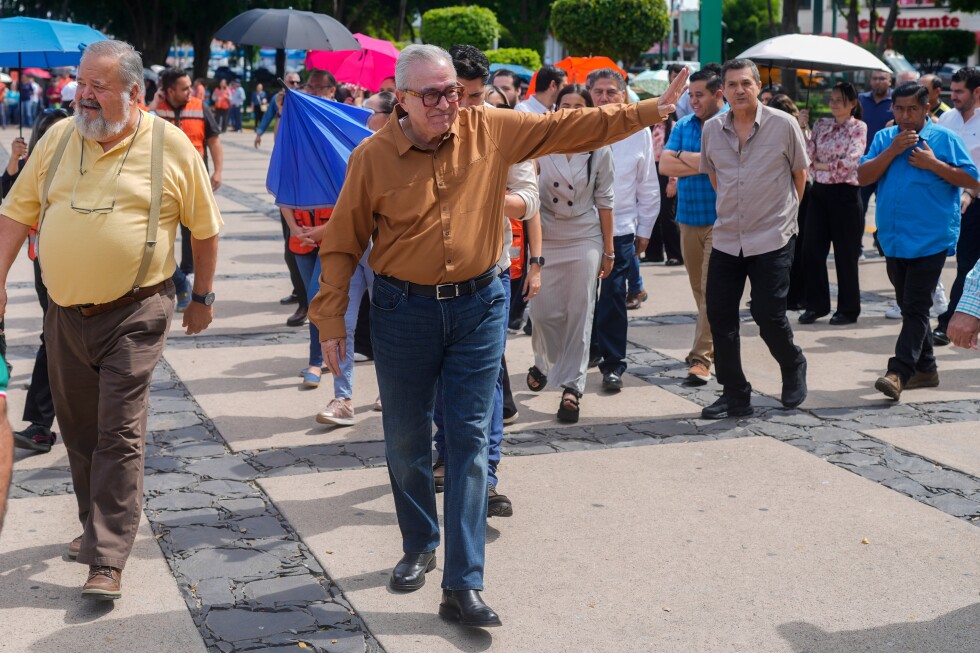
Rubén Rocha Moya, 76, who has governed Sinaloa since November 2021, faces the most serious allegations. Prosecutors charged him with narcotics importation conspiracy and possession of machine guns and destructive devices. If convicted, Rocha could receive a life sentence or a minimum of 40 years in prison.
None of the defendants are currently in U.S. custody. The Mexican government confirmed it had received multiple extradition requests but has not indicated how it will respond to these demands.
Rocha, who was born in the same town as infamous drug lord Joaquín “El Chapo” Guzmán, vehemently denied the accusations. “I categorically and completely reject” the charges, he wrote on social media platform X, describing them as a “perverse strategy” to violate Mexico’s national sovereignty and “an attack” on the country’s ruling party.
According to the indictment, the officials were closely aligned with the “Los Chapitos” faction of the Sinaloa Cartel, run by the sons of El Chapo, who is currently serving a life sentence in a U.S. prison. U.S. Attorney Jay Clayton stated in a release, “The Sinaloa Cartel, and other drug trafficking organizations like it, would not operate as freely or successfully without corrupt politicians and law enforcement officials on their payroll.”
This isn’t the first time Rocha’s name has been linked to cartel activities. In 2023, he was mentioned in a letter written by a Sinaloa Cartel member who was kidnapped by rivals and later turned over to U.S. law enforcement. The letter claimed the capo believed he was traveling to meet with Rocha when he was abducted.
The charges present a political dilemma for Mexican President Claudia Sheinbaum, as at least three of the indicted officials – including Rocha, the mayor of Sinaloa’s capital, and a senator – belong to her progressive Morena party. Some party members have already characterized the indictment as a politically motivated attack.
“This carries tremendous consequences for her politically,” said Vanda Felbab-Brown, a senior fellow in foreign policy at the Brookings Institution. Felbab-Brown noted that Sheinbaum faces difficult choices ahead of Mexico’s midterm elections next year. If she pursues Rocha’s arrest and possible extradition, she risks internal political fallout. If she resists U.S. pressure, she could jeopardize critical trade relations with the United States.
The indictments come just days after U.S. Ambassador to Mexico Ron Johnson announced an anti-corruption campaign targeting Mexican officials allegedly linked to organized crime. “Corruption not only hinders progress, it distorts it,” Johnson said last week. “It increases costs, weakens competition, and erodes the trust upon which markets depend.”
Sheinbaum responded cautiously on Monday, saying her government had not seen “any evidence” of the corruption charges and insisting that “any investigation in the United States against any person in Mexico must have evidence reviewed by the (Mexican) Attorney General’s Office.”
The case echoes the 2023 conviction of Genaro García Luna, Mexico’s former public security secretary under President Felipe Calderón, who received a 38-year prison sentence in the U.S. for taking bribes from the Sinaloa Cartel. García Luna has denied the allegations and is appealing his conviction.
Meanwhile, violence between rival factions of the Sinaloa Cartel continues to ravage the northern Mexican state as they battle for territorial control. The cartel is among eight Latin American crime groups designated as terrorist organizations by the U.S. government.
Sheinbaum’s government has already detained several local officials across Mexico in an ongoing crackdown against cartels, spurred by mounting pressure from the Trump administration. How she navigates these new indictments could significantly impact both U.S.-Mexico relations and her domestic political standing.
Fact Checker
Verify the accuracy of this article using The Disinformation Commission analysis and real-time sources.

6 Comments
Allegations of such widespread corruption at the highest levels of the Mexican government are deeply troubling. This highlights the immense challenge of combating the powerful and entrenched drug cartels. Strengthening cross-border cooperation and anti-corruption efforts will be crucial to making progress.
You’re right, this case underscores the need for Mexico and the US to work together more effectively to root out corruption and dismantle the drug trafficking operations. It won’t be easy, but it’s a necessary step.
If these charges are proven, it would be a devastating blow to Mexico’s credibility and efforts to combat the drug trade. The involvement of senior officials, including a sitting governor, is extremely worrying. Addressing this level of graft will require courageous and coordinated action.
The details in this indictment are quite alarming. The alleged collusion between high-level Mexican officials and the Sinaloa Cartel is very troubling. Rooting out this entrenched corruption will be critical, but also incredibly challenging given the power and reach of the cartels.
This is a serious escalation in the ongoing battle against drug trafficking in Mexico. The allegations against these high-level officials, including the sitting Sinaloa governor, are extremely concerning if true. It will be interesting to see how the Mexican government responds to the US extradition requests.
This is a major escalation in the US crackdown on Mexican drug trafficking and corruption. Charging a sitting state governor is an unprecedented move that signals the gravity of the situation. The Mexican government will face immense pressure to respond forcefully to these allegations.