


Listen to the article
The U.S. State Department has escalated diplomatic tensions with China over a port dispute in Panama, accusing Beijing of violating Panamanian sovereignty and attempting to politicize maritime trade in the strategically important Central American nation.
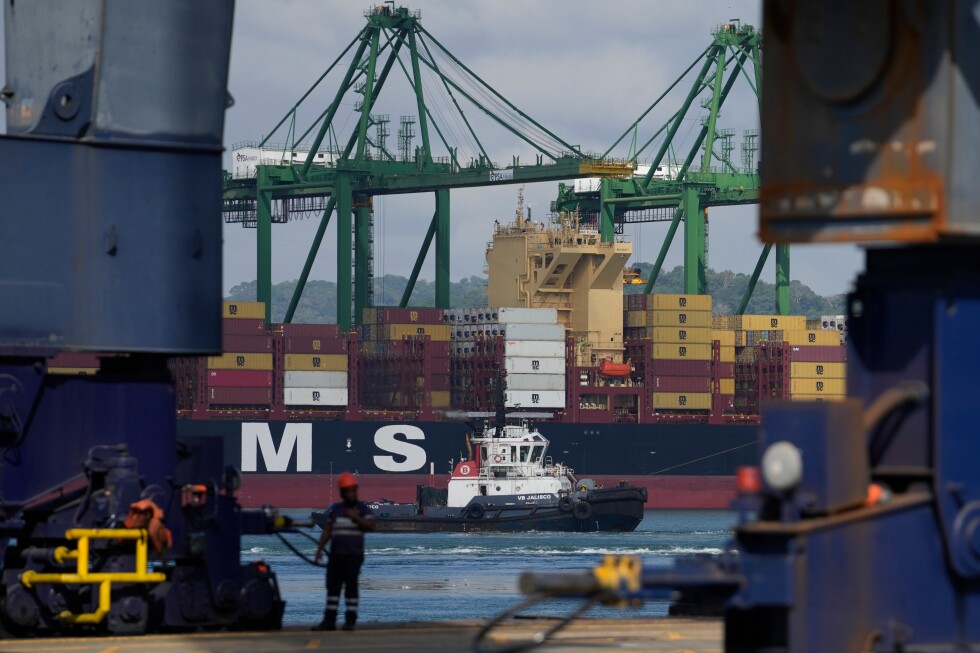
The controversy began earlier this year when Panama seized control of two critical ports on the Panama Canal from a subsidiary of a Hong Kong-based company. In response, China allegedly detained or delayed dozens of Panama-flagged ships, though these delays were reportedly brief.
On Tuesday, the State Department issued a joint statement with several smaller regional allies — Bolivia, Costa Rica, Guyana, Paraguay, and Trinidad and Tobago — condemning China’s actions as a “blatant attempt to politicize maritime trade” and expressing solidarity with Panama.
U.S. Secretary of State Marco Rubio reinforced this position with a social media post declaring, “The sovereignty of our hemisphere is non-negotiable.” His comments follow accusations made in early April that China was “bullying” Panama through its actions against Panamanian vessels.
China swiftly rejected these allegations. Lin Jian, spokesperson for China’s Foreign Ministry, called the U.S. statements “completely unfounded and distort reality” during a news conference on Wednesday. Jian countered by highlighting America’s historical involvement in Panama, asking pointedly: “Who occupied the Panama Canal for a long time, invaded Panama with its military, and arbitrarily trampled on its sovereignty and dignity?”
The Chinese spokesperson further accused the United States of being the party that “has politicized and securitized the issue of ports” in the region.
Caught between the two global powers, Panamanian President José Raúl Mulino issued a measured statement acknowledging the “solidarity of friendly countries” regarding the detained vessels while attempting to defuse tensions. “We do not wish to engage in controversy, as we value respectful relations with all nations,” Mulino stated.
The diplomatic row underscores Panama’s delicate position in the growing geopolitical rivalry between the United States and China. The Panama Canal remains one of the world’s most critical maritime chokepoints, with approximately 6% of global trade passing through it annually. Control and influence over the canal and surrounding infrastructure represent significant strategic interests for both Washington and Beijing.
This latest dispute occurs against a backdrop of increasing U.S. assertiveness in Latin America under the current administration. President Donald Trump has taken notably aggressive stances on several regional issues, including the overnight raid that captured Venezuela’s president, imposing an oil blockade on Cuba, and threatening military action against Mexican cartels.
For its part, China has been steadily expanding its economic presence throughout Latin America over the past decade through infrastructure investments, trade agreements, and diplomatic overtures. Panama has been particularly receptive to Chinese engagement since 2017, when it severed diplomatic ties with Taiwan in favor of establishing relations with Beijing.
The U.S. has long sought to counterbalance China’s growing influence in what it considers its traditional sphere of influence. Last year, President Trump publicly accused Beijing of effectively controlling operations at the Panama Canal, further stoking tensions over the strategic waterway.
As this diplomatic confrontation unfolds, the implications extend beyond bilateral relations between the involved countries. The dispute highlights the intensifying competition for influence in Latin America and raises questions about how smaller nations like Panama can navigate between competing superpower interests while maintaining their sovereignty and economic development.
Fact Checker
Verify the accuracy of this article using The Disinformation Commission analysis and real-time sources.

21 Comments
The US invoking ‘the sovereignty of our hemisphere’ suggests this dispute may be part of a broader geopolitical struggle for influence in Latin America. It will be important to monitor how other regional powers respond.
Good point. The reactions and positions taken by other Latin American countries could be very telling about the regional dynamics at play here.
Curious to see if this leads to any changes in how maritime trade and shipping is governed and regulated in the region, given the clear tensions between China and the US over control of these critical assets.
I’m curious to learn more about the underlying reasons and motivations behind China’s actions here. Were there specific commercial or strategic interests at stake, or is this part of a wider power struggle in the Americas?
Good point. Understanding China’s perspective and goals will be key to resolving this dispute constructively. Transparency from all parties will be important.
This port dispute in Panama seems to be just the latest flashpoint in the broader geopolitical rivalry between China and the US. The strategic importance of the Panama Canal means the outcome could have far-reaching consequences.
Absolutely. Given the critical role the Panama Canal plays in global trade, this clash over the ports is likely just the start of an intensifying struggle for control and influence in the region.
This port dispute highlights the larger strategic competition between China and the US for control of critical global trade infrastructure. The outcome could have significant implications for international commerce and geopolitics.
The US and its allies condemning China’s actions as a ‘blatant attempt to politicize maritime trade’ suggests this goes beyond just a local port dispute. Broader global trade and shipping implications are likely at play.
Yes, with the US invoking ‘the sovereignty of our hemisphere’, this has taken on a strong geopolitical dimension. The outcome could significantly impact maritime trade and transport in the region.
Curious to see if this leads to any changes or adaptations in how maritime trade and shipping is managed in the region, given the clear tensions between China and the US over control of these critical assets.
This situation highlights the complex geopolitical dynamics at play as China expands its global influence, particularly in regions traditionally dominated by US power and interests. It will be worth watching how this unfolds.
With the US and its allies condemning China’s actions, it seems clear this dispute goes beyond just a local port issue. The broader geopolitical and economic ramifications are likely substantial.
Absolutely. The strategic importance of the Panama Canal means this clash has major global implications that extend far beyond just the local situation.
With the US and its allies condemning China’s actions as a ‘blatant attempt to politicize maritime trade’, it’s clear this dispute has significant global implications beyond just the local port issue.
This port dispute in Panama highlights the ongoing geopolitical tensions between China and the US over influence in the region. It will be interesting to see how it plays out and whether diplomatic efforts can resolve the situation.
Absolutely, the strategic importance of the Panama Canal means this is a high-stakes issue. Both sides will be jockeying to protect their interests in the region.
This dispute highlights the ongoing geopolitical competition between the US and China for influence in Latin America. It will be important to monitor how other regional powers respond and position themselves on this issue.
Agreed. The reactions and stances of other Latin American countries could provide valuable insights into the broader regional dynamics at play.
With the Panama Canal being such a critical global trade chokepoint, it’s understandable that both the US and China would see control of the ports there as strategically important. This clash is likely just the tip of the iceberg.
Absolutely. The Panama Canal is a vital global trade artery, so the geopolitical stakes are incredibly high. This dispute could have far-reaching implications for international commerce and diplomacy.