


Listen to the article
Russia’s Global Recruitment of Foreign Fighters Raises Human Rights Concerns
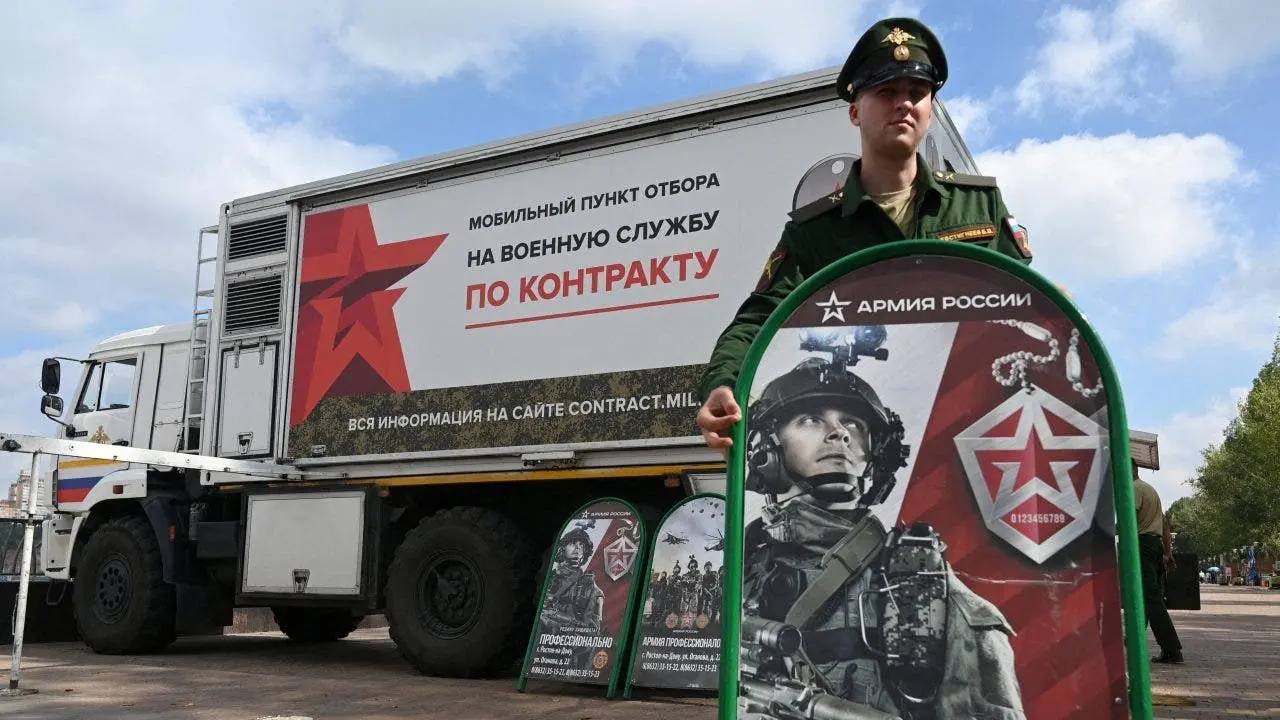
Russia has established a vast global recruitment network drawing tens of thousands of vulnerable foreign nationals into its war against Ukraine, according to a comprehensive investigation by human rights organizations. The recruitment pipeline spans more than 130 countries, with investigators alleging coercive, deceptive, and in some cases trafficking-like practices.
The report, published jointly by the International Federation for Human Rights (FIDH), Truth Hounds, and the Kazakhstan International Bureau for Human Rights, estimates that Russia has recruited at least 27,000 foreign fighters since February 2022. These recruits come primarily from Central and South Asia, Africa, the Middle East, and Latin America.
Ukrainian authorities cited in the report project that Russia could recruit another 18,500 foreign nationals in 2026 alone, which would represent the highest annual total since the full-scale invasion began.
“This report highlights something fundamental: that the use of foreign fighters by Russia is neither a marginal nor a spontaneous phenomenon,” said Alexis Deswaef, president of the International Federation for Human Rights. “Russia has built a global recruitment system that deliberately targets the most vulnerable populations — undocumented migrants, detainees, precarious workers, or even foreign students — across dozens of countries.”
The investigation reveals that Russia’s recruitment strategy has evolved significantly since the war began. Early in the conflict, Russia relied primarily on ideologically motivated volunteers. By mid-2023, however, Moscow had institutionalized a broader model by expanding legal eligibility for foreign nationals, easing language and residency requirements, and offering citizenship and financial incentives in exchange for military service.
This shift came after Russia suffered major battlefield losses and sought to avoid another politically risky domestic mobilization, the report suggests. The formalized recruitment system has allowed Russia to sustain its war machine without drawing from its own population.
According to the investigators, Russia’s methods for recruiting foreign nationals often exploit economic desperation and legal vulnerability. Inside Russia, migrants were allegedly pressured to enlist through raids, detention threats, document confiscation, fabricated criminal charges, and physical abuse. Outside Russia, potential recruits were frequently lured through promises of civilian jobs, non-combat positions, or pathways to Europe, only to find themselves bound by military contracts they often could not read or understand.
Of 16 prisoners of war interviewed for the report, 13 said they were told they would not be required to fight, yet were later deployed to frontline positions, typically within weeks of their recruitment. Many foreign recruits were reportedly sent to participate in “meat assaults” — high-risk frontal attacks associated with severe casualty rates.
Ukrainian estimates cited in the report indicate that at least 3,388 foreign fighters have been killed, with some estimates suggesting that one in five recruits may not survive deployment.
“Despite the fact that many states are taking measures to curb recruitment, and although Russia claims it is no longer recruiting citizens from certain countries, the predatory recruitment continues,” said Maria Tomak, associated researcher and advocacy expert at Truth Hounds. “Our primary objective remains clear: to halt recruitment and to compel Russia to repatriate those already recruited.”
While the report acknowledges that not every foreign fighter was trafficked, and some enlisted voluntarily for financial gain, it concludes there are reasonable grounds to believe that at least some cases meet international definitions of trafficking in persons through deception, coercion, and exploitation.
The broader concern for human rights investigators is that Russia’s war effort now partially depends on a transnational manpower pipeline that weaponizes global inequality, drawing economically desperate men from around the world into one of Europe’s deadliest conflicts.
The report calls on governments, international organizations, and Ukraine’s allies to crack down on recruitment networks, apply diplomatic pressure on Moscow, and push for the repatriation of foreign nationals already caught in Russia’s military system.
Fox News Digital reached out to the Russian Embassy in Washington, D.C., and Russia’s Defense Ministry for comment but did not receive a response.
Fact Checker
Verify the accuracy of this article using The Disinformation Commission analysis and real-time sources.

14 Comments
This is a concerning report on Russia’s predatory recruitment tactics targeting vulnerable migrants for its war in Ukraine. The scale and global reach of this operation raise serious human rights issues that deserve further scrutiny.
Agreed. The exploitation of foreign nationals in this manner is unethical and likely violates international law. Russia must be held accountable for these practices.
It’s disturbing to see Russia aggressively recruiting foreign fighters, often through deceptive means, to bolster its forces in Ukraine. This underscores the growing humanitarian crisis stemming from the invasion.
Absolutely. The report highlights the urgent need for the international community to intervene and protect these vulnerable populations from being exploited in Russia’s unlawful war.
The findings in this report are deeply concerning. Russia’s global recruitment network targeting vulnerable migrants for its war in Ukraine is a deplorable practice that violates fundamental human rights. Urgent action is needed to address this crisis.
This report provides a sobering look at the lengths Russia will go to in order to maintain its military presence in Ukraine. The recruitment of vulnerable migrants is a cynical and exploitative tactic that deserves strong international condemnation.
Agreed. Russia’s disregard for human rights in its pursuit of military objectives is deeply troubling. The international community must take action to protect these migrants and hold Russia accountable.
The details in this report are truly alarming. Russia’s predatory recruitment of vulnerable migrants for its war in Ukraine is a gross violation of human rights that demands a strong international response.
The findings in this report are a stark reminder of the human cost of Russia’s invasion of Ukraine. Recruiting vulnerable migrants under false pretenses is a deplorable practice that violates fundamental human rights.
While the details in this report are shocking, it’s unfortunately not surprising that Russia would resort to such predatory tactics to sustain its military campaign in Ukraine. The scale of this recruitment network is alarming.
This report sheds light on a concerning trend of Russia exploiting migrants and other vulnerable populations to bolster its forces in Ukraine. The international community must work to safeguard these individuals and hold Russia responsible.
Absolutely. The scale and systematic nature of Russia’s recruitment tactics are truly disturbing. Urgent action is needed to protect these migrants and address this human rights crisis.
This report paints a troubling picture of Russia’s disregard for human rights in its pursuit of military objectives in Ukraine. The exploitation of vulnerable migrants is a shameful tactic that must be condemned and stopped.
Agreed. The international community needs to take immediate action to protect these migrants and hold Russia accountable for these egregious human rights abuses.