


Listen to the article
Nearly 3,000 Evacuated as Philippines’ Mayon Volcano Shows Signs of Eruption
Philippine authorities evacuated nearly 3,000 villagers from the foothills of Mayon Volcano after detecting mild eruptions and dangerous pyroclastic flows, officials announced Wednesday.
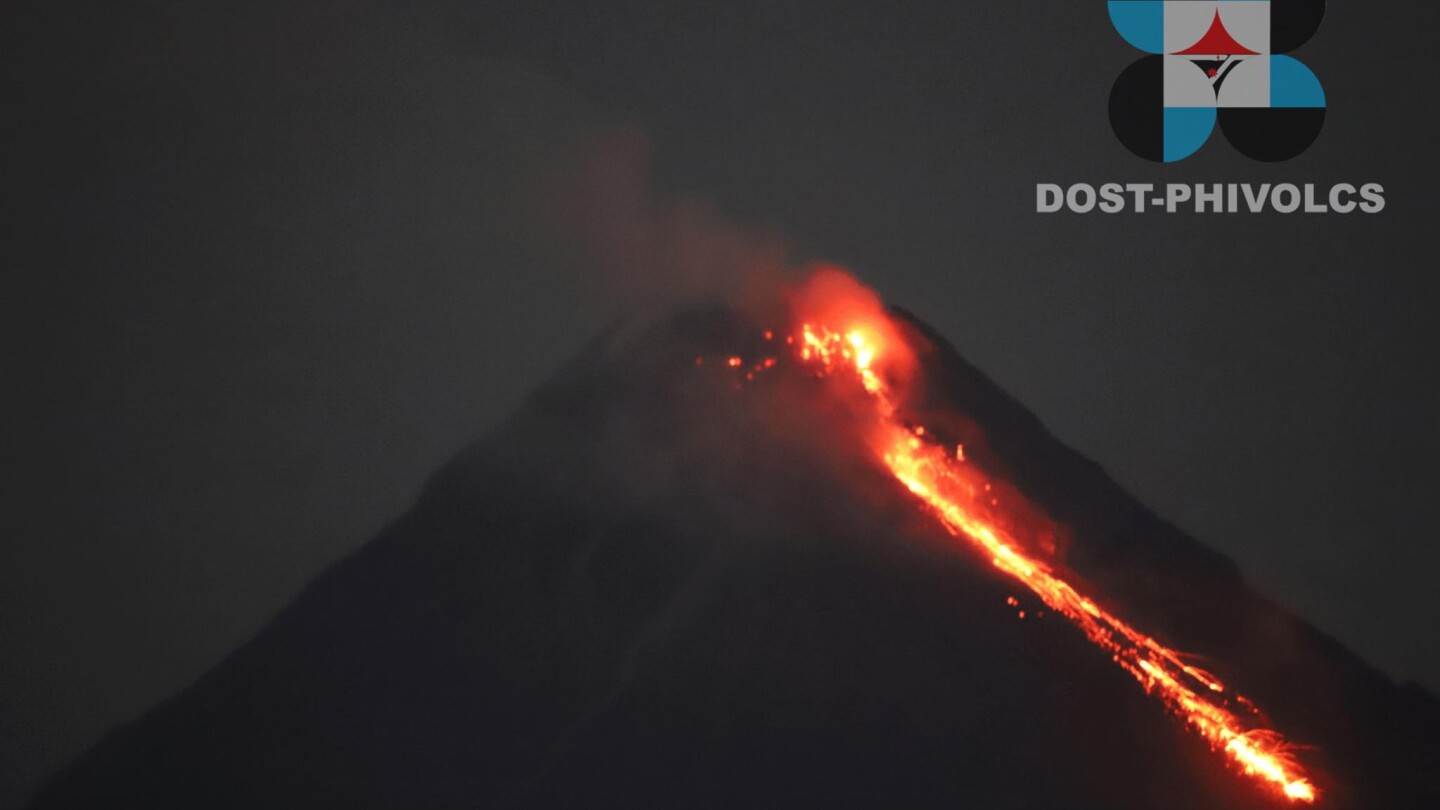
The alert level for the Philippines’ most active volcano was raised to level 3 on a 5-point scale after scientists observed intermittent rockfalls from the peak crater, some “as big as cars,” along with flows of super-heated rock fragments, ash and volcanic gas down the slopes.
“This is already an eruption, a quiet one, with lava accumulating up the peak and swelling the dome, which cracked in some parts and resulted in rockfalls,” explained Teresito Bacolcol, the country’s chief volcanologist, in an interview with The Associated Press.
Bacolcol noted it remains uncertain whether Mayon’s activity will intensify into a more violent eruption, citing the absence of other key warning signs such as increased volcanic earthquakes or elevated sulfur dioxide emissions that typically precede major events.
The evacuation effort involved troops, police, and disaster response teams who helped relocate 2,800 residents from 729 households within the designated 6-kilometer (3.7-mile) permanent danger zone surrounding the volcano’s crater. According to Albay provincial officials, this area has long been marked with concrete warning signs indicating the persistent risk.
An additional 600 villagers living outside the permanent danger zone have voluntarily relocated to government-run emergency shelters as a precautionary measure, according to Claudio Yucot, regional director of the Office of Civil Defense.
The iconic 2,462-meter (8,007-foot) Mayon Volcano, renowned for its nearly perfect cone shape, stands as both a premier tourist attraction and the most volatile of the country’s 24 active volcanoes. Historical records document 54 eruptions since documentation began in 1616, establishing a pattern of regular volcanic activity.
Despite the well-documented dangers and official prohibitions against settlement within the permanent danger zone, thousands of villagers have persistently made their homes or maintained farms in the volcano’s fertile foothills. Lucrative enterprises, including sand and gravel quarrying operations and tourism activities, have also flourished in defiance of safety restrictions.
A sobering reminder of Mayon’s destructive potential stands 13 kilometers (8 miles) from the volcano — the partially buried belfry of a 16th-century Franciscan stone church. This remnant is all that remains of a baroque church that was engulfed by volcanic mudflow during an 1814 eruption that claimed approximately 1,200 lives, including many who had sought sanctuary within the church’s walls.
The situation surrounding Mayon reflects a broader national challenge, as economically disadvantaged Filipinos often have little choice but to inhabit hazardous areas throughout the archipelago. Communities persist not only near active volcanoes like Mayon but also on landslide-prone mountainsides, vulnerable coastal areas, earthquake fault lines, and flood-prone lowlands.
The Philippines’ location along the Pacific “Ring of Fire” — a horseshoe-shaped belt of seismic activity encircling the Pacific Ocean — exposes the nation to frequent volcanic eruptions and earthquakes. This geological position, combined with approximately 20 typhoons and tropical storms that strike the country annually, creates a landscape of persistent natural hazards for many communities.
Officials continue to monitor Mayon’s activity closely, maintaining evacuation orders and safety protocols while scientists assess whether current conditions might escalate to the more dangerous levels 4 or 5, which would signal impending violent eruptions with significant ashfall and widespread impact.
Fact Checker
Verify the accuracy of this article using The Disinformation Commission analysis and real-time sources.

9 Comments
Interesting to see the details on the volcanic activity at Mayon, with the reports of rockfalls and pyroclastic flows. I wonder if the situation will escalate further or if this is just a temporary increase in activity. Evacuations are certainly the right call in the meantime.
Volcanic activity is always a concerning situation, especially in a country like the Philippines that is prone to seismic events. Evacuating thousands of villagers is a prudent measure, even if the eruption risk remains uncertain. Safety should be the top priority.
Glad to see the authorities are taking the volcano activity seriously and evacuating nearby residents. Safety should be the top priority when dealing with unpredictable natural hazards like this. Hopefully the situation remains stable and the evacuation is just a precaution.
Agreed, it’s important to err on the side of caution when it comes to volcanic activity. Better to be overprepared than caught off guard by a sudden eruption.
Mayon Volcano is one of the most active in the Philippines, so it’s not surprising to see increased activity. Monitoring the situation closely and evacuating nearby communities is a sensible approach to mitigate any potential risks.
Absolutely. Volcanic eruptions can be incredibly destructive, so being proactive with evacuations is the responsible thing to do, even if the situation doesn’t escalate further.
It’s good to see the Philippines government taking a cautious approach here. Volcano monitoring and early evacuation can save a lot of lives if the situation deteriorates. Let’s hope Mayon Volcano remains relatively calm and the evacuees can return home soon.
The Philippines has a long history of dealing with volcanic hazards, so it’s not surprising to see them taking this threat seriously. Mayon Volcano is known for its unpredictable behavior, so it’s wise to err on the side of caution and get people out of harm’s way.
Mayon Volcano is a major tourist attraction in the Philippines, but public safety has to come first when it shows signs of increased activity. Hopefully the evacuation goes smoothly and the situation stabilizes without any major eruption. Volcanic monitoring is so important in areas prone to these hazards.