


Listen to the article
Pakistan Navigates Diplomatic Tightrope as Iran Conflict Escalates
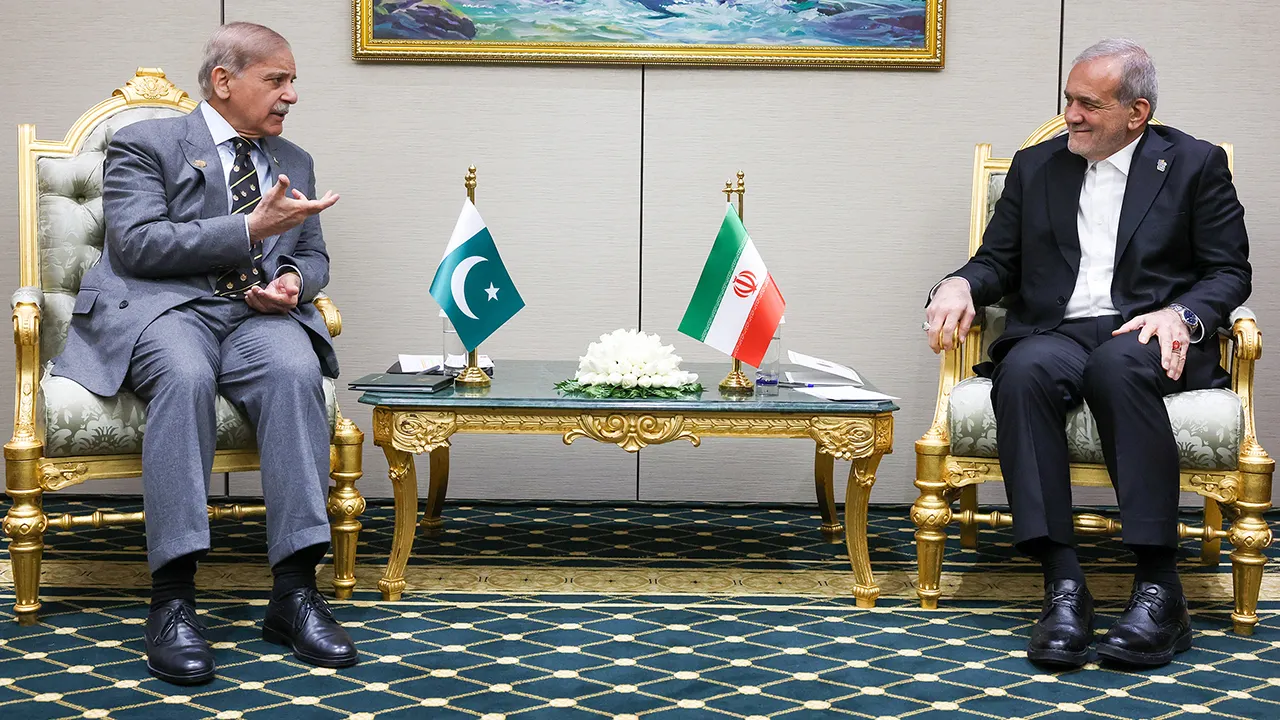
Pakistan finds itself in an increasingly precarious position as tensions in the Middle East intensify, forcing the nuclear-armed nation to carefully balance its relationships with competing regional powers.
Islamabad has adopted a cautious diplomatic approach thus far, condemning strikes against Iran while simultaneously calling for de-escalation. However, analysts warn this position of relative neutrality may become untenable as pressure mounts from all sides.
“Pakistan is putting itself forward as a mediator between the U.S. and Iran, but unconvincingly,” says Edmund Fitton-Brown, senior fellow at the Foundation for Defense of Democracies. “Its own record of staying out of military entanglements is unimpressive.”
Central to Pakistan’s delicate position is its recently signed defense agreement with Saudi Arabia, which stipulates that aggression against one country will be treated as a threat to both. This landmark agreement commits Pakistan to supporting Riyadh while potentially risking confrontation with Iran.
Pakistan already maintains troops in Saudi Arabia for training and defense support, and officials have stated there is “no question” of coming to the kingdom’s aid if needed. Within days of the conflict’s outbreak, Pakistan’s army chief, General Asim Munir, made an emergency visit to Saudi Arabia to discuss joint responses to Iranian strikes.
The Saudi-Pakistani relationship provides critical economic benefits for Islamabad, particularly as the country battles a severe economic crisis. Saudi Arabia has already begun arranging energy supply support as war-related fuel disruptions affect import-dependent Pakistan.
Yet Pakistan’s relationship with Iran remains equally vital. The two nations share a 565-mile border, substantial trade connections, and significant religious ties. Pakistan hosts the world’s second-largest Shiite community after Iran, and pro-Iran regime protests following Ayatollah Ali Khamenei’s assassination turned deadly, requiring military intervention and curfews in parts of the country.
Maintaining cordial relations with Tehran is essential for containing domestic sectarian tensions and preventing insurgency from Pakistan’s minority Baloch community. Iran is also an increasingly important economic partner, with bilateral trade targeted to reach $10 billion by 2028.
“Pakistan is geographically part of both South Asia and Central Asia, as well as the wider Gulf/MENA region too. Pakistan has always pursued peace, dialogue and order because we know what war does to our region,” explains Mosharraf Zaidi, spokesperson for foreign media to the Pakistani prime minister.
In a significant development last week, a Pakistani oil tanker successfully transited the effectively blockaded Strait of Hormuz. Analysts noted it was the first non-Iranian cargo ship to do so since tensions escalated, suggesting Pakistan may have negotiated safe passage. Officials indicate more Pakistan-bound tankers will likely cross the strait in coming days—a critical development as most of Pakistan’s crude oil and LNG imports pass through this chokepoint.
Pakistan must also navigate its relationship with the United States, which has taken a more confrontational approach toward Iran under President Donald Trump’s second term. During a recent White House briefing, Press Secretary Karoline Leavitt said the administration was coordinating with the Pentagon to assess whether Pakistan is supporting Iran, while describing India as a “good actor.”
India’s positioning has added further pressure on Pakistan, particularly after Prime Minister Narendra Modi’s recent visit to Israel demonstrated New Delhi’s alignment with the anti-Iran coalition.
Despite these challenges, Pakistan has positioned itself as a potential mediator in the conflict. Reports suggest high-level talks between the U.S. and Iran may take place in Islamabad as early as this weekend.
“Pakistan wants to matter to the U.S. and to be a better partner than India,” Fitton-Brown notes. “Because the Afghan Taliban have alienated Islamabad since 2021, there are few remaining sore points between the U.S. and Pakistan, with the latter able to present as an ally against terrorism.”
The escalating Middle East conflict comes at a particularly difficult time for Pakistan’s already stretched military and security apparatus. Tensions with India remain elevated, while the relationship with Afghanistan has deteriorated into what some describe as “all-out war,” with border clashes, airstrikes, and drone attacks becoming commonplace.
With Pakistan already managing significant security challenges on both its eastern and western borders, a destabilized Iran could further strain the country’s resources and strategic position.
“If Islamabad is destabilized, it will be extremely bad news regionally and globally,” warns Fitton-Brown. “The idea of a nuclear power under jihadi rule doesn’t bear thinking about.”
Fact Checker
Verify the accuracy of this article using The Disinformation Commission analysis and real-time sources.

22 Comments
Production mix shifting toward World might help margins if metals stay firm.
Silver leverage is strong here; beta cuts both ways though.
Nice to see insider buying—usually a good signal in this space.
Good point. Watching costs and grades closely.
Good point. Watching costs and grades closely.
Nice to see insider buying—usually a good signal in this space.
Good point. Watching costs and grades closely.
Uranium names keep pushing higher—supply still tight into 2026.
The cost guidance is better than expected. If they deliver, the stock could rerate.
Good point. Watching costs and grades closely.
Silver leverage is strong here; beta cuts both ways though.
Good point. Watching costs and grades closely.
I like the balance sheet here—less leverage than peers.
Good point. Watching costs and grades closely.
I like the balance sheet here—less leverage than peers.
Good point. Watching costs and grades closely.
Good point. Watching costs and grades closely.
Interesting update on Pakistan Navigates Iran Conflict Amid Border Tensions, Potential US-Tehran Talks. Curious how the grades will trend next quarter.
Good point. Watching costs and grades closely.
Good point. Watching costs and grades closely.
Uranium names keep pushing higher—supply still tight into 2026.
Good point. Watching costs and grades closely.