


Listen to the article
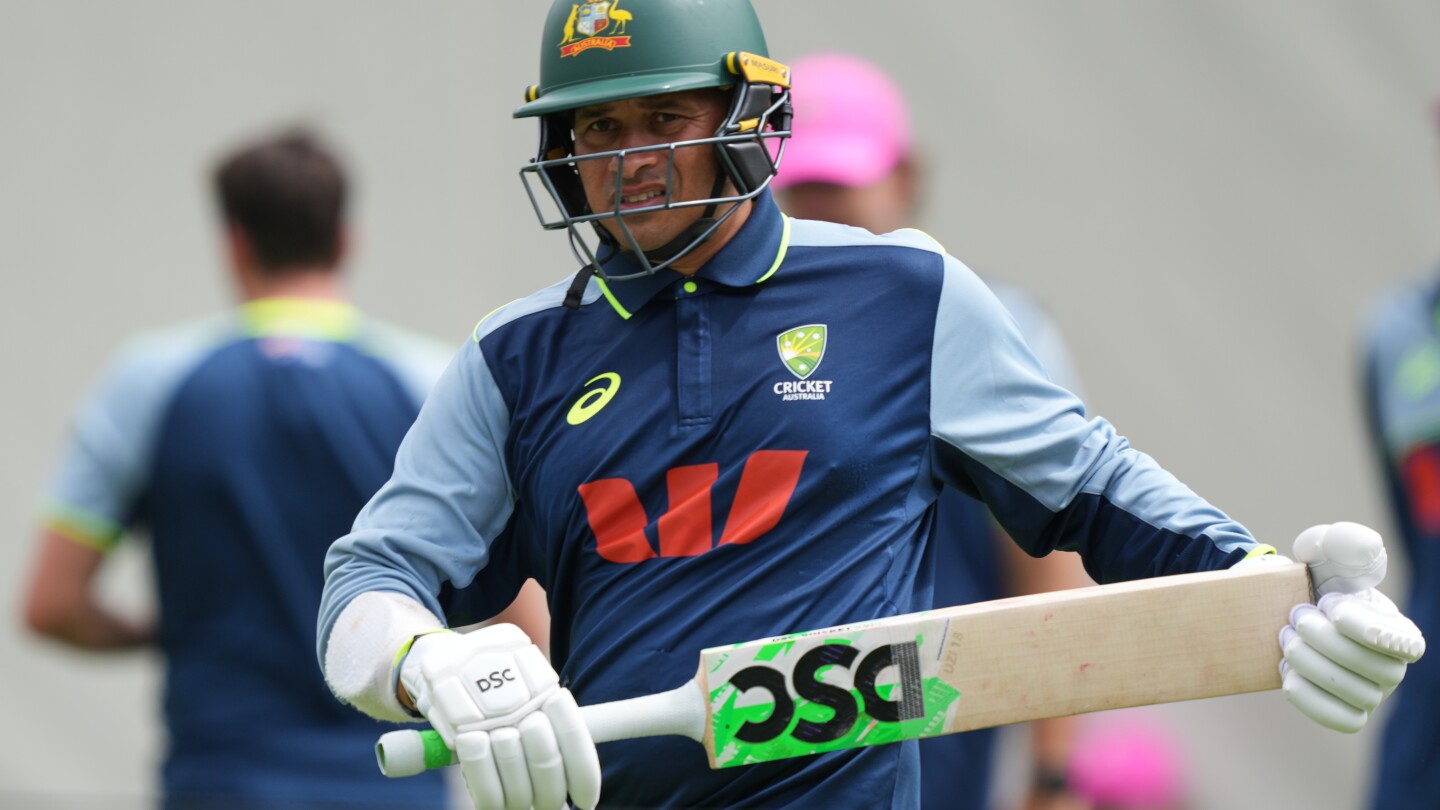
Veteran Australian batter Usman Khawaja has announced his retirement from international cricket, with the fifth Ashes test against England at the Sydney Cricket Ground set to be his final appearance in the baggy green cap.
The 39-year-old Pakistan-born cricketer, who made history as Australia’s first Muslim test player, used his retirement announcement Friday to address racial stereotyping he experienced throughout his career, delivering pointed criticism of media and former players.
“I’m glad I can go out on my own terms,” Khawaja told reporters in Sydney, revealing he had been contemplating retirement leading into the current Ashes series, where Australia has already secured victory with a 3-1 lead ahead of the final test beginning Sunday.
The SCG holds special significance for Khawaja, marking both the beginning of his first-class career and the site of career-defining moments. It was here that he scored his first Ashes century, a magnificent 171 against England in 2018. The ground also witnessed his remarkable career revival at age 35 when he scored twin centuries against England, sparking a late-career renaissance that saw him score seven centuries in the following two years.
However, Khawaja’s position came under intense scrutiny this season after back spasms prevented him from opening in the Perth test. He subsequently missed the Brisbane match due to the injury and was initially left out of the Adelaide test before Steve Smith’s bout with vertigo created an opening in the lineup. Khawaja’s return was validated with a solid 82 in Adelaide’s first innings, cementing his place for the Melbourne test.
During his retirement press conference, Khawaja spoke candidly about feeling “treated a little bit different, even to now” due to his Pakistani heritage and Muslim faith. He particularly addressed the criticism he faced after his recent injury.
“The way the media and past players came out and attacked me… I copped it for about five days straight. Everyone was piling in,” Khawaja said. “Once the racial stereotypes came in, of me being lazy, it was things I’ve dealt with my whole life. Pakistani, West Indian, colored players… we’re selfish, we only care about ourselves, we don’t care about the team, we don’t train hard enough.”
Khawaja pointed to double standards in how his pre-match activities were scrutinized compared to other players. He was criticized for playing golf twice and missing an optional training session before the Perth test, with some commentators suggesting the golfing contributed to his back issues.
“I can give you countless number of guys who have played golf the day before a match and have been injured, but you guys haven’t said a thing,” he told the media. “I can give you even more examples of guys who have had 15 schooners the night before a game and have then been injured, but no one said a word because they were just being ‘Aussie larrikins,’ they were just being lads.”
Khawaja’s international career spans 87 tests, with an impressive record of 6,206 runs at an average of 43.49, including 16 centuries and 28 half-centuries. His consistent performances at the top of the order earned him the ICC Test Cricketer of the Year award in 2023, the same year Australia won the World Test Championship.
Cricket Australia CEO Todd Greenberg praised Khawaja’s contributions both on and off the field. “Usman has made a huge contribution to Australian cricket both through his outstanding achievements as one of our most stylish and resilient batters and off field, particularly through the Usman Khawaja Foundation,” Greenberg said in a statement.
Despite the frustrations he voiced regarding stereotyping, Khawaja expressed contentment about his career as he prepares for his 88th and final test. “I’m very lucky to have played so many games for Australia the way I have,” he said. “I hope I have inspired people along the way.”
As Khawaja prepares to take the field at the SCG one final time, he leaves behind a legacy as not just one of Australia’s most reliable opening batters, but also as a trailblazer who challenged perceptions and stereotypes throughout his distinguished career.
Fact Checker
Verify the accuracy of this article using The Disinformation Commission analysis and real-time sources.

6 Comments
It’s great to see Usman Khawaja retiring on his own terms after such an impactful career. As the first Muslim player for Australia, he’s been a trailblazer and it’s good he’s speaking out against racial stereotyping in cricket.
Khawaja’s achievements are impressive, especially his late-career resurgence scoring 7 centuries in 2 years. Cricketers of diverse backgrounds like him help break down barriers and inspire the next generation.
Kudos to Usman Khawaja for speaking up about the racial stereotypes he faced. Diversity and inclusion are crucial for the growth and progress of any sport, and his experience provides valuable lessons for cricket administrators.
Khawaja’s retirement is bittersweet – he’s had an incredible career, but it’s sad to see such a talented player depart the international stage. His legacy as a trailblazer and advocate for diversity will live on.
Retiring at the SCG, the site of his first-class debut and career highlights, is a fitting way for Khawaja to end his international career. His criticisms of racial stereotyping raise important issues that the sport needs to continue addressing.
It’s refreshing to see a high-profile cricketer like Khawaja use his platform to call out racial biases in the sport. His candid remarks highlight the important work still needed to create a more inclusive and equitable environment in cricket.