


Listen to the article
Olympic Pin Hunt Sparks Early Morning Races Through Milan
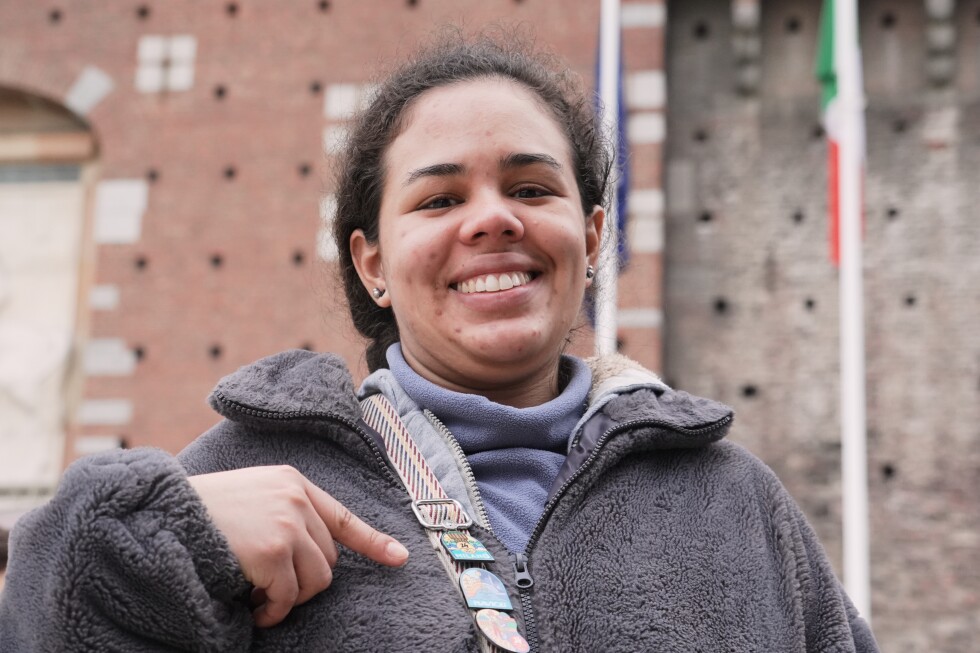
A dozen eager collectors gathered outside a Milan metro station at dawn on Wednesday, eyes glued to their phones until precisely 8 a.m. When the Instagram post finally appeared with the announcement “Run, don’t walk: we’re in the Castello area,” the group broke into a sprint, determined to claim that day’s coveted Olympic pin.
Each morning since the Winter Olympics began, dedicated collectors have been rising early to participate in this modern treasure hunt for limited-edition pins distributed by YesMilano, the city’s promotional agency. The prizes: a complete collection featuring seven neighborhoods—including Isola and Porta Venezia—and five iconic landmarks, such as Milan’s famous Duomo.
Ilaria Pasqua, an English teacher in Milan, has been part of this ritual daily since Saturday. She’s teamed up with three collectors she met on her first outing, creating a system to ensure they’re among the first in line.
“I know it can sound like it’s a bit extreme, and like it’s a waste of time. But actually, I’ve met these people that I am doing this with, so it’s nice,” Pasqua said. “It’s a way to get to know the city that you live in or are visiting. It’s also social. I’m really enjoying it, to be honest. And you take a little treasure with you home every day, so it’s fun.”
After securing her pins each morning, Pasqua tucks them deep into her coat pocket, hiding them from latecomers hoping for trades she’s unwilling to make.
The Olympic Pin Subculture
Pin collecting represents an essential part of Olympic culture, with dedicated enthusiasts traveling worldwide to add to their often substantial collections. For those less inclined toward scavenger hunts, Milan offers the first official pin trading center since the 2018 Pyeongchang Winter Games.
Sponsored by Warner Brothers, the center features an area where children can interact with Looney Tunes characters—cultivating the next generation of collectors—alongside tables where serious traders from around the world display their wares.
Eddie Schneider of Lindenhurst, New York, has been trading pins since the 1984 Los Angeles Summer Games. Among his impressive collection of 25,000 pins is one from the 1948 London Games, which his mother attended.
“I consider it like going to a World’s Fair every two years,” Schneider said at the trading center. “You get to go different places and experience different cultures and have fun.”
Pin Hierarchy and Value
Serious collectors understand the intrinsic value hierarchy of Olympic pins, which includes retail, delegation, team, sponsor, media, and national Olympic committee categories. Japanese media pins are particularly prized for their rarity, while at these Games, Iranian pins have become especially sought-after in Cortina d’Ampezzo.
Official pins must incorporate the Milan Cortina 26 logo and Olympic rings, which are exclusively produced by Los Angeles-based manufacturer Honav, the official rights-holder for both these Winter Games and the upcoming 2028 Los Angeles Summer Olympics.
Mario Simonson, Honav’s owner, revealed that his company designed hundreds of pin styles and produced millions for the Milan Games—each bearing the Honav backstamp to verify authenticity. The International Olympic Committee receives royalties for the use of the official logo and rings.
“Pins without those official features have zero value for serious traders,” Simonson noted.
“Pindemonium” Goes Global
London resident Josh Waller, 21, began his collecting journey at age 8 during the 2012 London Olympics. He now owns over 10,000 pins and brought 1,500 to Milan specifically for trading. “Pindemonium,” as he calls it, has become his passion.
Waller’s collection of London Olympic pins, including vintage items, has won awards. He belongs to an online trading community that expanded significantly after the Tokyo Games, when pandemic restrictions kept spectators at home. He’s even developed software to authenticate high-value pins.
Now a volunteer at the Milan pin trading center, Waller reported that thousands of visitors, including athletes and families, lined up over the opening weekend to buy and trade.
“The whole pin trading community is very tight,” said Mark Gabriel, a Warner Brothers consumer products executive. He expects trading “to reach a fever pitch” during the Games’ second weekend.
A Citywide Promotion Success
YesMilano’s morning pin distribution has proven wildly successful beyond organizers’ expectations. While city pins have long been part of Olympic traditions, Milan’s campaign is distinctive in promoting less-visited neighborhoods and encouraging tourists to explore landmarks throughout the city.
On the first day, more than 1,000 people showed up in the North of Piazza Loreto (NOLO) neighborhood. By the second day at the architectural landmark Torre Velasca, about 600 arrived—though word had spread of the daily 250-pin limit.
Latecomers receive stickers as consolation prizes but can purchase the YesMilano pins at official souvenir vendors for 20 euros ($24)—a price that has increased from the initial 12 euros due to overwhelming demand.
Beatrice Biondi rose at 6:30 a.m. to travel to Milan from Varese, an hour away, hoping to be first in line at Sforza Castle. Having just completed her university exams the previous day, this was her first attempt at collecting Olympic memorabilia.
“We had to run a bit, but we made it so we are very happy,” she said. After collecting her Sforza Castle pin, she planned to add a focaccia charm from the Esselunga supermarket chain and a Coca-Cola pin from the Olympic sponsor.
Her collecting philosophy is simple but enthusiastic: “All the pins I can find, I will take.”
Fact Checker
Verify the accuracy of this article using The Disinformation Commission analysis and real-time sources.

4 Comments
It’s impressive how much effort and organization these Olympic pin hunters have put into their hobby. The early morning sprints, the coordinated teams – this is clearly no casual pastime. I wonder if the thrill of the chase is what keeps them coming back, or if there’s a deeper significance to completing a full collection.
This sounds like quite the competitive pin-collecting craze in Milan! I wonder what the appeal is to these dedicated collectors – is it the thrill of the hunt, the pride of completing a set, or something else? Regardless, it’s an interesting example of how even small collectibles can inspire such passionate enthusiasm.
The dawn sprints to claim the limited-edition pins remind me of the frenzy around Beanie Babies or Pokémon cards in the 90s. I suppose there’s just something about the scarcity and exclusivity of these collectibles that really captures people’s imaginations. Do you think the pins will hold their value over time, or is this more about the experience than the investment?
This Olympic pin hunt in Milan sounds like a fascinating cultural phenomenon. I’m curious to learn more about the history and significance of these collectibles. Do they have any connection to the host city, or are they just generic Olympic souvenirs? Either way, the passion and organization of the collectors is quite impressive.