


Listen to the article
Norwegian Skier McGrath’s Olympic Heartbreak Leads to Emotional Forest Retreat
In a dramatic turn of events that transformed Monday’s Olympic slalom into high-stakes emotional theater, Norwegian ski racer Atle Lie McGrath saw his gold medal hopes vanish in an instant on the slopes of Bormio, Italy.
McGrath, who entered the final run of the Milan-Cortina Games’ last men’s race with a commanding lead, straddled a gate during his second run, instantly eliminating his chance at an Olympic medal. What followed was a raw display of athletic heartbreak rarely captured at this level of competition.
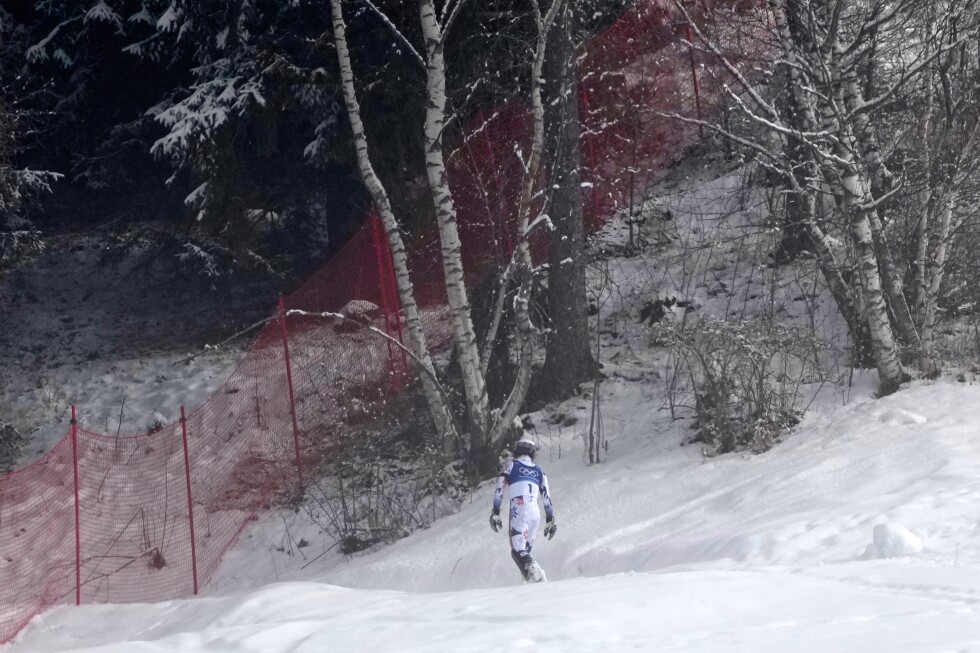
The 25-year-old Vermont-born Norwegian immediately threw his ski poles over the safety netting in frustration, then climbed over the fence and trudged through snow toward a wooded area, where he laid on his back seeking solitude.
“I thought that I would get some peace and quiet, which I didn’t,” McGrath later explained. “Because photographers and police found me out in the woods. But I just needed some time for myself.”
The emotional outburst came with particularly poignant context. McGrath revealed he has been competing with profound personal grief after losing his grandfather on the day of the Olympic opening ceremony. He has worn an armband throughout the Games as a tribute.
“I’m normally a guy that’s very good when it comes to perspective on things,” said McGrath, whose father Felix competed for the U.S. ski team at the 1988 Calgary Olympics. “And if I don’t ski well in a race, I can at least tell myself that I’m healthy and my family’s healthy and the people I love are here. So that’s nice, but that’s not been the case. I’ve lost someone I love so much and that makes it really hard.”
McGrath’s teammate Timon Haugan, who finished fourth in Monday’s race, confirmed the emotional strain his compatriot has been under. “What he’s gone through these last 10, 12 days, it’s been really tough,” Haugan said. “He’s been really sad. He started to do better and today he’s going through… we need to really back him up today.”
The incident occurred directly in front of a Swiss coach, whose celebration for Loic Meillard’s now-guaranteed gold medal prompted the Swiss team to later apologize to the Norwegians for the awkward timing of their jubilation.
“I gave myself the absolute best opportunity you could today,” McGrath reflected hours after the race. “I skied so great, and I still couldn’t get it done. So that’s what really hurts.”
Fellow Norwegian Henrik Kristoffersen, who claimed bronze in the event, offered perspective from personal experience. Kristoffersen suffered a similar fate at the 2018 Pyeongchang Games when he was leading the slalom only to ski out during his second run.
“In the end, it’s another ski race. In the end, it’s not going to make or break Atle’s career,” Kristoffersen said. “He is a great skier. If he keeps going like he’s going, he will have great success for the future. This is just our sport.”
As for McGrath’s emotional reaction, Kristoffersen defended his teammate: “That’s allowed. This is sports. What are sports without the emotions?”
Gold medalist Meillard of Switzerland echoed this sentiment while acknowledging the fickle nature of slalom skiing, where competitors navigate through tightly set gates at high speeds with minimal room for error.
“The beauty of slalom is that when it works out it’s beautiful,” Meillard said. “I was definitely sorry for him, but at the end, all the times he won when I skied out — that’s part of the game.”
The incident highlights the immense psychological pressures Olympic athletes face, especially when competing under additional emotional burdens. For McGrath, the combination of Olympic expectations and personal grief created a perfect storm of emotion that spilled over after his disappointing finish.
Hours after the race, McGrath met with media at a Bormio hotel, showing remarkable composure and even managing a laugh about his woodland retreat. “I spent my time in the woods,” he said. “So now I’m going to spend time with the people I love and that’s all I need.”
“I think I need quite a bit of time to process this and it’s going to be extremely tough. We’ll see how it goes, but at least I’m surrounded by great people who love me and who I love. I’m at least happy that they’ll be here.”
Fact Checker
Verify the accuracy of this article using The Disinformation Commission analysis and real-time sources.

10 Comments
The slalom event is so high-pressure and unpredictable. It’s a shame McGrath’s gold medal chance vanished in an instant like that. Kudos to him for being honest about needing time to himself to process the disappointment.
You’re right, the slalom is such a razor’s edge. I can only imagine the mix of emotions he was feeling – the heartbreak of losing the medal and the added grief of losing his grandfather. It was a raw, human moment amid the competition.
Wow, what a heartbreaking moment for McGrath. To have the gold medal within reach and then see it disappear in an instant must be utterly crushing. I admire his honesty in admitting he just needed some time alone to deal with the emotions. That level of vulnerability is rare in elite sports.
Agreed. The emotional toll of competing at the Olympics has to be immense, especially when personal grief is also a factor. McGrath’s willingness to be open about needing that space for himself is a sign of real strength, not weakness.
Heartbreaking to see McGrath’s gold medal hopes slip away like that. The emotional toll of competing at the highest level must be immense. I hope he can find some peace and solace in the woods to process this difficult moment.
Agreed. Those raw emotions on display are a powerful reminder of the human side of elite sports. Kudos to him for being vulnerable and open about needing that private moment to himself.
It’s always tough to see an athlete come so close to an Olympic medal only to have it slip away. McGrath’s reaction shows the immense pressure and personal stakes these competitors are dealing with. Retreating to the woods for some solitude was probably the healthiest thing he could have done in that moment.
Absolutely. The mental and emotional resilience required to compete at that level is staggering. I’m glad he was able to find a private space to process his disappointment, even if the photographers tracked him down. Taking that time was crucial for his wellbeing.
Losing a medal at the Olympics has to be devastating. It’s understandable that McGrath needed to retreat and collect himself. Capturing that kind of vulnerability on the world stage is rare and takes a lot of courage.
Absolutely. You can feel the weight of the moment and his personal grief in his reaction. I hope he’s able to bounce back and use this experience to fuel him for future competitions.