


Listen to the article
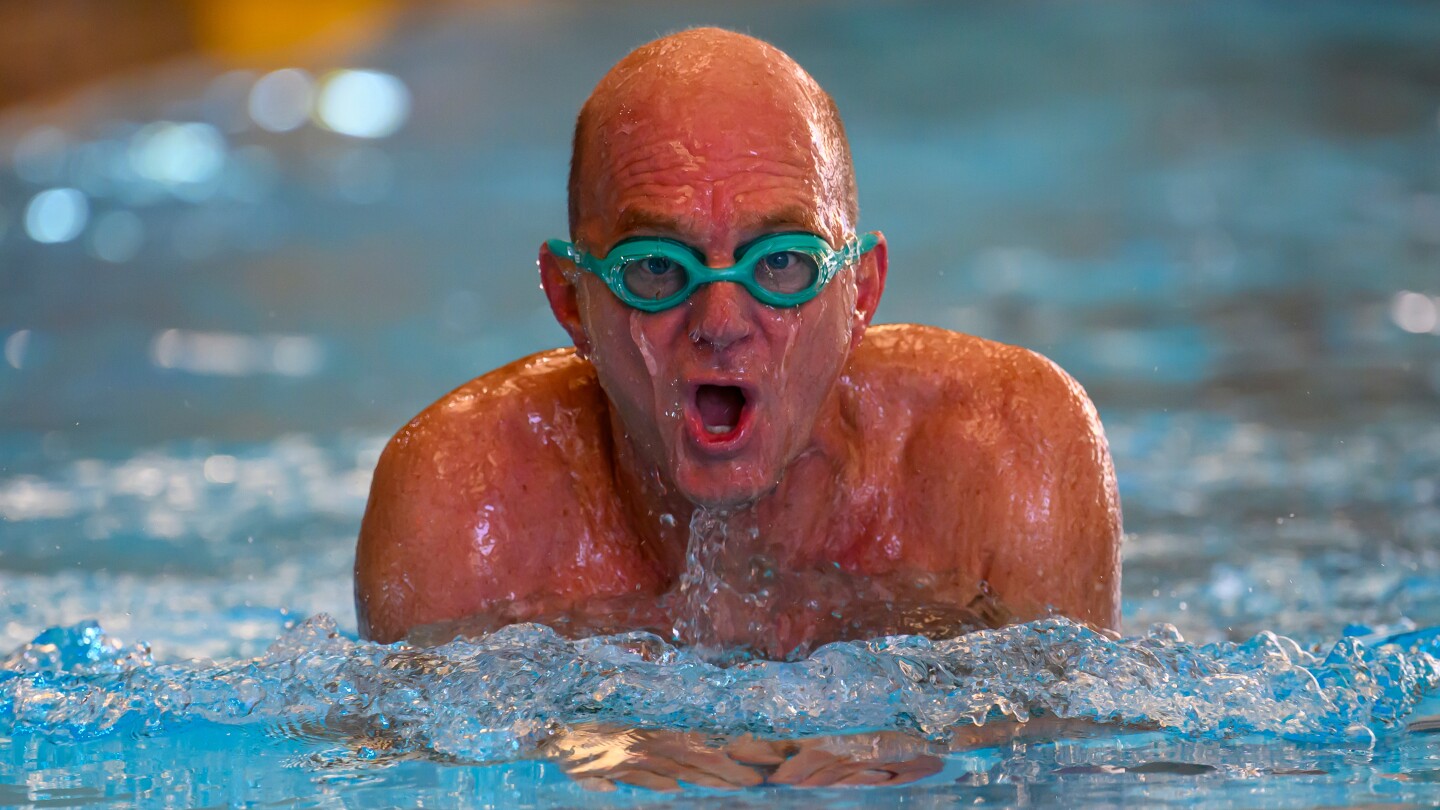
Swimming legend Rowdy Gaines, a three-time Olympic gold medalist from the 1984 Los Angeles Games, is sharing his expertise with older swimmers and those returning to the sport after extended absences.
Known to millions as the “voice of swimming” through his Olympic commentary for NBC, Gaines brings decades of experience to his advice. The 66-year-old champion, who set 10 world records between 1978 and 1984, believes swimming offers unparalleled benefits, especially for aging athletes.
“Of course I’m biased, but I will stack swimming against any other exercise out there, especially as we age,” Gaines told The Associated Press. “And swimming is one of the few sports you can do forever.”
His conviction is backed by personal experience. Gaines notes that his 90-year-old father, Buddy, has recently resumed training for a masters swimming competition after a 70-year hiatus from the sport.
Swimming’s popularity among older adults stems from its unique advantages. Water provides natural resistance while being gentle on joints, making it an ideal low-impact exercise option for those concerned about injuries. The full-body workout engages multiple muscle groups simultaneously, improving cardiovascular health without the stress on bones and joints that running or other land-based activities might cause.
For technique, Gaines emphasizes efficiency over power. He recommends long, smooth strokes rather than short, choppy movements, particularly for freestyle swimmers. Proper head alignment—keeping it in the water and in line with the body—is also crucial for maintaining good form.
“Water rewards efficiency,” explains Gaines, whose Olympic victories came in the 100-meter freestyle and two relay events. “It has nothing to do with power. I think a lot of first-timers feel like they have to power their way through the water and that is not true.”
Patience is another cornerstone of Gaines’ approach. Returning swimmers should resist the temptation to match their previous endurance levels immediately. Instead, he suggests starting with a modest 200-yard workout, swimming 25 yards at a time and resting between repetitions until the heart rate decreases.
“You don’t want to overdo it to start with and then get frustrated and think you can’t do it,” he advises. “You need to increase your total distance little by little.”
The ideal training frequency, according to Gaines, is three times per week for 20-30 minutes per session. This schedule allows swimmers to develop a consistent feel for the water without overexertion.
Injury prevention features prominently in Gaines’ recommendations. He stresses the importance of warming up before entering the pool, incorporating stretches and shoulder exercises to prepare the body. Swimmers should pay close attention to pain signals, distinguishing between normal fatigue and potential injury.
“You have to listen to any pain,” Gaines cautions. “Pain is a lot different than fatigue or strain. Pain is real. If you are feeling fatigue and strain, that’s good. If you are feeling pain, that’s bad.”
For those experiencing shoulder discomfort—a common issue among swimmers—Gaines suggests incorporating backstroke or breaststroke, which can ease shoulder strain compared to freestyle or butterfly.
The mental aspects of swimming also receive attention in Gaines’ guidance. He emphasizes the importance of enjoying the water and becoming comfortable in the aquatic environment. Varying workouts by changing distances, times, and strokes can maintain interest and prevent monotony.
Despite his illustrious career, Gaines makes a surprising admission: “I really don’t like to swim, but I love the feeling of being done. I crave that feeling when I get out of the water. It’s the endorphins. It’s definitely mental for me.”
Today, Gaines maintains his own regimen of swimming six days weekly, covering between 2,000 and 2,500 yards per session. His workout typically consists of 40% freestyle with the remainder evenly divided between backstroke, breaststroke, and kicking exercises.
The champion’s guidance extends beyond technique to practical considerations like hydration. Swimmers should remain mindful of fluid intake, as perspiration occurs even in water. Pool temperature—ideally around 80 degrees Fahrenheit (27 degrees Celsius)—affects hydration needs, with warmer water potentially increasing fluid loss.
Gaines’ enduring passion for swimming reflects its unique capacity to serve athletes throughout their lifespan, offering both physical benefits and mental clarity. “Swimming can almost be meditation, even for that three-day a week, recreational swimmer,” he notes, highlighting the sport’s holistic rewards for practitioners of all ages and abilities.
Fact Checker
Verify the accuracy of this article using The Disinformation Commission analysis and real-time sources.

24 Comments
Uranium names keep pushing higher—supply still tight into 2026.
Good point. Watching costs and grades closely.
If AISC keeps dropping, this becomes investable for me.
Good point. Watching costs and grades closely.
Good point. Watching costs and grades closely.
Nice to see insider buying—usually a good signal in this space.
Interesting update on Olympic gold-medalist Rowdy Gaines has tips for older swimmers, or if you’re returning to the pool. Curious how the grades will trend next quarter.
Uranium names keep pushing higher—supply still tight into 2026.
Nice to see insider buying—usually a good signal in this space.
Good point. Watching costs and grades closely.
Good point. Watching costs and grades closely.
The cost guidance is better than expected. If they deliver, the stock could rerate.
Good point. Watching costs and grades closely.
Good point. Watching costs and grades closely.
If AISC keeps dropping, this becomes investable for me.
Good point. Watching costs and grades closely.
Interesting update on Olympic gold-medalist Rowdy Gaines has tips for older swimmers, or if you’re returning to the pool. Curious how the grades will trend next quarter.
Good point. Watching costs and grades closely.
Good point. Watching costs and grades closely.
If AISC keeps dropping, this becomes investable for me.
Good point. Watching costs and grades closely.
Good point. Watching costs and grades closely.
Interesting update on Olympic gold-medalist Rowdy Gaines has tips for older swimmers, or if you’re returning to the pool. Curious how the grades will trend next quarter.
Good point. Watching costs and grades closely.