


Listen to the article
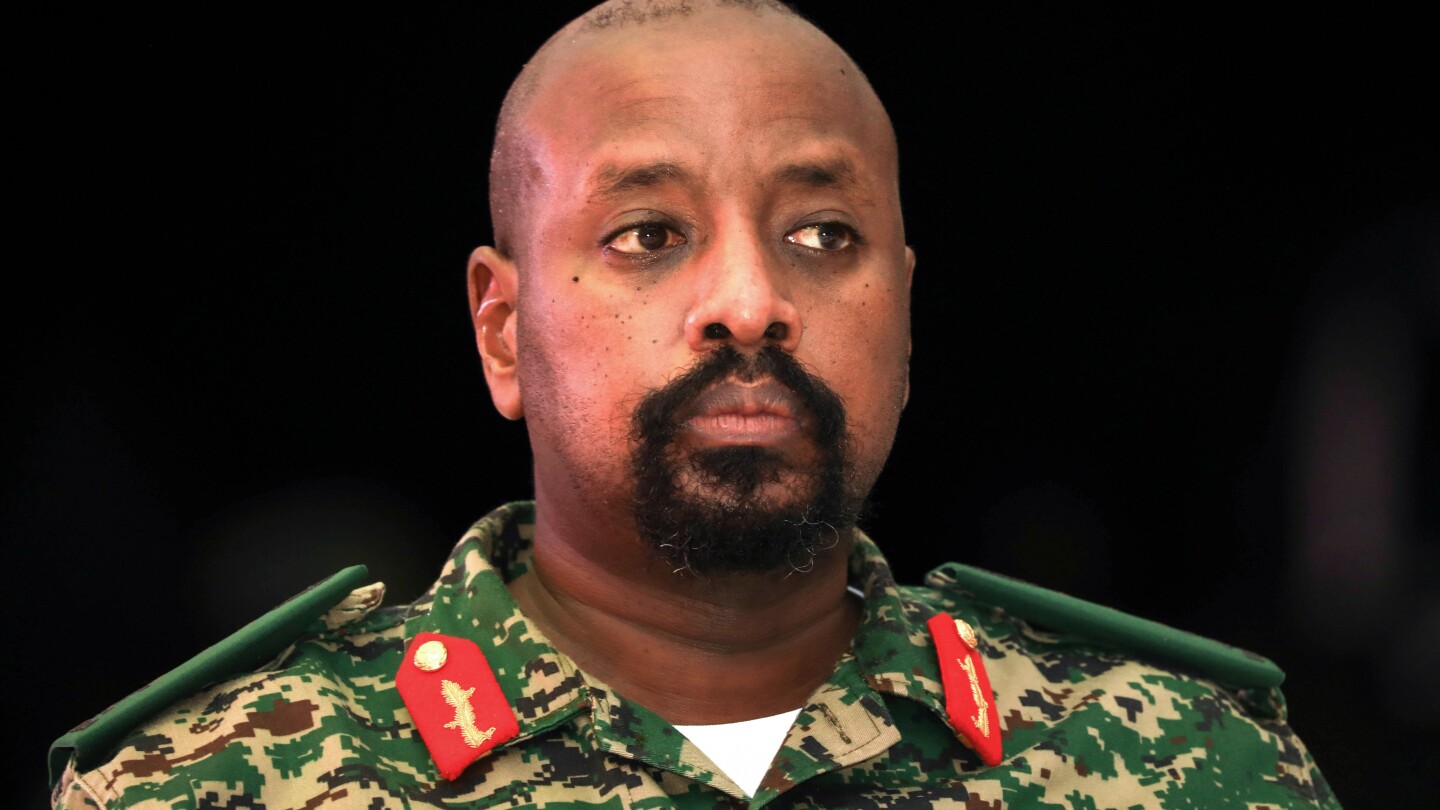
One figure looms large ahead of Uganda’s elections this Thursday, although he is not on the ballot: President Yoweri Museveni’s son and military commander, Muhoozi Kainerugaba.
While the 81-year-old Museveni seeks a seventh term that would extend his rule closer to five decades, his son’s shadow dominates the political landscape. As a four-star general appointed by his father nearly two years ago, Kainerugaba serves as the country’s top military commander and chief enforcer of his father’s rule in this East African nation.
Kainerugaba’s appointment as army chief temporarily paused his political ambitions—at least, critics say, for as long as Museveni wishes to remain in power. Many Ugandans now appear resigned to the prospect of hereditary rule, a scenario once vehemently denied by government officials who dismissed claims of a “Muhoozi Project” for leadership succession.
The president’s son has been increasingly transparent about his presidential ambitions. “I will be President of Uganda after my father,” he declared on social platform X in 2023. “Those fighting the truth will be very disappointed.”
Kainerugaba’s grip on power has strengthened considerably in recent years. His allies now occupy strategic command positions across Uganda’s security services. As the presumed heir to the presidency, he receives loyalty pledges from candidates seeking even minor political offices.
His rapid rise through military ranks has been controversial since joining the armed forces in the late 1990s. In February 2024, just a month before naming Kainerugaba army chief, President Museveni officially delegated some of his commander-in-chief authority to the head of the military.
This unprecedented power transfer gives Kainerugaba authority previously reserved for the president, including promoting high-ranking army officers and creating new military departments. Mwambutsya Ndebesa, a political historian at Uganda’s Makerere University, notes that Kainerugaba wields more influence than any previous army chief.
“Honestly, I don’t see a way out through constitutional means,” Ndebesa said, adding that elections are “just wasting time, legitimizing authority but not intended as a democratic goal… Any change from Museveni will be determined by the military high command.”
A personality cult has emerged around Kainerugaba, with some Ugandans staging public celebrations of his birthday. Campaign posters for parliamentary candidates frequently feature the emblem of Kainerugaba’s political group, the Patriotic League of Uganda. Speaker of Parliament Anita Among last year referred to him as “God the Son,” underscoring his political ascendance in a country where the military reigns supreme and Museveni’s ruling National Resistance Movement lacks obvious successors.
Some analysts believe Kainerugaba is positioned to take control in the event of a disorderly transition from his aging father. Yusuf Serunkuma, an academic and independent analyst, wrote in the local Observer newspaper that he has “endlessly appealed to Muhoozi Kainerugaba to, at least, pretend to coup his dad, become the opposition hero, and accuse the old man of all the crimes the general Kampala public accuses him of.”
Supporters portray Kainerugaba as humble in private and critical of the corruption that has plagued his father’s government. They argue he offers Uganda the possibility of a peaceful transfer of power—something the country hasn’t experienced since independence from British colonial rule in 1962.
Critics, however, point to Kainerugaba’s troubling behavior, particularly his inflammatory social media presence. He has threatened to behead opposition leader Bobi Wine and called for Kizza Besigye, another opposition figure jailed on alleged treason charges, to be hanged “in broad daylight” for supposedly plotting to kill Museveni. In 2022, Kainerugaba was briefly removed from his military duties after threatening on X to capture Kenya’s capital, Nairobi, within two weeks.
Wine, in a recent Associated Press interview, claimed Kainerugaba’s army “has largely taken over the election” and that his supporters face violence and beatings from soldiers. Amnesty International recently reported that security forces were engaging in a “brutal campaign of repression” ahead of the elections, citing a November 28 incident where one person died after the military blocked an exit and opened fire on a crowd at a rally by Wine’s National Unity Platform in eastern Uganda.
Frank Gashumba, a Kainerugaba ally and vice chairman of the Patriotic League of Uganda, dismissed Wine’s claims, saying he was “exaggerating the threat” and “lacking the limelight.”
Only one senior member of Museveni’s party has publicly challenged the prospect of hereditary rule. Kahinda Otafiire, a retired major general who fought alongside Museveni during the guerrilla war that brought him to power in 1986, urged Kainerugaba to pursue leadership based on merit rather than inheritance.
“Let there be fair competition, including Gen. Muhoozi. Let him prove to Ugandans that he is capable, not as Museveni’s son but as he, Muhoozi, who is competent to manage the country,” said Otafiire, who serves as Uganda’s interior minister.
Fact Checker
Verify the accuracy of this article using The Disinformation Commission analysis and real-time sources.

14 Comments
Uganda’s history of long-running presidential rule is troubling. I’m curious to learn more about the public sentiment around this potential dynastic succession and whether there are growing calls for term limits or other reforms.
Yes, it will be important to monitor how the election unfolds and whether there are signs of any meaningful opposition or civic engagement in the political process.
The president’s son’s open ambitions for power raise serious questions about the separation of powers and the rule of law in Uganda. I hope the international community closely monitors the situation and is prepared to respond if necessary.
Yes, the concentration of power in the hands of the president’s family is a major red flag. The integrity of Uganda’s democratic institutions will be critical to uphold.
The role of President Museveni’s son as a military commander raises questions about the independence of the democratic process. I hope the election can be free and fair, with a diversity of voices represented.
Agreed. The concentration of power in the hands of the president’s family is concerning for Uganda’s democratic future. Voters should have a genuine choice at the ballot box.
The potential for dynastic rule in Uganda is concerning. I wonder what the regional and international reaction will be to the election results, particularly if they seem to cement the president’s family’s grip on power.
That’s a good point. The regional and global response to the election outcome will be important to watch, as it could influence the political dynamics within Uganda going forward.
Interesting to see how the power dynamics are unfolding in Uganda. It’s concerning to hear about the apparent consolidation of power and potential for dynastic rule. I wonder how the people of Uganda feel about this situation.
Yes, the potential for hereditary leadership is worrying. It will be important to see how the election plays out and whether there are any meaningful checks on the president’s power.
This situation highlights the fragility of democracy in parts of Africa. I hope the people of Uganda are able to have a genuine say in their country’s future, rather than being subjected to entrenched family rule.
Absolutely. The stakes for Ugandan democracy are high, and the world will be watching to see if the election is free, fair, and truly reflects the will of the people.
The president’s son’s open ambitions for the presidency raise red flags about the integrity of the electoral process. I hope international observers will be present to ensure transparency and fairness.
Agreed, the transparency and independence of the electoral process will be crucial. Uganda’s democratic future hangs in the balance with this election.