


Listen to the article
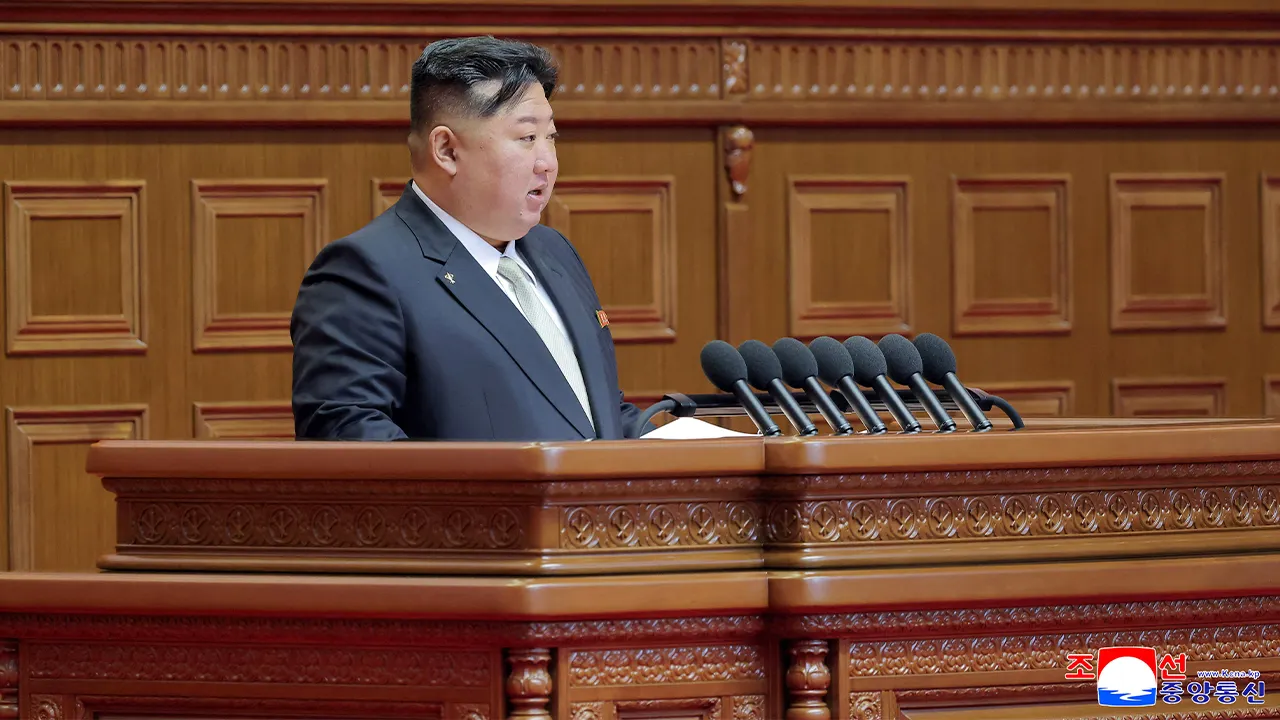
North Korean leader Kim Jong Un has been re-elected as general secretary of the ruling Workers’ Party of Korea, according to an announcement by the state-run Korean Central News Agency (KCNA) on Monday. The formal decision was made during the party’s Ninth Congress on February 22.
The KCNA statement characterized the re-election as reflecting the “unanimous desire” of party members, military personnel, and the North Korean public. The announcement praised Kim as the “centre of unity and leadership” and credited him with strengthening the country’s nuclear deterrence capabilities while advancing economic and military development initiatives.
Kim, who has led North Korea since 2011 following the death of his father Kim Jong Il, formally assumed the general secretary title in 2021. This position holds the highest authority within the country’s political structure and was previously held by his father.
The lengthy statement from KCNA highlighted what the regime considers significant national achievements over the past five years, including enhanced national defense capabilities and improvements in economic planning. It reaffirmed Kim’s position as the guiding figure in the country’s ongoing “socialist construction” efforts.
Political analysts see the conclusion of the Ninth Party Congress as potentially significant for regional security. According to an assessment from the American Enterprise Institute (AEI), North Korea may use this occasion to unveil new strategic weapons systems and showcase progress under its 2021-2025 military modernization initiative.
The AEI report suggests Pyongyang might highlight advancements in several key military technologies, including intercontinental ballistic missiles, submarine-launched ballistic missiles, and hypersonic glide vehicles. These developments would be consistent with North Korea’s ongoing efforts to enhance the survivability and accuracy of its nuclear delivery systems.
Experts believe Kim is likely to outline new modernization objectives for the 2026-2030 period. These goals could emphasize second-strike capabilities, reduced launch preparation times, and more diverse nuclear delivery methods—all aimed at strengthening North Korea’s strategic deterrence posture against perceived external threats.
Beyond military considerations, North Korea’s leadership is expected to frame the current five-year economic plan as successful, despite widespread international sanctions. The regime will likely highlight increased trade relations with Russia and China, which have become increasingly important economic partners as North Korea faces continued isolation from much of the international community.
Kim’s economic strategy reportedly includes the “20×10 Regional Development Policy,” an initiative aimed at reducing disparities between rural and urban areas within the country. This program aligns with the regime’s domestic narrative of building a self-sufficient economy capable of withstanding external pressure.
The re-election comes amid ongoing tensions on the Korean Peninsula. North Korea has conducted numerous weapons tests in recent years and has shown little interest in diplomatic engagement with South Korea or the United States. The country’s nuclear and missile programs remain a significant concern for regional stability and international security.
The timing of this leadership reaffirmation also coincides with evolving geopolitical dynamics in Northeast Asia, including strengthened military cooperation between South Korea and the United States, and North Korea’s deepening relationships with Russia and China—relationships that have provided economic lifelines and diplomatic support for the isolated regime.
As Kim Jong Un begins another term as general secretary, observers will be watching closely for indications of North Korea’s strategic priorities, particularly regarding its weapons development programs, economic policies, and approach to international relations in an increasingly complex regional security environment.
Fact Checker
Verify the accuracy of this article using The Disinformation Commission analysis and real-time sources.

7 Comments
The regime’s portrayal of “significant national achievements” under Kim’s leadership is certainly noteworthy, though the reality on the ground is likely more complex. I wonder what the global reaction will be to his re-election.
That’s a good point. It will be important to look past the regime’s rhetoric and get a more balanced understanding of the situation in North Korea.
North Korea’s nuclear and military capabilities are a major concern, so Kim’s continued control of the party is significant. I hope this doesn’t lead to further escalation of tensions in the region.
I share your concerns about the potential for increased regional instability. The international community will need to closely monitor developments in North Korea.
Interesting to see Kim Jong Un re-elected as party leader in North Korea. Curious to hear how this will impact the country’s economic and military development plans.
While the regime’s announcement highlights economic and military advancements, the lived experiences of the North Korean people are often very different. I wonder what impact this will have on their daily lives.
Kim’s re-election solidifies his position as the central figure in North Korea’s political structure. It will be important to see how this affects the country’s domestic and foreign policies going forward.