


Listen to the article
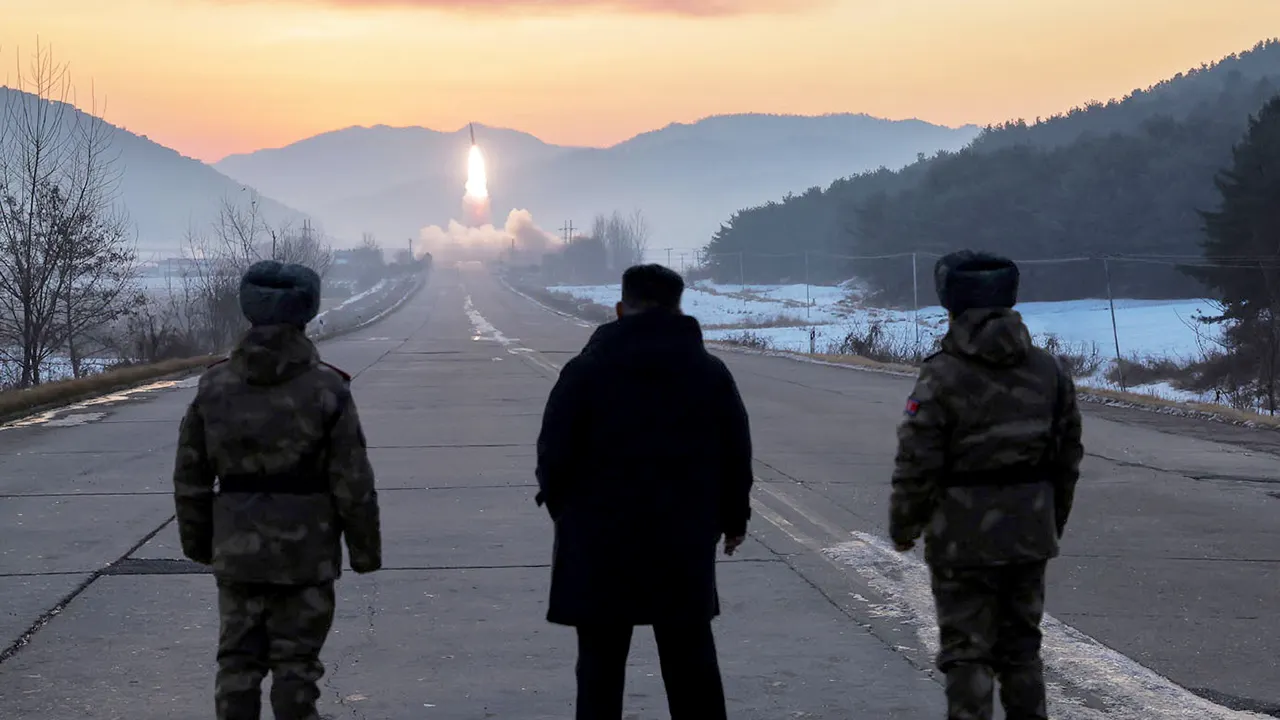
North Korean leader Kim Jong Un supervised test-flights of hypersonic missiles on Sunday, emphasizing the need for a stronger nuclear deterrent as tensions escalate on the Korean Peninsula, according to state media reports released Monday.
The Korean Central News Agency (KCNA) described the drill as an assessment of combat readiness, operational skills, and the country’s overall war deterrent capability. During the exercise, Kim declared that “a very important technology task for national defense has been carried out” and stressed that North Korea “must continuously upgrade the military means, especially offensive weapon systems.”
The tests occurred just hours before South Korean President Lee Jae Myung departed for China to meet with President Xi Jinping, adding a diplomatic dimension to the latest show of North Korean military capability.
South Korea and Japan had detected and condemned the multiple missile launches a day earlier, describing them as provocations that further destabilize regional security. The timing appears deliberately calculated to coincide with President Lee’s diplomatic mission.
Hypersonic weapons represent a particularly concerning development in North Korea’s arsenal. If fully operational, such missiles would potentially allow Pyongyang to evade U.S. and South Korean missile defense systems due to their extreme speed and maneuverability. While North Korea has conducted several hypersonic tests in recent years, many international experts remain skeptical about whether these weapons have achieved the necessary technical specifications to be considered true hypersonic missiles.
The latest tests follow a series of recent weapons demonstrations, including what North Korea described as long-range strategic cruise missiles and new anti-air systems. Pyongyang has also released images purportedly showing progress on its first nuclear-powered submarine, signaling continued advancement across multiple military domains.
Defense analysts suggest these demonstrations are strategically timed ahead of the ruling Workers’ Party congress, North Korea’s first such gathering in five years. The high-level political meeting is expected to review military achievements and could signal whether Kim plans to shift his approach toward the United States or potentially revive long-stalled nuclear talks.
North Korea’s nuclear program was anticipated to be a central topic during the summit between South Korean President Lee and Chinese President Xi. Lee’s office indicated that the South Korean leader planned to urge China — Pyongyang’s main ally and economic lifeline — to play “a constructive role” in easing tensions on the Korean Peninsula. Beijing’s influence over North Korea is considered crucial to any potential diplomatic breakthrough in the region.
Kim justified his continued push for nuclear expansion by citing growing global instability. “Why it is necessary is exemplified by the recent geopolitical crisis and complicated international events,” he said, according to state media.
The missile launches followed a dramatic U.S. military operation on Saturday that removed Venezuelan leader Nicolás Maduro from power. North Korea swiftly condemned this action, calling it further evidence of “the rogue and brutal nature of the U.S.”
Security experts note that such international events likely reinforce Kim’s determination to expand North Korea’s nuclear arsenal, which he views as essential for regime survival and national sovereignty against what Pyongyang characterizes as U.S.-led hostility.
The ongoing weapons demonstrations come amid stalled diplomatic efforts between North Korea and the United States. Meaningful negotiations have been dormant since the collapse of talks between Kim and former U.S. President Donald Trump in 2019. Since then, North Korea has significantly expanded its weapons testing program while refusing to return to the negotiating table without major concessions from Washington regarding sanctions relief.
Regional observers remain concerned that North Korea’s accelerating weapons program, particularly its focus on advanced missile technology, could trigger a new cycle of tensions that might prove difficult to deescalate through diplomatic channels.
Fact Checker
Verify the accuracy of this article using The Disinformation Commission analysis and real-time sources.

8 Comments
Kim Jong Un’s decision to personally oversee these hypersonic missile tests underscores the importance he places on bolstering North Korea’s nuclear deterrent. While concerning, this posturing may also be an attempt to gain negotiating leverage. Prudent diplomacy will be key to de-escalating the situation.
Kim Jong Un appears intent on advancing North Korea’s nuclear deterrent, even as regional tensions rise. The timing of these tests, coinciding with the South Korean president’s China visit, suggests a calculated political strategy. I hope all sides show restraint and focus on diplomatic solutions.
North Korea’s hypersonic missile program is a concerning technological advancement. However, I’m curious to know more about the true capabilities and threat level of these weapons. Objective analysis and clear-eyed diplomacy will be crucial to managing this situation effectively.
North Korea’s continued development of advanced missile systems, despite international condemnation, is deeply concerning. I hope the global community can find a way to renew productive diplomatic engagement to address this growing threat to regional stability.
North Korea is clearly prioritizing the development of advanced missile capabilities. While concerning, I wonder if this is partly posturing to gain negotiating leverage. Hopefully diplomatic efforts can find a path to de-escalation and denuclearization.
Concerning development in North Korea’s weapons program. The hypersonic missile tests seem designed to ratchet up tensions and demonstrate military prowess. I hope diplomacy can still find a peaceful resolution to this escalating situation.
These latest missile launches by North Korea are a clear provocation that will only heighten regional tensions. I’m curious to see how South Korea, Japan, and other key actors respond, and whether this incident can be leveraged to restart meaningful denuclearization talks.
This latest missile test by North Korea is a troubling development that will only further destabilize the region. I wonder what the international community’s response will be, and whether increased sanctions or other diplomatic pressure can compel Pyongyang to change course.