


Listen to the article
North Korea Tests Strategic Cruise Missiles, Touts Nuclear Deterrence
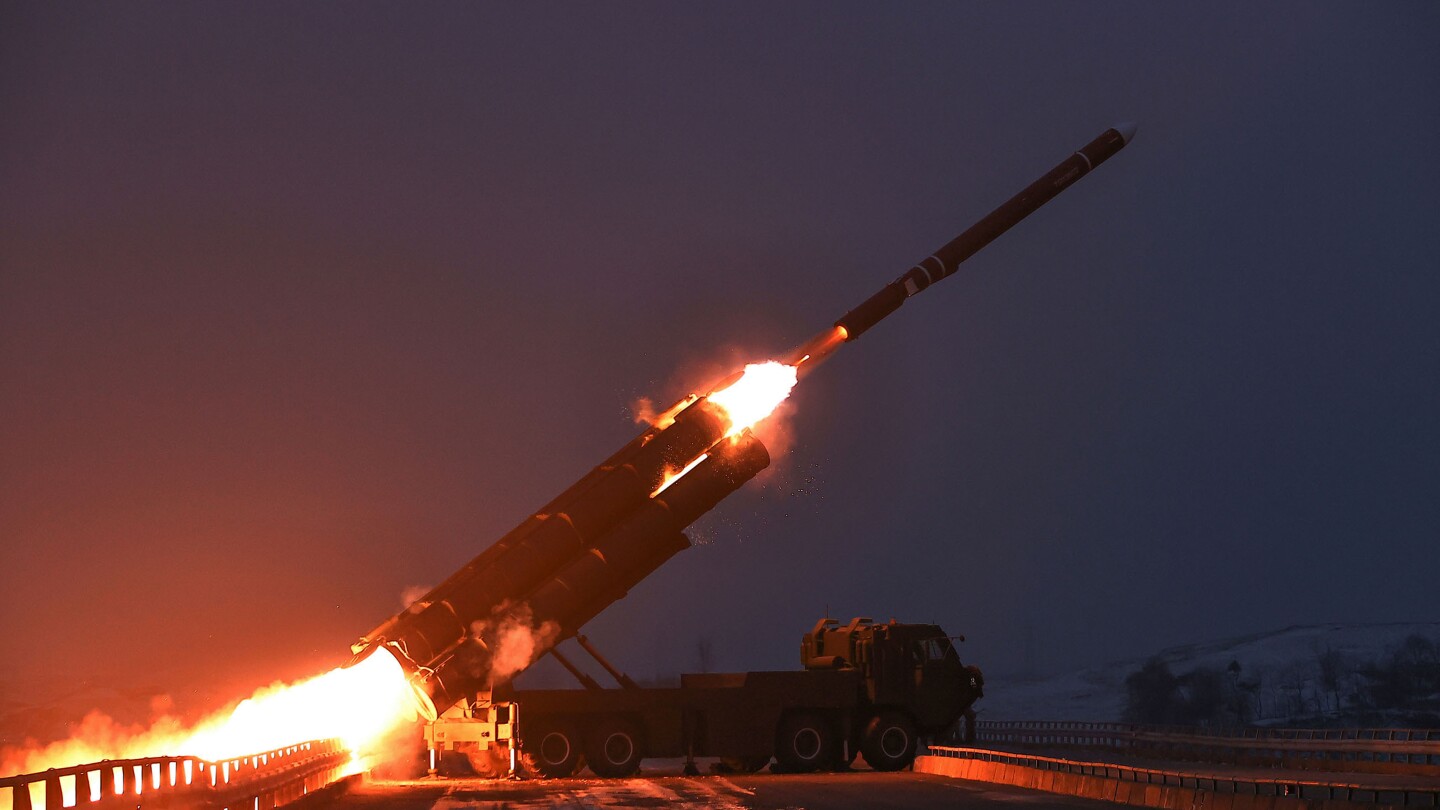
North Korea launched long-range strategic cruise missiles into the sea on Sunday, describing the test as a demonstration of its nuclear deterrent capabilities, according to state media. The test comes just days after Pyongyang revealed apparent progress in the construction of its first nuclear-powered submarine.
The official Korean Central News Agency (KCNA) reported that North Korean leader Kim Jong Un expressed “great satisfaction” with the launches conducted off the country’s west coast. According to KCNA, Kim characterized the tests as “a responsible exercise of the right to self-defense and war deterrence” amid what North Korea perceives as external security threats.
South Korea’s Joint Chiefs of Staff confirmed awareness of several cruise missile launches originating from North Korea’s capital region on Sunday morning. South Korean military officials emphasized that they maintain readiness to counter any potential provocations through their alliance with the United States.
Unlike ballistic missile tests, which are prohibited under United Nations Security Council resolutions, cruise missile launches are not specifically banned. However, security analysts note these weapons still pose a significant threat to the United States and South Korea due to their ability to fly at low altitudes and maneuver around radar detection systems.
Military experts believe North Korea is developing cruise missiles primarily to target U.S. naval assets, including aircraft carriers and warships, in potential conflict scenarios. The highly maneuverable nature of cruise missiles makes them particularly effective against maritime targets.
The latest weapons test follows a series of military advancements by North Korea in recent weeks. Last week, Pyongyang test-fired new anti-air missiles off its east coast and released photographs showing the largely completed hull of a nuclear-powered submarine under development. North Korean state media implied the submarine would eventually be armed with nuclear missiles.
A nuclear-powered submarine represents one of several sophisticated weapons systems that Kim has pledged to develop to counter what he describes as U.S.-led security threats. Some military observers suggest North Korea’s deepening military alignment with Russia may have accelerated its weapons development program. Reports indicate North Korea has sent thousands of troops and military equipment to support Russian operations in Ukraine, potentially receiving crucial technologies in exchange.
These developments come ahead of North Korea’s planned Workers’ Party congress scheduled for early 2024, the first such gathering in five years. International observers will be watching closely to see if Kim establishes new foreign policy priorities, particularly regarding relations with the United States and whether Pyongyang might respond to Washington’s calls to resume long-stalled denuclearization talks.
North Korea has significantly expanded its nuclear arsenal since Kim’s high-profile diplomatic engagement with former U.S. President Donald Trump collapsed in 2019. However, in September, Kim suggested he might consider returning to negotiations if the United States abandons what he termed its “delusional obsession with denuclearization” of North Korea.
Security analysts believe Kim may be calculating that his enhanced nuclear capabilities provide greater leverage in potential future talks with the United States. The timing of these demonstrations – showcasing both strategic missile capabilities and nuclear submarine development – appears designed to strengthen North Korea’s negotiating position ahead of any diplomatic reengagement.
The increasing frequency of weapons tests underscores North Korea’s determination to be recognized as a nuclear power despite international sanctions and diplomatic isolation. As tensions in the region persist, neighboring countries and the United States continue to monitor North Korea’s military activities while maintaining defensive postures against potential provocations.
Fact Checker
Verify the accuracy of this article using The Disinformation Commission analysis and real-time sources.

10 Comments
While North Korea’s weapons tests are concerning, it’s important to avoid knee-jerk reactions and instead focus on fostering constructive dialogue and diplomatic solutions. Escalating tensions further could have serious consequences for the region.
Well said. Maintaining open communication channels and pursuing a measured, diplomatic approach is crucial in navigating this delicate situation.
The cruise missile tests highlight the complex and fragile security situation in the region. Both sides will need to exercise caution and pursue diplomatic solutions to ease tensions and avoid potential escalation.
You raise a good point. Diplomacy and de-escalation should be the priority, rather than further inflaming the situation through tit-for-tat military posturing.
From a technical standpoint, the reported progress in North Korea’s cruise missile and nuclear submarine capabilities is concerning. However, the broader geopolitical and security context is critical to understanding the motivations and implications.
Absolutely. Technical capabilities alone don’t tell the whole story. Navigating these complex regional dynamics requires a nuanced, multi-faceted approach focused on stability and de-escalation.
Interesting development. North Korea continues to push the boundaries with its weapons testing. While this may be concerning, it’s important to understand the regional geopolitics and security dynamics at play here.
Agreed. The cruise missile tests are likely a show of force and nuclear deterrence capabilities, as North Korea tries to assert its position amid ongoing tensions with the US and its allies.
The latest cruise missile tests by North Korea demonstrate the ongoing challenges in the region. Achieving a lasting peace and stability will require patience, compromise, and a commitment to diplomatic engagement from all parties involved.
Absolutely agree. Resolving these complex security issues will require nuanced diplomacy and a willingness to address the underlying drivers of tension, rather than relying solely on military posturing.