


Listen to the article
Nigerian Separatist Group Pledges Peaceful Approach After Leader’s Life Sentence
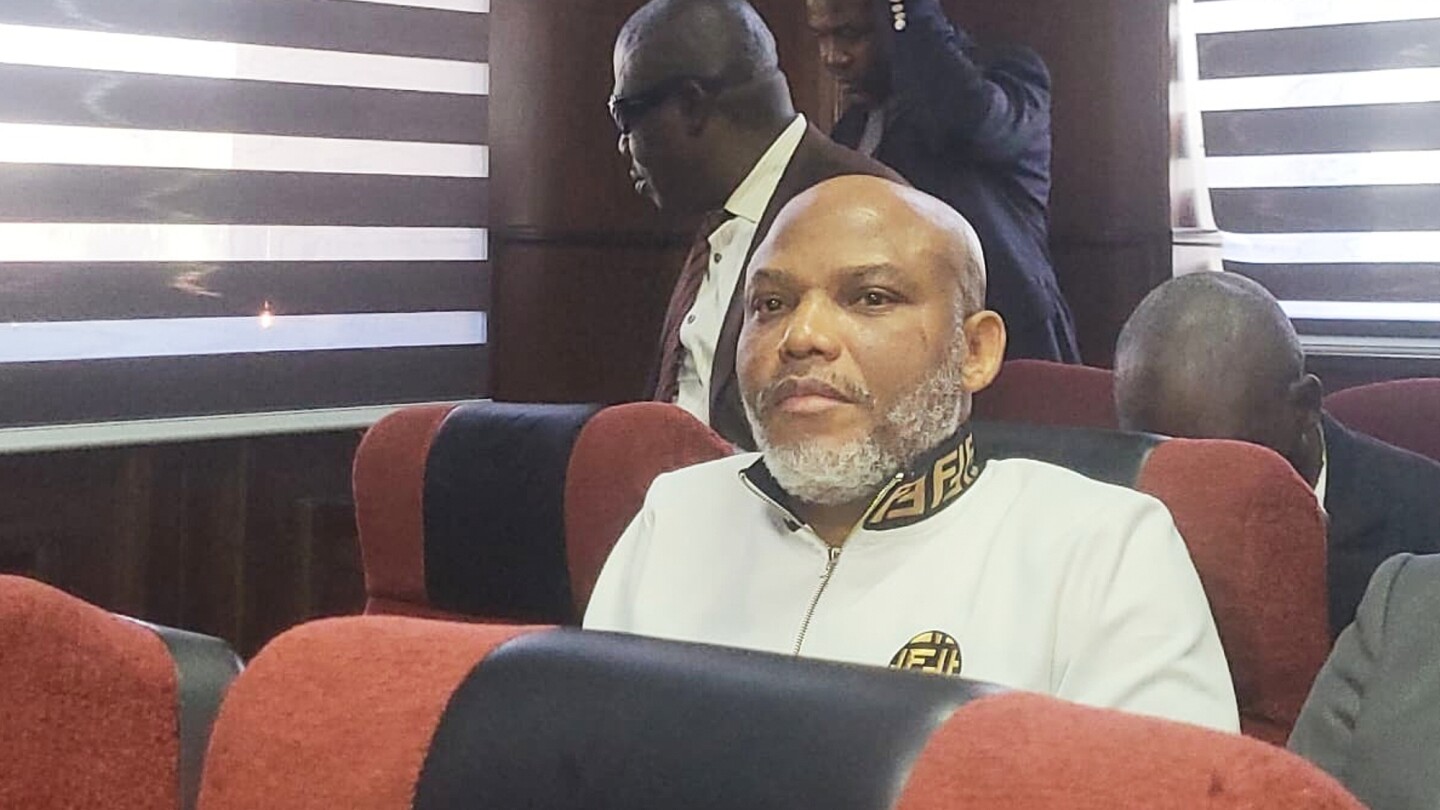
The Indigenous People of Biafra (IPOB) reaffirmed its commitment to peaceful self-determination efforts on Friday, just one day after its founder and leader Nnamdi Kanu was sentenced to life imprisonment on terrorism charges by a Nigerian court.
“We reaffirm our commitment to peaceful advocacy, international law and the pursuit of a United Nations–supervised referendum,” said Emma Powerful, IPOB’s spokesperson, in a statement following the verdict.
IPOB, which has been campaigning for the creation of an independent state in Nigeria’s southeastern region, condemned the sentencing. The group claimed that no weapons or “attack plan” were ever discovered in Kanu’s possession and maintained that their leader had not committed any offenses under either Nigerian or international law.
The charges against Kanu were extensive. They included carrying out acts of terrorism, issuing and forcefully implementing weekly stay-at-home orders that paralyze the southeastern region every Monday, providing instructions on bomb-making for attacks on government facilities, and incitement.
During Thursday’s proceedings, Judge James Omotosho acknowledged that “the right to self-determination is a political right” but emphasized that “any self-determination not done according to the constitution of Nigeria is illegal.”
Kanu, who has consistently rejected the court’s jurisdiction over him, has been in detention for an extended period. His case has drawn significant attention both within Nigeria and internationally, highlighting the ongoing tensions surrounding separatist movements in the country’s southeast.
The IPOB spokesperson further claimed that the violence plaguing the southeast region “is politically manufactured” and has no connection to Kanu, particularly given his continued detention.
This verdict comes against the backdrop of Nigeria’s complex history with separatist movements. The region that IPOB seeks to establish as an independent Biafra state was previously the site of a devastating civil war between 1967 and 1970, when secessionists attempted to create a Biafran nation. That conflict resulted in the deaths of an estimated one million people, primarily from starvation.
IPOB’s activities have significantly disrupted economic and social life in Nigeria’s southeast in recent years. The weekly stay-at-home orders, in particular, have had severe economic consequences for a region already facing considerable development challenges.
The Nigerian government has consistently classified IPOB as a terrorist organization, accusing it of violence against security forces and civilians who fail to comply with its directives. However, IPOB maintains that it is a peaceful movement seeking self-determination through legal and democratic means.
The case bears similarities to that of another Nigerian separatist leader, Simon Ekpa, who was convicted in Finland this September. Ekpa, who holds Finnish citizenship, received a six-year prison sentence for participating in terrorist activities, public incitement to commit crimes for terrorist purposes, and aggravated tax fraud.
Security analysts note that the sentencing of Kanu could potentially inflame tensions in Nigeria’s southeast, where IPOB enjoys significant support among those who feel marginalized by the federal government.
The group’s insistence on peaceful methods following the verdict will be closely watched by Nigerian authorities and international observers alike. Whether IPOB supporters will adhere to this commitment in the wake of their leader’s life sentence remains to be seen.
As Nigeria continues to grapple with multiple security challenges across different regions, the government’s handling of separatist movements like IPOB represents just one facet of the complex task of maintaining national unity while addressing legitimate grievances among diverse populations.
Fact Checker
Verify the accuracy of this article using The Disinformation Commission analysis and real-time sources.

14 Comments
Maintaining stability and security is understandably a priority for the Nigerian government. But the IPOB’s claims for self-determination also deserve a fair hearing through lawful and democratic means.
Exactly. This requires nuanced balancing of multiple interests and perspectives to reach a just and lasting solution.
The IPOB leader’s harsh sentence raises concerns about political repression. However, the group’s stated commitment to peaceful methods is encouraging and worth exploring further.
That’s a thoughtful perspective. Maintaining open channels of communication, even in the face of tensions, may help find a constructive solution.
This conflict underscores the need for inclusive, democratic processes to address regional grievances and aspirations. I hope all parties can engage in good faith to find a peaceful way forward.
Absolutely. Durable solutions often require flexibility, compromise, and a willingness to listen to different viewpoints.
This is a complex situation with competing claims and perspectives. I hope the parties can find a peaceful path forward that respects human rights and the rule of law.
Agreed, violence will only beget more violence. Dialogue and diplomacy seem like the wisest approach here.
The charges against the IPOB leader seem quite serious. However, the group’s stated commitment to peaceful advocacy is encouraging. I wonder if there are ways the government and IPOB can find common ground.
That’s a good point. Compromise and concessions on both sides may be needed to resolve this conflict constructively.
This conflict highlights the challenges of ethnic and regional tensions within Nigeria. I hope both sides can find a mutually acceptable path forward that upholds human rights and the rule of law.
Agreed. Addressing the root causes of this conflict, rather than just the symptoms, will be key to a lasting resolution.
The IPOB’s pledge to pursue self-determination peacefully is a positive sign. However, the government will likely need more concrete assurances and actions before easing its crackdown.
That’s a fair assessment. Building trust between the parties is crucial, even as they negotiate complex political and legal issues.