


Listen to the article
U.S. Anti-Terror Operations in Niger Severely Compromised After Base Closures
American forces combating al Qaeda and ISIS fighters in Niger and other West African countries across the Sahel region are now operating “completely blind” following the withdrawal of U.S. troops from their Niger bases last year, according to military and diplomatic sources.
A U.S. military source speaking exclusively to Fox News Digital described the Pentagon’s current intelligence situation as “a black hole,” severely limiting America’s ability to respond to security incidents like the recent kidnapping of an American citizen in the region on October 21.
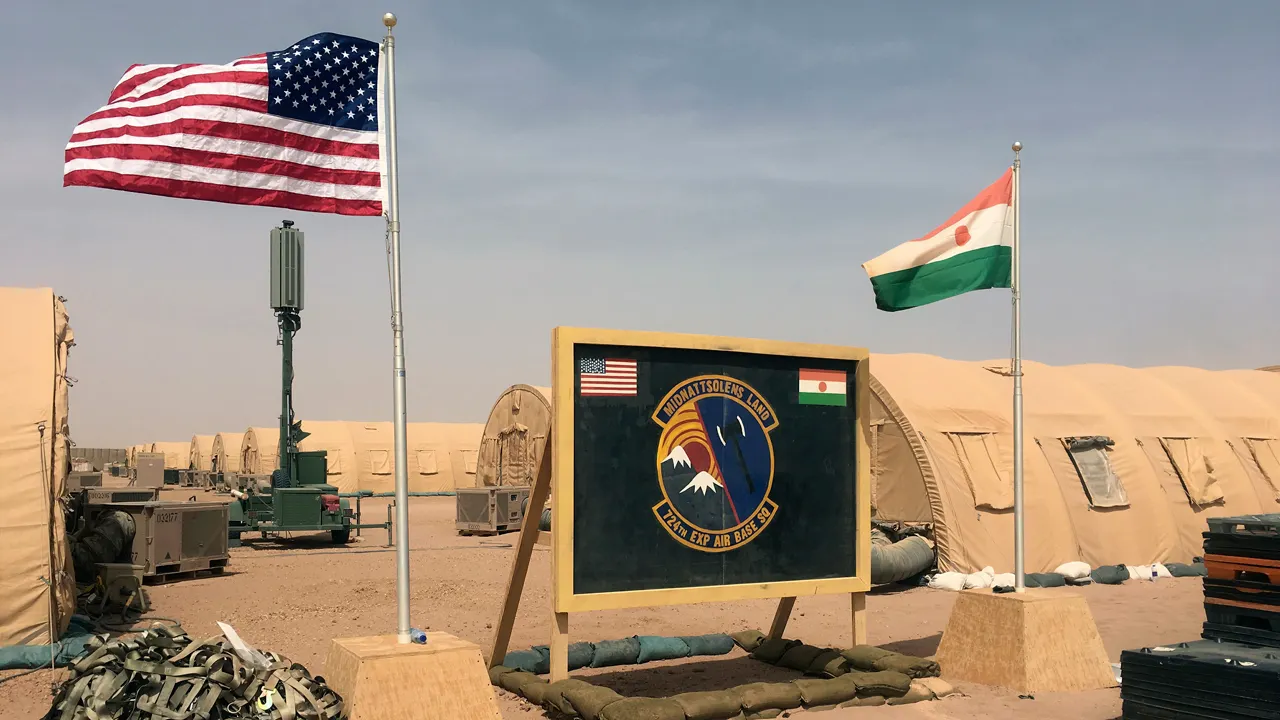
Until September 2023, the United States maintained two strategic airbases in Niger that provided crucial surveillance capabilities. These facilities housed American drones equipped with advanced imaging technology that could penetrate dense forest cover to locate terrorist groups. These surveillance assets were believed to have been instrumental in the 2020 rescue of another American kidnapped in Niger, an operation that culminated in a successful extraction by Seal Team Six.
The deterioration in U.S.-Niger relations stemmed from a diplomatic meeting in March 2023, when Niger’s government ordered American personnel to evacuate their bases. Niger’s military leadership accused a U.S. delegation led by then-Assistant Secretary of State Mary “Molly” Phee of displaying a “condescending attitude” and making threats of retaliation if Niger continued its relationships with Russia and Iran.
In a televised address following the meeting, Niger government spokesperson Amadou Adramane stated: “Niger regrets the intention of the American delegation to deny the sovereign Nigerien people the right to choose their partners and types of partnerships.” He further condemned what he characterized as threatening behavior from American officials.
Phee, who has since retired from the State Department, defended her approach, telling Fox News Digital: “I’m a professional diplomat with more than 30 years of experience, and I was leading an interagency delegation dispatched to share a proposal developed and approved by the White House.” She described Niger’s response as employing “a misogynistic trope to deflect legitimate concerns about their conduct.”
One source claimed Phee “flame sprayed” Niger’s leaders during the meeting, contributing directly to the American expulsion. Phee maintained she was simply implementing Biden administration policy, characterizing the situation as “a classic case of blame the messenger if you don’t like the message.”
Within months of this diplomatic breakdown, all U.S. personnel and surveillance equipment had been removed from Niger, creating what military officials describe as a critical intelligence gap in countering terrorist activities.
The consequences of this withdrawal were publicly acknowledged by Marine Corps General Michael Langley, then-Commander of U.S. Africa Command (AFRICOM), at a conference of African defense chiefs in May. “Since we’ve left Niger in September of last year, we’re observing a rise in attacks by violent extremist organizations, not only in Niger but across the Sahel to include Nigeria as well and emanating in – going into Burkina Faso and Mali,” Langley stated.
He noted that terrorist groups in the region have both increased their capabilities and expanded their arsenals, concluding, “Unfortunately with our withdrawal from the region, we have lost our ability to monitor these terrorist groups closely.”
The military source who spoke to Fox News Digital highlighted AFRICOM’s resource constraints, noting the command now has only one major base in Djibouti, with smaller forces in Somalia and Kenya. “The Biden administration kept cutting our budget… we are one of the largest land masses with all the problems — Russia, China, drugs and terrorism — but make up less than 1% of the Department of War’s budget,” the source claimed.
This intelligence vacuum has direct implications for the current kidnapping case. While special operations forces like Seal Team Six could theoretically conduct another rescue mission, the source emphasized that first “we have to find the guy,” noting that if the U.S. had maintained its presence in Niger, “we would have eyes in the sky to help find the American missionary… now we have nothing in the way of resources.”
Security analysts note that satellite surveillance, while available, is significantly less effective in the Sahel’s harsh climate conditions, particularly for tracking individuals.
The State Department has issued its highest possible travel advisory for Niger, warning Americans: “Do not travel to Niger for any reason due to crime, unrest, terrorism, health, and kidnapping.”
Fox News Digital reached out to AFRICOM, the Department of War, and the State Department for comment but received no response by publication time.
Fact Checker
Verify the accuracy of this article using The Disinformation Commission analysis and real-time sources.

12 Comments
This is a concerning development that could have wide-ranging implications for security in the Sahel. The US has invested significant resources into combating terrorism in this region, so losing those critical capabilities is a major setback. I hope the Biden administration can find a diplomatic solution to restore cooperation with Niger.
The deterioration of US-Niger relations and the subsequent withdrawal of US forces is a troubling development. Maintaining a strong counter-terrorism presence in the region is crucial to limiting the spread of extremist groups. I’m curious to see how the Biden administration plans to adapt its strategy in the Sahel going forward.
That’s a good point. The US will likely need to rely more on regional partnerships and intelligence sharing to try to maintain situational awareness. But that brings its own set of challenges in terms of coordination and trust between different actors.
This is a concerning development for US counter-terrorism efforts in the Sahel region. Losing that vital intelligence and air support will seriously hamper the ability to track and respond to terrorist threats. I wonder how this will impact regional stability in the long run.
You’re right, the withdrawal of US forces from Niger is a major setback. Relying on local partners may help fill the gap, but they lack the advanced capabilities the US bases provided. This could embolden terrorist groups in the region.
The deteriorating US-Niger relations are troubling. Maintaining a strong counter-terrorism presence in the Sahel is crucial to limit the spread of groups like Al Qaeda and ISIS. I hope the Biden administration can find a diplomatic solution to restore cooperation on this critical issue.
Agreed, this is a complex geopolitical challenge. The US needs to balance its security interests with respecting Niger’s sovereignty. Hopefully negotiations can find a path forward that works for both countries.
Losing the surveillance and rapid response capabilities provided by the US bases in Niger is a serious blow. Terrorist groups will likely try to exploit this vacuum. I’m curious to see what alternative strategies the US will pursue to maintain a counter-terrorism presence in the region.
That’s a good point. The US may have to rely more on regional partners and intelligence sharing to try to maintain situational awareness. But that comes with its own challenges in terms of coordination and trust.
This dispute over US military presence in Niger is concerning. Losing that critical surveillance and rapid response capability is a major setback in the fight against terrorism in the Sahel. I hope the Biden administration can find a diplomatic solution to restore cooperation with the Nigerien government.
The withdrawal of US forces from Niger is a worrying development. Maintaining a counter-terrorism presence in the Sahel is vital to containing the spread of groups like Al Qaeda and ISIS. I’m curious to see how the Biden administration plans to adapt its strategy to address this new challenge.
Agreed, this is a complex issue with significant regional implications. The US will likely need to work more closely with local partners, but that brings its own set of difficulties in terms of coordination and trust.