


Listen to the article
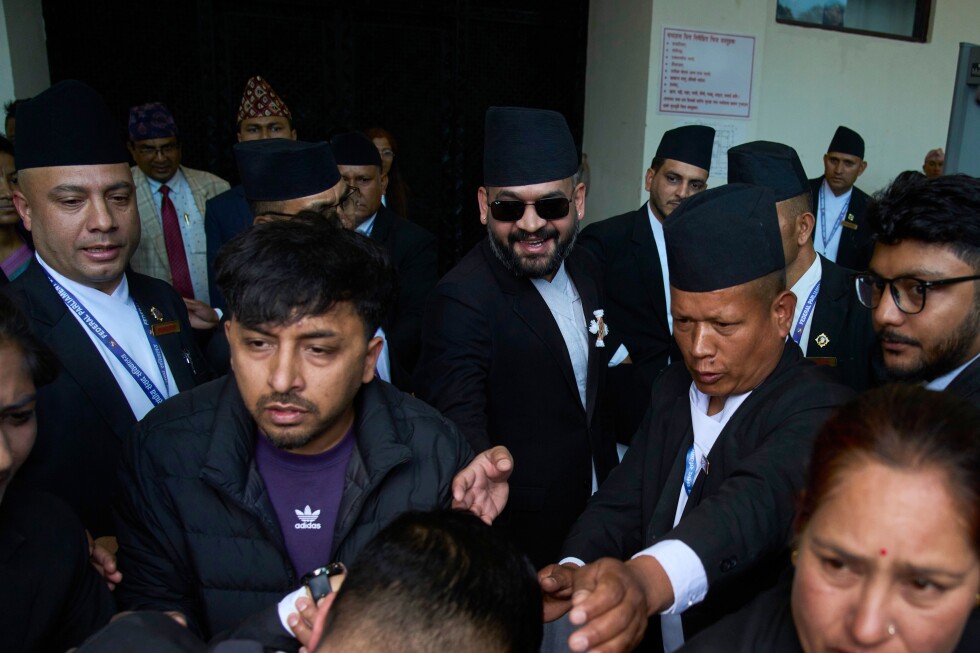
Nepal’s newly elected members of parliament took their oaths of office on Thursday, marking a significant political shift as a young political party secured a commanding majority in the legislative body.
The Rastriya Swatantra Party (RSP), formed less than four years ago, captured nearly two-thirds of the 275 seats in the House of Representatives, Nepal’s powerful lower chamber. The party, led by rapper-turned-politician Balendra Shah, won 125 directly elected seats and gained an additional 57 through proportional representation, giving it a total of 182 seats.
This landslide victory represents a dramatic reshaping of Nepal’s political landscape, where established parties have long dominated. The Nepali Congress, previously one of the country’s most influential political forces, secured just 38 seats, relegating it to a distant second place.
Shah, who is expected to be formally appointed as Nepal’s new prime minister after being chosen as party leader, is scheduled to take his oath of office on Friday. President Ram Chandra Poudel will officially appoint him following notification from the RSP.
The election marks Nepal’s first since last year’s youth-led uprising that toppled the government of former Prime Minister Khadga Prasad Oli. That protest movement, which began in response to a social media ban, eventually grew into widespread demonstrations against corruption and poor governance. The unrest turned deadly, with dozens killed and hundreds injured as protesters clashed with security forces and attacked government buildings.
Shah emerged as a prominent figure during those protests, building on the political capital he had accumulated since winning the Kathmandu mayoral race in 2022. His party’s meteoric rise from its founding that same year to commanding control of parliament reflects significant public dissatisfaction with Nepal’s established political order.
Nepal’s electoral system combines direct representation with proportional allocation. Voters directly elect 165 members to the House of Representatives, while the remaining 110 seats are distributed to political parties based on their share of the overall vote. This system, designed to ensure broader representation, has now delivered a strong mandate to a party that positioned itself as an alternative to traditional political powers.
The RSP’s triumph comes at the expense of Nepal’s traditional political duopoly – the Nepali Congress and the Communist Party of Nepal (Unified Marxist-Leninist). Both parties have alternated power for decades but have faced increasing criticism for perceived governance failures and corruption.
Political analysts suggest the RSP’s success stems from its appeal to Nepal’s youthful population, many of whom are frustrated with the country’s persistent economic challenges, high unemployment, and political instability. Nepal, a landlocked nation situated between India and China, has experienced 13 different governments since transitioning to a federal democratic republic in 2008.
The parliamentary members sworn in Thursday will serve five-year terms, during which the RSP-led government will face significant challenges. Nepal continues to struggle with economic development, infrastructure deficits, and the lingering effects of the 2015 earthquake that devastated parts of the country.
Shah’s transition from entertainment to politics mirrors a global trend of outsiders challenging established political systems. His government will now be tasked with implementing reforms while navigating Nepal’s complex geopolitical position between two competing regional powers.
As the new parliament begins its work, many Nepalis hope this dramatic political shift will translate into meaningful change for a country that has long sought stability and prosperity following years of civil conflict and political turmoil.
Fact Checker
Verify the accuracy of this article using The Disinformation Commission analysis and real-time sources.

11 Comments
The youth-led revolt that toppled the previous government seems to have ushered in a new era of political dynamism in Nepal. It will be crucial for the RSP to address the concerns that drove this change and deliver tangible improvements for the people.
Absolutely. The RSP’s ability to translate their electoral success into effective governance will be the true test of this political upheaval. Balancing the demands of reform with political realities will be a delicate challenge.
The landslide victory of the RSP is a testament to the power of grassroots movements and the desire for change among Nepal’s population. It will be crucial for the new government to maintain this momentum and demonstrate tangible improvements in the lives of citizens.
The surge of the Rastriya Swatantra Party is a remarkable feat, given their recent formation. It will be intriguing to see how they leverage their mandate to address Nepal’s pressing issues, from economic development to social justice.
Fascinating to see Nepal’s political landscape shift so dramatically. The RSP’s landslide victory is a testament to the power of grassroots movements and the desire for change among the youth. It will be interesting to see how the new leadership navigates the country’s challenges.
I agree, this is a significant shift that could have far-reaching implications for Nepal. The RSP’s platform and priorities will be closely watched as they take power.
It’s intriguing to see a relative newcomer like the RSP sweep to power in Nepal. Their success underscores the appetite for fresh perspectives and bold reforms. However, the transition to effective governance will be a significant challenge.
This is an exciting development in Nepali politics, though it also raises questions about the long-term stability of the new government. The RSP’s relative inexperience could be both a strength and a weakness as they seek to implement their agenda.
You make a fair point. The RSP’s lack of established political machinery could hinder their ability to navigate the complexities of governing, but it may also allow them to pursue bolder reforms unencumbered by entrenched interests.
The RSP’s triumph represents a significant shift in Nepal’s political landscape. Their focus on youth empowerment and anti-corruption measures seems to have struck a chord with the electorate. It will be crucial for them to deliver on these promises and address the country’s pressing issues.
This election result is a clear rejection of the status quo in Nepali politics. The RSP’s emphasis on youth empowerment and anti-corruption measures appears to have resonated strongly with the electorate. Their ability to deliver on these promises will be crucial.