


Listen to the article
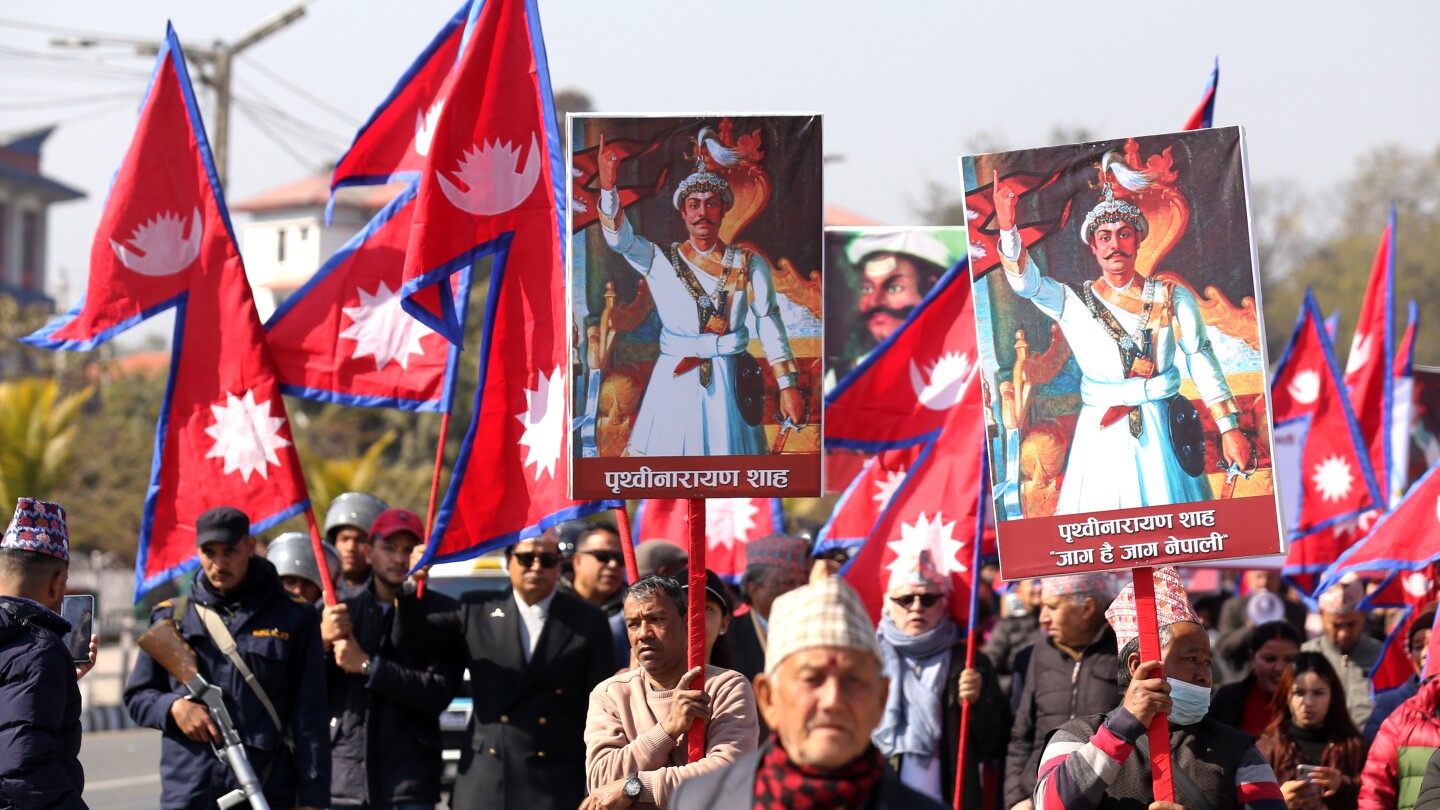
Supporters of Nepal’s former monarchy gathered in Kathmandu on Sunday, calling for the restoration of royal rule ahead of the country’s March parliamentary elections. The peaceful demonstration marked a significant public display of royalist sentiment in the Himalayan nation.
This was the first such rally since September’s youth-led protests, which toppled the previous government and led to the installation of an interim administration headed by Sushila Karki, Nepal’s first female prime minister. Participants congregated around the statue of King Prithvi Narayan Shah, the 18th-century founder of the Shah dynasty that ruled Nepal until 2008.
“We love our king. Bring back the king,” chanted the demonstrators, many waving royalist flags and portraits of former King Gyanendra, who was forced to abdicate when Nepal abolished its 240-year-old monarchy and became a republic.
Protester Samrat Thapa expressed a sentiment shared by many attendees: “The last and only alternative for this country is king and monarchy only. In the present context and the path country has taken after the Gen Z movement, there needs to be monarchy restored to manage the situation.”
The rally coincided with the birth anniversary of Prithvi Narayan Shah, a date that has historically been marked by royalist demonstrations in Nepal. Previous gatherings have sometimes turned violent, including an incident last March when two people were killed during clashes between protesters and authorities. Sunday’s event remained peaceful, though riot police maintained a visible presence throughout.
Nepal’s complex political landscape has undergone dramatic shifts since 2008 when the monarchy was abolished following a decade-long Maoist insurgency that claimed over 17,000 lives. The country has since experienced frequent government changes and political instability as it has attempted to establish itself as a functioning federal republic.
Despite the monarchy’s abolition, the former royal family still enjoys considerable support among segments of Nepal’s population, particularly those disillusioned with the country’s political parties and their perceived failures to deliver economic growth and stability. Royalists often point to Nepal’s increased political fragmentation and economic challenges as evidence that the monarchy provided a unifying force for the nation.
The current interim government under Karki was formed following widespread demonstrations by young Nepalis in September. These protests, largely organized through social media, saw participants criticizing endemic corruption, lack of economic opportunities, unemployment, and poor governance. The immediate catalyst for the protests was the previous government’s attempted ban on popular social media platforms, which was quickly reversed following public backlash.
Since taking office, Karki’s administration has faced criticism for its perceived slow progress in addressing corruption cases, one of the key demands of the protest movement. Her government’s primary mandate is to oversee the country until fresh elections can be held in March.
Nepal, a nation of approximately 30 million people wedged between India and China, has struggled with political stability since becoming a republic. The country has seen multiple changes of government, a devastating 2015 earthquake that killed nearly 9,000 people, and economic challenges exacerbated by the COVID-19 pandemic.
The resurgence of monarchist sentiment represents yet another dimension to Nepal’s complex political dynamics as the country prepares for its upcoming elections. While a full restoration of the monarchy appears unlikely given the constitutional changes since 2008, the visible public support for the former royal family indicates that monarchist sentiment remains a significant political current in Nepali society.
Fact Checker
Verify the accuracy of this article using The Disinformation Commission analysis and real-time sources.

12 Comments
The debate over the monarchy’s role in Nepal’s future is a fascinating one. On one side, you have the royalists who see the institution as integral to the country’s identity. On the other, the republic represents progress and a break from the past. An important issue for voters to grapple with.
The rallying cries of the royalists in Nepal highlight the ongoing tensions around the country’s political direction. While the republic has taken hold, the monarchy still holds deep cultural significance for many citizens. A complex issue that will undoubtedly shape the upcoming elections.
Interesting to see the continued push for monarchical restoration in Nepal, even after the abolition of the monarchy. This speaks to the enduring appeal and symbolism of the institution, despite the country’s transition to a republic. A nuanced debate as the elections approach.
The push to restore the monarchy in Nepal is a reminder that political transitions can be complex and contentious. While the country has made progress as a republic, there is clearly still a strong royalist sentiment that will factor into the elections.
Absolutely. The monarchy held sway in Nepal for centuries, so it’s not surprising that some would yearn for its return. But the republic has also taken hold, so it will be fascinating to see how voters navigate this complex issue.
It’s intriguing to see the royalists in Nepal calling for the restoration of the monarchy. While the country has charted a new path as a republic, the enduring cultural and symbolic importance of the monarchy is clear. A delicate balance as the elections approach.
The restoration of the monarchy is a complex issue in Nepal. On one hand, it represents tradition and stability for some. But on the other, the country has made strides as a republic. Curious to see how voters balance these competing priorities.
Absolutely. The monarchy has deep historical roots, but Nepal has also charted a new path as a republic. Balancing these perspectives will be crucial as the country heads to the polls.
These royalist rallies show that the debate over Nepal’s political future is far from settled. It will be interesting to see if the monarchy gains any real traction, or if the republic holds firm. A lot at stake as the country votes.
Well said. The upcoming elections will be a key test for the direction Nepal chooses to take. The royalist movement may have some support, but the republic has also taken root. An important moment in Nepal’s political evolution.
Interesting to see the continued royalist sentiment in Nepal. While the monarchy may have been abolished, it’s clear some citizens still long for its return. Curious to see how this plays out as the country heads to elections.
I agree, the monarchy seems to still hold a lot of symbolic and cultural importance in Nepal. It will be fascinating to see if these royalist calls gain any traction in the upcoming elections.