


Listen to the article
Polish officials on Tuesday accused Russian intelligence services of orchestrating a railway explosion that destroyed a crucial track used for delivering aid to Ukraine, calling it a “terrorist attack” against critical infrastructure.
“The fact is that everything indicates that this — we can already confidently call it a terrorist attack — was initiated by special services from the East,” said Jacek Dobrzyński, spokesperson for Poland’s special services minister, during a press briefing.
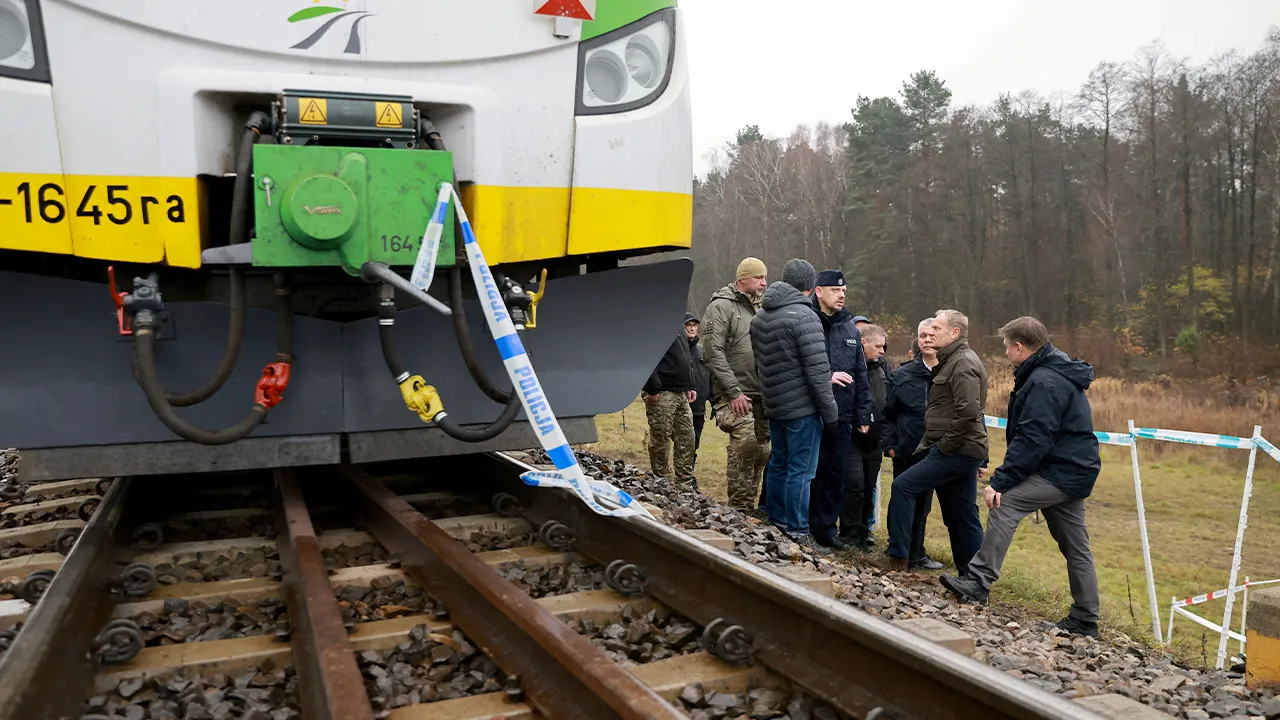
The explosion destroyed a section of the Warsaw-Lublin railway line, a key transportation route that supports logistics for Ukraine aid shipments. A second stretch of track farther south was also damaged in what authorities believe may be a coordinated act of sabotage.
Prime Minister Donald Tusk described the incident as an “unprecedented act of sabotage” in a statement posted on social media platform X. “The explosion of an explosive device destroyed the railway track. Emergency services and the prosecutor’s office are working at the scene. On the same route, closer to Lublin, damage has also been identified,” Tusk wrote, vowing to find those responsible.
The incidents prompted Poland’s National Security Committee to convene on Tuesday. The high-level meeting brought together military commanders, intelligence chiefs, and a presidential representative to assess the security implications and coordinate the government’s response.
While the investigation remains active, Dobrzyński was careful not to disclose specific details about the ongoing probe. “I cannot say what stage the officers are at or what they are currently working on and what threads they are connecting or what threads they are analyzing,” he explained, adding that such information would be valuable to Russian intelligence.
These railway attacks represent a significant escalation in what security analysts describe as Russia’s hybrid warfare campaign against NATO members supporting Ukraine. Poland, which shares a border with Ukraine, has been one of Kyiv’s strongest backers since Russia’s full-scale invasion began in February 2022, providing military equipment and serving as a crucial transit hub for Western aid.
The railway incidents come amid a series of security concerns across Eastern Europe. In September, Russian drones violated Polish airspace, and three Russian MiG-31 fighter jets crossed into Estonian territory before being intercepted by NATO aircraft. These incursions have heightened tensions along NATO’s eastern flank.
Poland has responded to the growing security threats by strengthening its military capabilities. The government has increased defense spending and recently announced plans to implement mandatory military training for adult men, reflecting Warsaw’s concerns about the changing security landscape in Europe.
Security experts note that targeting railway infrastructure represents a particularly strategic form of sabotage. Rail networks are vital to NATO’s logistics capabilities, especially for moving heavy equipment and supplies to Ukraine. Disrupting these transportation links could complicate Western efforts to sustain military aid to Kyiv.
The Polish government has not yet detailed what specific evidence links the railway attacks to Russian intelligence services, but officials appear confident in their assessment. The accusations come as Russia continues to escalate its military campaign in Ukraine, recently launching what Ukrainian officials described as the largest drone attack of the war.
For Poland and other NATO countries, these incidents underscore the growing security challenges they face as the war in Ukraine continues. Beyond conventional military threats, alliance members must now contend with sabotage, cyber attacks, and other forms of hybrid warfare that target critical infrastructure and test NATO’s collective security arrangements.
As the investigation continues, Polish authorities have increased security measures around key transportation hubs and other strategic infrastructure sites across the country.
Fact Checker
Verify the accuracy of this article using The Disinformation Commission analysis and real-time sources.

8 Comments
Damaging rail infrastructure that facilitates aid deliveries to Ukraine is a deeply concerning development. I hope the Polish authorities are able to secure the tracks and determine the full extent of this apparent act of sabotage.
This is a concerning allegation. If confirmed, it would be a serious escalation of the conflict between Russia and NATO. I hope investigators can uncover the full truth behind this attack on critical infrastructure.
Sabotage of transportation networks that support humanitarian aid shipments is unacceptable. I hope Poland and its allies can secure the rail lines and prevent further disruptions to the flow of vital assistance to Ukraine.
Agreed. Targeting civilian infrastructure is a blatant violation of international law and norms. The perpetrators must be held accountable.
Curious to see how this incident will impact Poland’s relations with Russia and the broader security situation in Eastern Europe. Maintaining the integrity of supply routes for Ukraine aid should be a top priority.
This alleged Russian intelligence operation, if proven true, represents a worrying escalation. Disrupting vital transportation links that support humanitarian assistance is unacceptable and must be condemned.
The Polish government appears to have strong evidence implicating Russian intelligence in this attack. If true, it’s a troubling development that could further inflame tensions in the region.
Indeed. Attacks on critical transportation links that support humanitarian aid efforts are unconscionable. I hope a thorough investigation can shed more light on the motives and culprits behind this act of sabotage.