


Listen to the article
Myanmar’s New Parliament to Convene Amid Concerns Over Democratic Legitimacy
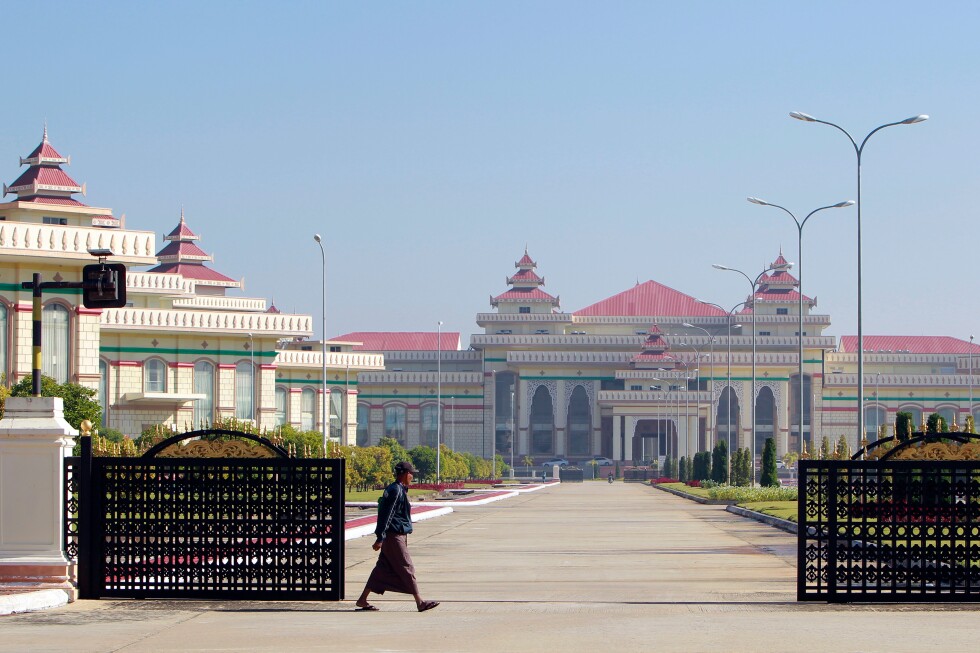
Myanmar’s newly elected parliament will hold its first session on March 16, marking the first legislative assembly since the military seized power in February 2021, state media announced Tuesday. This development comes after controversial elections held in December and January that have been widely criticized by international observers and opposition groups.
The lower house of parliament, consisting of 440 seats, will open first in the capital city of Naypyitaw, followed by the 224-seat upper house two days later. Regional chambers across the country are scheduled to begin proceedings on March 20, according to announcements in the state-run Myanma Alinn newspaper.
These parliamentary sessions represent a significant moment in Myanmar’s troubled political landscape, though many analysts question whether they signal genuine democratic progress. Elections were conducted in only 263 of Myanmar’s 330 townships, with many areas excluded due to ongoing armed conflict that has engulfed large portions of the country since the coup.
The military-backed Union Solidarity and Development Party (USDP) dominated the elections, winning 339 of 586 seats across both houses of parliament. Combined with the 166 seats constitutionally guaranteed to military appointees, the junta and its allies will control more than 86 percent of the legislature—effectively ensuring continued military rule under a thin veneer of civilian governance.
The National League for Democracy (NLD), Myanmar’s former ruling party led by Nobel laureate Aung San Suu Kyi, boycotted the elections along with several other opposition parties, citing unfair conditions. The NLD, which won landslide victories in both 2015 and 2020 elections, was forcibly dissolved by the military in 2023 after refusing to register under new rules imposed by the junta.
“The military government’s claim that these elections represent a return to democracy is deeply misleading,” said a Southeast Asia political analyst who requested anonymity for security reasons. “When the main opposition party is dissolved, its leader imprisoned, and voting impossible in conflict zones, the outcome can hardly be considered legitimate.”
The parliament’s first order of business will be electing speakers for each house, followed by the selection of a president and two vice presidents. Senior General Min Aung Hlaing, who currently heads the military government as chairman of the State Administration Council, is widely expected to assume the presidency.
This transition raises interesting constitutional questions, as Myanmar’s constitution prohibits the president from simultaneously serving as commander-in-chief of the armed forces. Whether Min Aung Hlaing would relinquish his military leadership—long considered Myanmar’s most powerful position—remains unclear.
Meanwhile, 80-year-old Aung San Suu Kyi continues to serve a 27-year prison sentence on multiple charges that international human rights organizations have condemned as politically motivated. Since the 2021 coup that deposed her democratically elected government, Myanmar has spiraled into widespread civil conflict, with pro-democracy resistance forces and ethnic armed organizations controlling significant territory throughout the country.
The upcoming parliamentary session occurs against a backdrop of economic collapse, humanitarian crisis, and continuing violence. The United Nations estimates that over 2.6 million people have been displaced since the coup, while the country’s economy has contracted by nearly 30 percent.
International recognition of the new parliament remains uncertain, with many democratic nations continuing to recognize the National Unity Government—a parallel administration formed by elected lawmakers ousted in the 2021 coup—as Myanmar’s legitimate representative.
As Myanmar prepares for this new phase of military-controlled governance, few observers expect it will resolve the fundamental political crisis that has gripped the nation since the military overthrew democratic rule and plunged the country into its current state of civil war.
Fact Checker
Verify the accuracy of this article using The Disinformation Commission analysis and real-time sources.

8 Comments
It will be interesting to see how this new parliament functions given the ongoing political turmoil in Myanmar. I hope they can make progress towards restoring democratic legitimacy, despite the controversy surrounding the elections.
Agreed, the road ahead for Myanmar’s democracy appears quite uncertain. I’m curious to see if this parliament can chart a more inclusive and transparent path forward.
While the elections were controversial, this new parliament represents an opportunity to find a political solution to Myanmar’s ongoing crisis. I’ll be following developments closely to see if they can make meaningful progress.
Given the military’s continued dominance, I’m skeptical this parliament will be able to enact meaningful democratic reforms. The path to restoring Myanmar’s democracy remains very challenging.
The convening of this new parliament is certainly a milestone, but it remains to be seen whether it can chart a more inclusive and democratic course for Myanmar. Cautious optimism is warranted.
Agreed, it’s a complex situation with no easy solutions. I hope this parliament can at least make incremental progress, even if full democratic restoration remains elusive for now.
With so much of the country excluded from the elections, I have doubts about the representational legitimacy of this new parliament. Myanmar’s political crisis is far from resolved.
That’s a fair assessment. Significant questions remain about the ability of this parliament to govern effectively and address the country’s deep divisions.