


Listen to the article
Myanmar’s military government announced Sunday the release of more than 6,100 prisoners as part of an amnesty marking the country’s 78th independence anniversary from Britain.
The amnesty, declared by military leader Senior Gen. Min Aung Hlaing, includes 6,134 prisoners and 52 foreigners who will be deported from Myanmar, according to state-run MRTV television. Officials have not clarified whether political detainees are among those being freed.
The prisoner release coincides with a controversial three-stage election process launched by the junta, which critics have widely denounced as a superficial attempt to legitimize military rule. Such prisoner releases are common during significant national occasions in Myanmar and are expected to continue over several days.
At Yangon’s infamous Insein Prison, known for housing political prisoners, families gathered at dawn hoping for news of their loved ones. However, there are no indications that former civilian leader Aung San Suu Kyi would be included in the amnesty.
The 80-year-old Nobel laureate remains in detention, serving a 27-year sentence on multiple charges that her supporters and international observers describe as politically motivated prosecutions. Suu Kyi has been held virtually incommunicado since the military seized power in February 2021.
According to the Assistance Association for Political Prisoners, an independent monitoring organization, more than 22,000 political detainees were being held in Myanmar as of last week. Many were arrested on incitement charges, a broadly interpreted offense that carries up to three years imprisonment and has been widely used to silence government critics.
The military takeover more than two years ago triggered massive peaceful demonstrations across Myanmar that evolved into armed resistance as the junta responded with increasingly violent crackdowns. The conflict has devastated Myanmar’s economy and created a humanitarian crisis in multiple regions.
The terms of the amnesty include warnings that released prisoners who reoffend must serve both their remaining original sentences plus any new sentences imposed. Additionally, those convicted of serious crimes such as murder and rape, or charged under specific security laws, were excluded from sentence reductions.
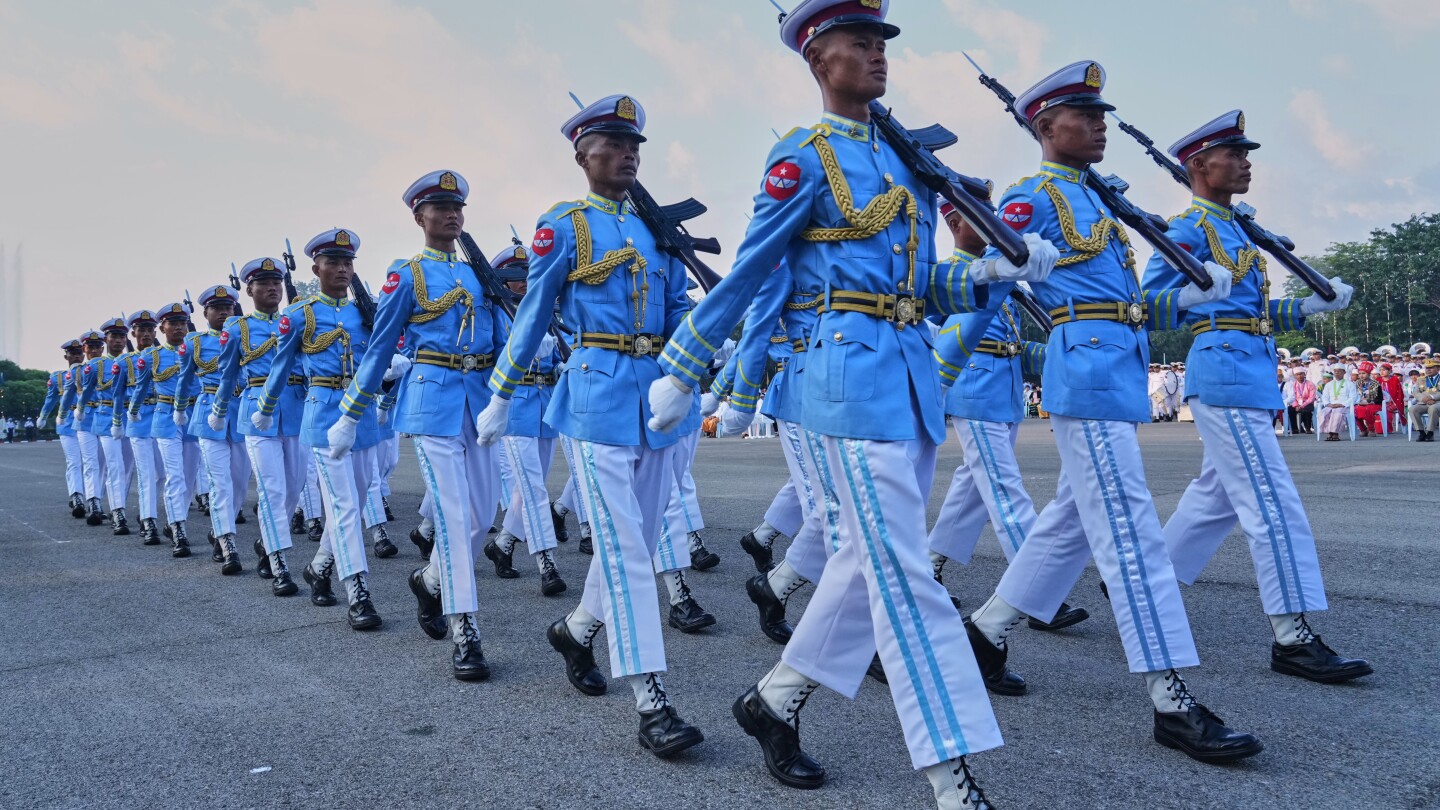
Myanmar’s independence day was marked with a flag-raising ceremony in the capital, Naypyitaw. The country, formerly known as Burma, was colonized by Britain in the late 19th century and regained its independence on January 4, 1948.
The amnesty announcement comes amid escalating conflict between the military and resistance forces across multiple regions of Myanmar. The junta has lost control of significant territory to ethnic armed organizations and pro-democracy resistance groups over the past year.
International human rights organizations have consistently criticized the military government for its widespread human rights abuses, including arbitrary detention, torture, and extrajudicial killings. The United Nations and various countries have imposed sanctions against military leaders and their economic interests since the coup.
Despite the large number of prisoners included in this amnesty, previous similar releases have often excluded the vast majority of political prisoners, focusing instead on those held for non-political offenses. Human rights groups maintain that the periodic amnesties serve primarily as public relations gestures rather than genuine humanitarian acts.
Regional experts note that the timing of this amnesty, alongside the military’s election process, appears calculated to project an image of normalcy and legitimacy both domestically and internationally, even as the country remains deeply fractured by ongoing civil conflict.
Fact Checker
Verify the accuracy of this article using The Disinformation Commission analysis and real-time sources.

10 Comments
This prisoner release is an interesting move by Myanmar’s military government, though it remains to be seen if any political detainees are included. Freeing over 6,000 prisoners is a significant step, but the timing around the controversial election process raises questions about the junta’s motivations.
You’re right, the lack of clarity around which prisoners are being released is concerning. Given the history of political detentions in Myanmar, it’s important to closely monitor whether this amnesty genuinely includes those imprisoned for political reasons.
While the scale of this prisoner release is noteworthy, the broader context of Myanmar’s political and humanitarian crises raises concerns about the junta’s intentions. Given the country’s history of human rights abuses, it will be important for the international community to closely monitor the implementation and impact of this amnesty.
While any reduction in the prison population is welcome news, the context of this amnesty raises concerns. Given Myanmar’s history of human rights abuses and the ongoing crackdown on dissent, I hope the international community closely monitors the situation and ensures that political prisoners are not excluded from this release.
It’s positive to see the military government taking some steps to address the overcrowding in Myanmar’s prisons, but the lack of clarity around the criteria for release is worrying. Without transparency and accountability, this amnesty risks being perceived as a superficial attempt to bolster the junta’s legitimacy.
The timing of this prisoner release, coinciding with the junta’s election plans, seems rather convenient. One has to wonder if this is an attempt to create an illusion of progress and reform, rather than a genuine effort to address the country’s political and humanitarian crises.
The release of over 6,100 prisoners is a significant development, but the timing and context suggest the junta may be trying to distract from the broader political and humanitarian challenges facing the country. It will be important to closely monitor whether this amnesty includes any high-profile political detainees.
Absolutely. The inclusion or exclusion of political prisoners will be a key indicator of the junta’s true motivations. Transparency and impartial oversight of this process will be crucial in determining whether this amnesty represents a genuine effort towards reform and reconciliation.
While prisoner releases during national holidays are common in Myanmar, the scale of this amnesty is quite remarkable. I’m curious to learn more about the specific criteria used to determine who is eligible for release and whether any high-profile political prisoners will be included.
That’s a good point. The details around the selection process for this amnesty will be crucial in understanding the junta’s intentions. Transparency and impartiality in such decisions would be an important step towards addressing Myanmar’s long-standing human rights issues.