


Listen to the article
Myanmar Holds Second Round of Elections Amid Conflict and International Criticism
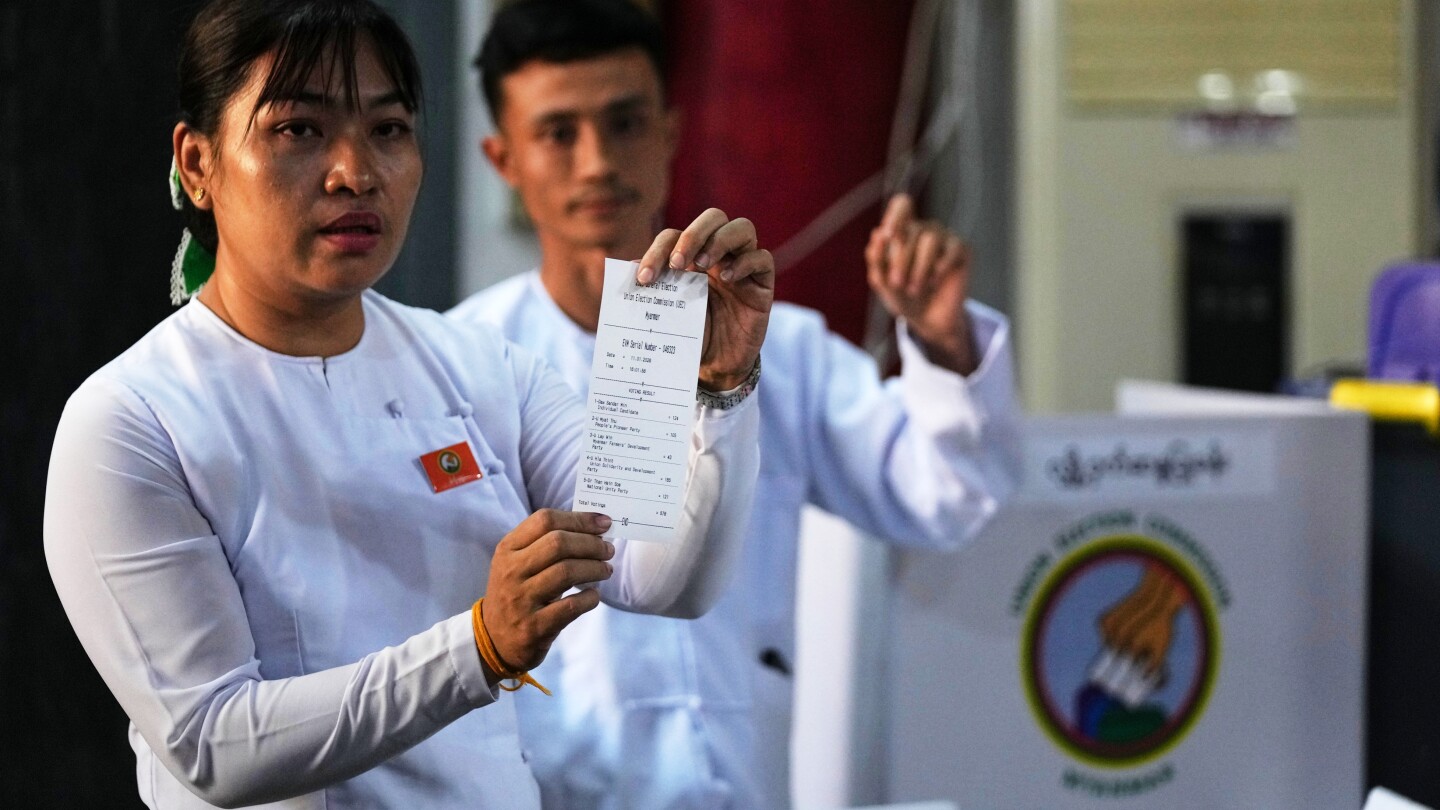
Myanmar conducted its second round of voting on Sunday in the first general election since the military seized power five years ago. Polling expanded to 100 additional townships, including some areas affected by the ongoing civil war between the military government and armed opposition groups.
The vote, which is taking place amid widespread conflict throughout the country, has drawn sharp criticism from international observers. Tom Andrews, a special rapporteur with the UN human rights office, urged the global community to reject what he termed a “sham election,” citing systematic coercion, violence, and political exclusion.
“You cannot have a free, fair or credible election when thousands of political prisoners are behind bars, credible opposition parties have been dissolved, journalists are muzzled, and fundamental freedoms are crushed,” Andrews stated.
According to the Assistance Association for Political Prisoners, more than 22,000 people are currently detained for political offenses in Myanmar. The organization also reports that security forces have killed over 7,600 civilians since the military takeover in February 2021.
The military’s seizure of power from the democratically elected government of Aung San Suu Kyi triggered nationwide peaceful protests that eventually transformed into armed resistance. The country has since descended into a civil war that shows little sign of resolution.
Authorities have implemented harsh measures to suppress criticism of the electoral process. A new Election Protection Law imposes severe penalties for public criticism of the polls, with more than 330 people reportedly charged in recent months for activities such as leafleting or posting comments online.
Security concerns remained prominent during Sunday’s vote. Independent media outlets including Myanmar Now reported attacks targeting polling stations and government buildings in at least four townships, resulting in the deaths of two administrative officials. Opposition organizations and ethnic armed groups had previously vowed to disrupt the electoral process.
The election is being conducted in three phases due to security concerns. The first round took place on December 28 in 102 townships, while the final round is scheduled for January 25. However, 65 of Myanmar’s 330 townships will not participate in any round due to ongoing fighting.
Voter turnout appeared mixed. The Associated Press reported varying attendance at polling stations in major cities like Yangon and Mandalay, with numbers ranging from just a few voters to about 150 at busier locations – significantly lower than the long lines witnessed during the 2020 election. Despite this, the military government claimed the first phase saw participation from more than 6 million people, representing about 52% of eligible voters in those areas.
Myanmar’s electoral system includes a two-house national legislature with 664 seats total. The party securing a parliamentary majority can select the new president, who then forms the government. Under the constitution, the military automatically receives 25% of seats in each house.
The military-backed Union Solidarity and Development Party (USDP) has emerged as the dominant force, winning nearly 90% of contested seats in the lower house during the first phase. Military spokesperson Major General Zaw Min Tun told journalists that parliament will convene in March, with a new government taking office in April.
Notably absent from the election is Aung San Suu Kyi and her National League for Democracy party. The 80-year-old former leader is serving a 27-year prison sentence on charges widely considered politically motivated. Her party was dissolved in 2023 after refusing to register under new military rules. Many other opposition parties have refused to participate or called for a voter boycott.
Some independent candidates, like Sandar Min from Yangon’s Latha township, defended their decision to participate despite criticism. “We want the country to be nonviolent. We do not accept violence as part of the change of the country,” she said after casting her ballot. “We care deeply about the people of this country.”
Fact Checker
Verify the accuracy of this article using The Disinformation Commission analysis and real-time sources.

22 Comments
Interesting update on Myanmar holds second round of voting in first general election since military takeover. Curious how the grades will trend next quarter.
Good point. Watching costs and grades closely.
Interesting update on Myanmar holds second round of voting in first general election since military takeover. Curious how the grades will trend next quarter.
Interesting update on Myanmar holds second round of voting in first general election since military takeover. Curious how the grades will trend next quarter.
Production mix shifting toward World might help margins if metals stay firm.
Good point. Watching costs and grades closely.
Good point. Watching costs and grades closely.
Production mix shifting toward World might help margins if metals stay firm.
Good point. Watching costs and grades closely.
Good point. Watching costs and grades closely.
Uranium names keep pushing higher—supply still tight into 2026.
Good point. Watching costs and grades closely.
The cost guidance is better than expected. If they deliver, the stock could rerate.
Good point. Watching costs and grades closely.
Good point. Watching costs and grades closely.
Exploration results look promising, but permitting will be the key risk.
If AISC keeps dropping, this becomes investable for me.
Nice to see insider buying—usually a good signal in this space.
Good point. Watching costs and grades closely.
The cost guidance is better than expected. If they deliver, the stock could rerate.
Good point. Watching costs and grades closely.
Good point. Watching costs and grades closely.