


Listen to the article
Saudi Arabia Escalates Campaign Against Yemen’s Southern Separatists
Saudi warplanes launched fresh airstrikes Saturday on military installations controlled by Yemen’s southern separatists, targeting a military camp in the strategic port city of Mukalla and other areas across Hadramout governorate, according to the Southern Transitional Council (STC).
The strikes hit the Barshid Brigade camp west of Mukalla as Saudi-backed forces moved to retake the city. The STC claims more than 100 Saudi airstrikes struck multiple locations over 24 hours, resulting in casualties, though exact figures were not specified.
Residents confirmed that Mukalla is now under the control of the Hadramout Tribes Confederacy and National Shield forces – both aligned with Saudi Arabia in the broader anti-Houthi coalition. Col. Ahmed Baqatyan, a military commander with the Hadramout Tribes Confederacy, stated that targeting the Barshid camp was strategically necessary as it sits on the route to Aden, Yemen’s temporary capital.
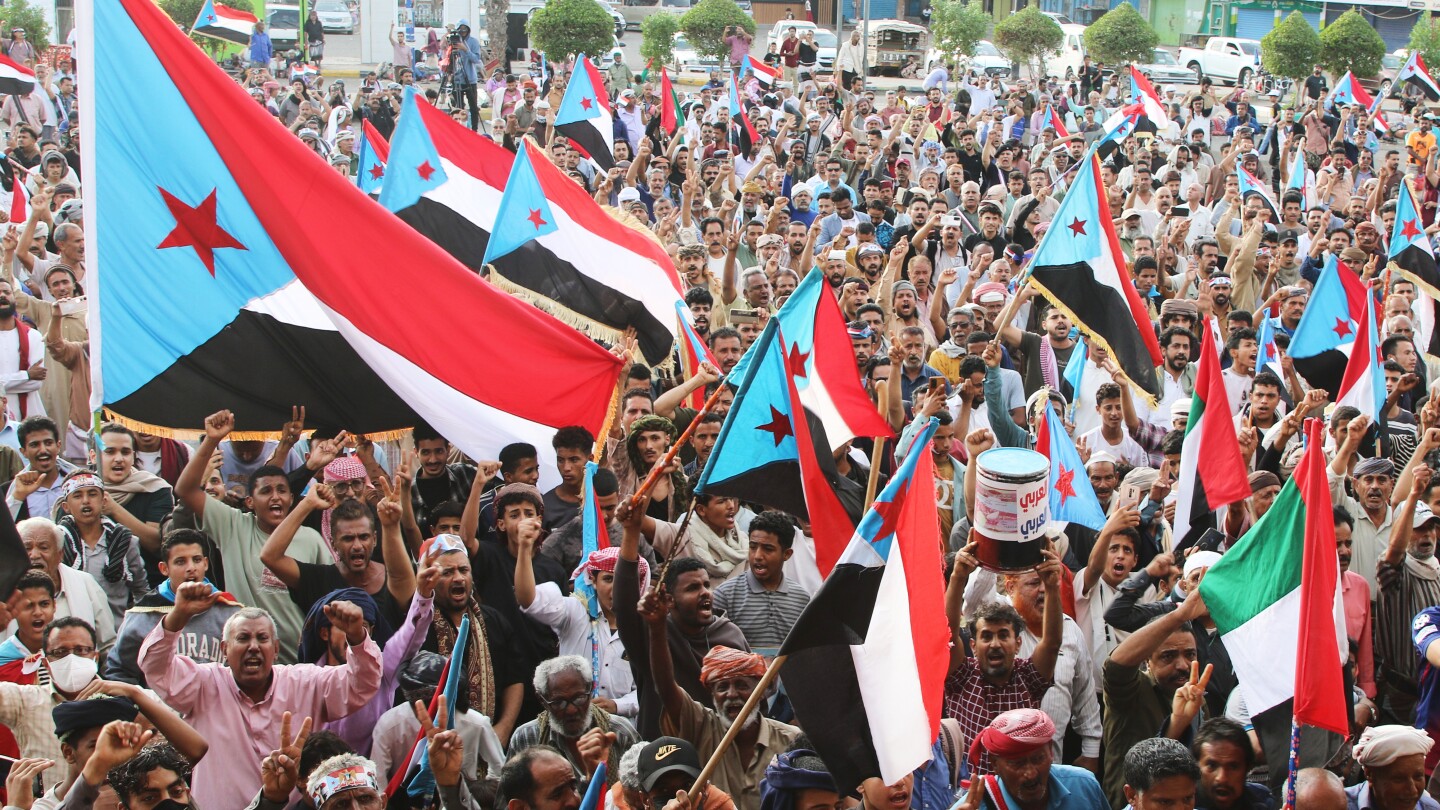
This military escalation represents the latest direct Saudi intervention against the UAE-backed separatists, who just a day earlier had announced a constitution for an independent South Yemen. Last month, the STC seized control of the oil-rich governorates of Hadramout and Mahra, displacing Saudi-aligned forces in the process.
Yemen’s complex civil war, now entering its second decade, has evolved beyond the initial conflict between Iran-backed Houthi rebels controlling the north and the internationally recognized government supported by a Saudi-led coalition in the south. The situation has been further complicated by divisions within the anti-Houthi coalition, with the UAE backing southern separatists seeking independence.
Early Saturday, following Saudi pressure and an ultimatum from anti-Houthi forces, the UAE announced it had withdrawn all its forces from Yemen. However, the damage to Saudi-Emirati relations appears significant. Though nominally partners in the coalition, the two Gulf powers have increasingly competed for influence in Yemen and across the Red Sea region.
“For the Saudis, the STC’s expansion into areas in Hadramout that border the kingdom was a red line,” explained Hilal Khashan, political science professor at the American University of Beirut. “The Saudis felt they were being held captive between the Houthis in the north and the UAE in the south, so they decided to stop the UAE from its regional expansionism.”
The STC-aligned Transportation Ministry has condemned what it described as Saudi airstrikes targeting the international airport in Seiyun, warning that the attacks could damage infrastructure and hinder the resumption of flights.
Meanwhile, clashes erupted Friday between National Shield forces and southern separatists in Hadramout, killing at least eight people, according to paramedic Ahmed al-Ketheri.
In an apparent attempt to defuse tensions, Saudi Arabia announced plans to host a conference in Riyadh bringing together all southern factions “to discuss just solutions to the southern cause.” This initiative comes in response to a request from Rashad al-Alimi, head of Yemen’s Presidential Leadership Council, though no timeline for the conference has been provided.
The latest escalation underscores the fragmentation of Yemen, where the original conflict has spawned multiple overlapping power struggles. While the coalition initially aimed to restore Yemen’s internationally recognized government, competing regional interests have complicated that mission, leaving Yemen’s people caught in what the United Nations has long described as one of the world’s worst humanitarian crises.
With Saudi Arabia now directly striking positions of UAE-backed forces, the possibility of a wider regional confrontation looms, even as both Gulf powers continue their parallel efforts to negotiate with the Houthi rebels to end the northern conflict.
Fact Checker
Verify the accuracy of this article using The Disinformation Commission analysis and real-time sources.

9 Comments
This latest military escalation between the Saudi-backed forces and the UAE-backed separatists in Yemen is deeply troubling. It risks further destabilizing the country and prolonging the humanitarian crisis. I hope the parties can find a way to de-escalate tensions and work towards a political solution.
Agreed, the civilians in Yemen have endured far too much suffering already. A political solution that addresses the underlying tensions and grievances is desperately needed.
Interesting developments in Yemen. The Saudi-Emirati rivalry seems to be heating up again, with the Saudis targeting separatist positions. I wonder how this will impact the broader conflict and civilian populations.
This is a complex and rapidly evolving situation. The Saudi airstrikes against the southern separatists add another layer of complexity to the Yemeni conflict. It will be important to closely monitor the situation and its impact on the local population.
You’re right, the situation in Yemen remains highly volatile. The regional power dynamics and competing interests make it difficult to find a lasting political solution.
The Saudi airstrikes highlight the complex web of alliances and shifting loyalties in the Yemeni civil war. It’s a difficult situation with no easy solutions, and the civilians caught in the crossfire continue to suffer.
This escalation between the Saudi-backed forces and the UAE-backed separatists is concerning. It could further destabilize the region and prolong the humanitarian crisis. I hope the parties can find a path to de-escalation and a political resolution.
The Saudis seem determined to maintain control over strategic areas like Mukalla. But the UAE-backed separatists have their own agenda, and this clash of interests could prolong the fighting. I wonder what the long-term implications will be for Yemen’s stability.
The Saudi-led intervention against the southern separatists in Yemen is a concerning development. It highlights the fragility of the anti-Houthi coalition and the potential for further fragmentation of the country. The civilians caught in the crossfire continue to suffer the most.