


Listen to the article
Millions around the world marked Orthodox Christmas on Wednesday, nearly two weeks after the widely observed December 25 celebration. This timing difference highlights the complex historical and religious divisions that continue to shape global faith traditions.
The delayed celebration stems from certain Eastern Orthodox churches, most notably the Russian Orthodox Church, following the ancient Julian calendar, which runs 13 days behind the Gregorian calendar used by most of the world. The Ethiopian Orthodox Church and several other Oriental Orthodox churches—distinct from Eastern Orthodox but sharing many traditions—also celebrated Christmas on January 7.
This calendar divergence has deep historical roots. For over a millennium, the ancient church in the Roman Empire set religious feasts based on the Julian calendar established by Julius Caesar. However, this calendar’s slight inaccuracies accumulated over centuries, creating an increasing misalignment with the solar year.
In the 16th century, Pope Gregory XIII approved a revised, more astronomically precise calendar that bears his name. The Gregorian reform abruptly shifted the calendar several days forward to correct the accumulated discrepancy and implemented a more precise calculation of leap years. Over time, Protestant churches and secular governments worldwide adopted this new standard.
Eastern Orthodox churches maintained the Julian calendar until 1923, when an inter-Orthodox gathering adopted a revised Julian calendar that closely aligns with the Gregorian. Greek Orthodox churches and those in Romanian and Bulgarian traditions embraced this reform, celebrating Christmas on December 25 along with Western Christians.
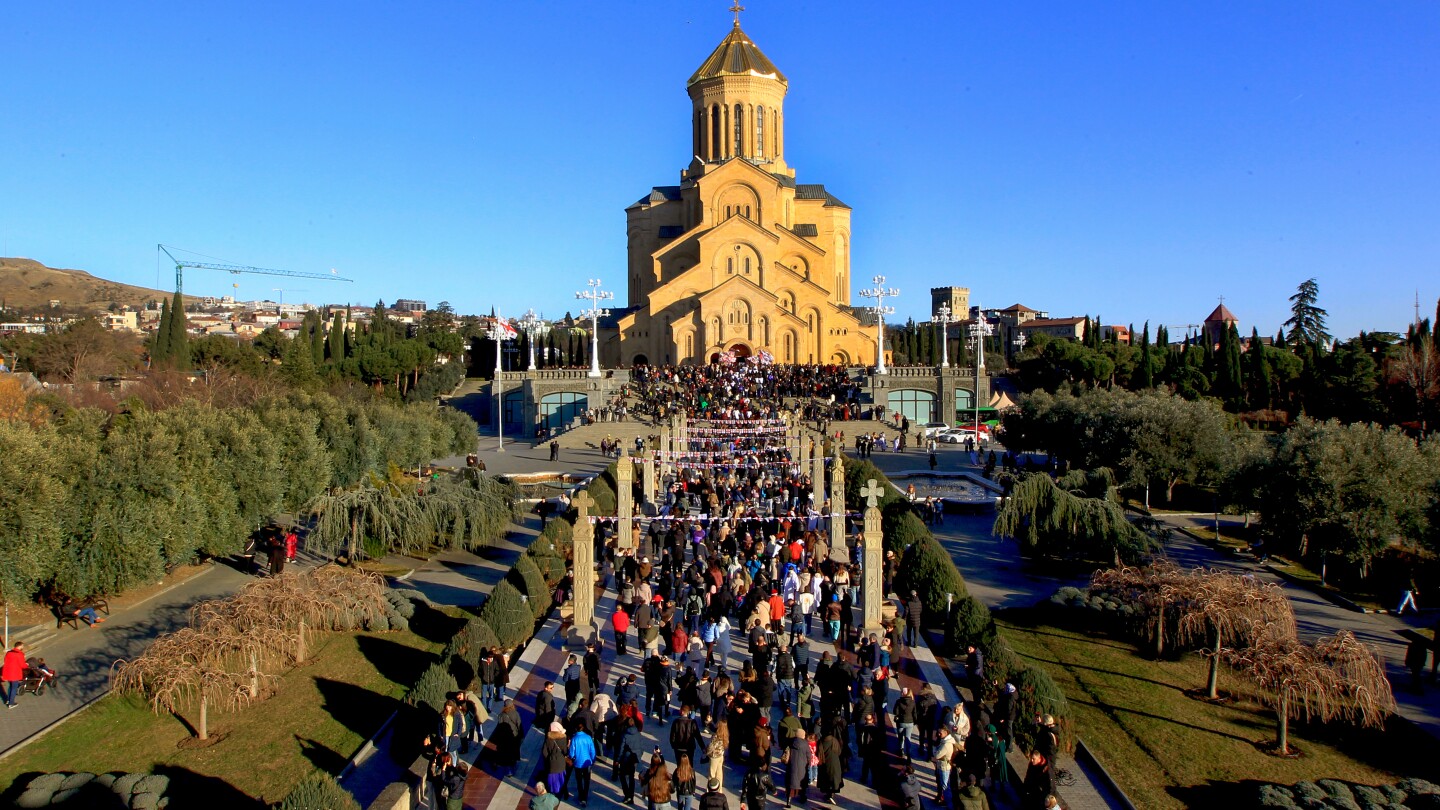
However, the Russian Orthodox Church—Eastern Orthodoxy’s largest communion with approximately 100 million followers—maintained the old calendar, as did Serbian and Georgian Orthodox churches. This positions their Christmas celebration on January 7 according to the Gregorian calendar. The situation in Ukraine reflects broader geopolitical tensions, with some Orthodox faithful beginning to observe Christmas on December 25, while others maintain the January 7 date.
The Armenian Orthodox tradition presents another variation, observing Christmas on January 6, a date that actually aligns with early Christian traditions before the December 25 date became standardized.
In North America, Orthodox Christmas observances vary according to national and cultural traditions. Churches in Greek and Antiochian traditions marked Christmas on December 25, while those in Slavic traditions, including Serbian and smaller Russian congregations, observe it on January 7.
Despite calendar differences, Eastern Orthodox Christmas celebrations feature distinctive worship services and rituals. The main liturgical celebration typically takes place on Christmas Eve. Serbian Orthodox churches often begin with a distinctive outdoor ceremony involving the burning of an oak branch or young oak tree, accompanied by joyous proclamations of Christ’s birth.
These different observances highlight how ancient calendrical decisions continue to shape modern religious experiences. While Western commercialization has standardized Christmas as primarily a December holiday, millions of Orthodox faithful maintain these historical distinctions, preserving traditional observances that connect them to centuries of religious practice.
The persistence of multiple Christmas dates serves as a reminder of Christianity’s complex historical development across different cultures and regions. While theological beliefs about Christ’s birth remain consistent, the expression of that faith through calendar observances reflects the rich diversity within global Christianity.
For Orthodox believers following the Julian calendar, this later Christmas celebration often provides a more contemplative alternative to the commercialized December holiday, allowing for a focus on religious significance rather than secular festivities.
Fact Checker
Verify the accuracy of this article using The Disinformation Commission analysis and real-time sources.

8 Comments
The differences in the calendars used by the Eastern Orthodox and Western Christian churches are a fascinating example of how global faith traditions can evolve and diverge over time. It’s a reminder of the rich cultural and religious diversity that exists in the world.
I’m curious to learn more about the historical and religious reasons behind the different calendars used by the Eastern Orthodox and Western Christian churches. It’s a fascinating example of how global faith traditions can diverge over time.
The fact that millions of people around the world still observe Orthodox Christmas on January 7th, nearly two weeks after the more widely celebrated December 25th, is a testament to the enduring power of cultural and religious traditions.
The Orthodox Christmas celebration on January 7th is a fascinating example of how ancient traditions can endure, even in the modern world. It’s a testament to the rich diversity of religious practices across the globe.
The calendar differences between the Gregorian and Julian calendars highlight the complexity of global faith traditions. It’s a reminder of how religious observances can vary across cultures and regions, even within the same broad religious framework.
It’s fascinating to see how the different Christian traditions have evolved over the centuries, keeping their distinct calendars and customs. The Orthodox Christmas celebration on January 7th has deep historical roots, reflecting their unique cultural heritage.
It’s interesting to see how the different Christian denominations have maintained their distinct calendars and customs over the centuries. The Orthodox Christmas celebration on January 7th is a unique cultural and religious practice that is still widely observed today.
The fact that millions of people around the world still celebrate Orthodox Christmas on January 7th is a testament to the enduring power of ancient traditions, even in our modern, globalized world.